



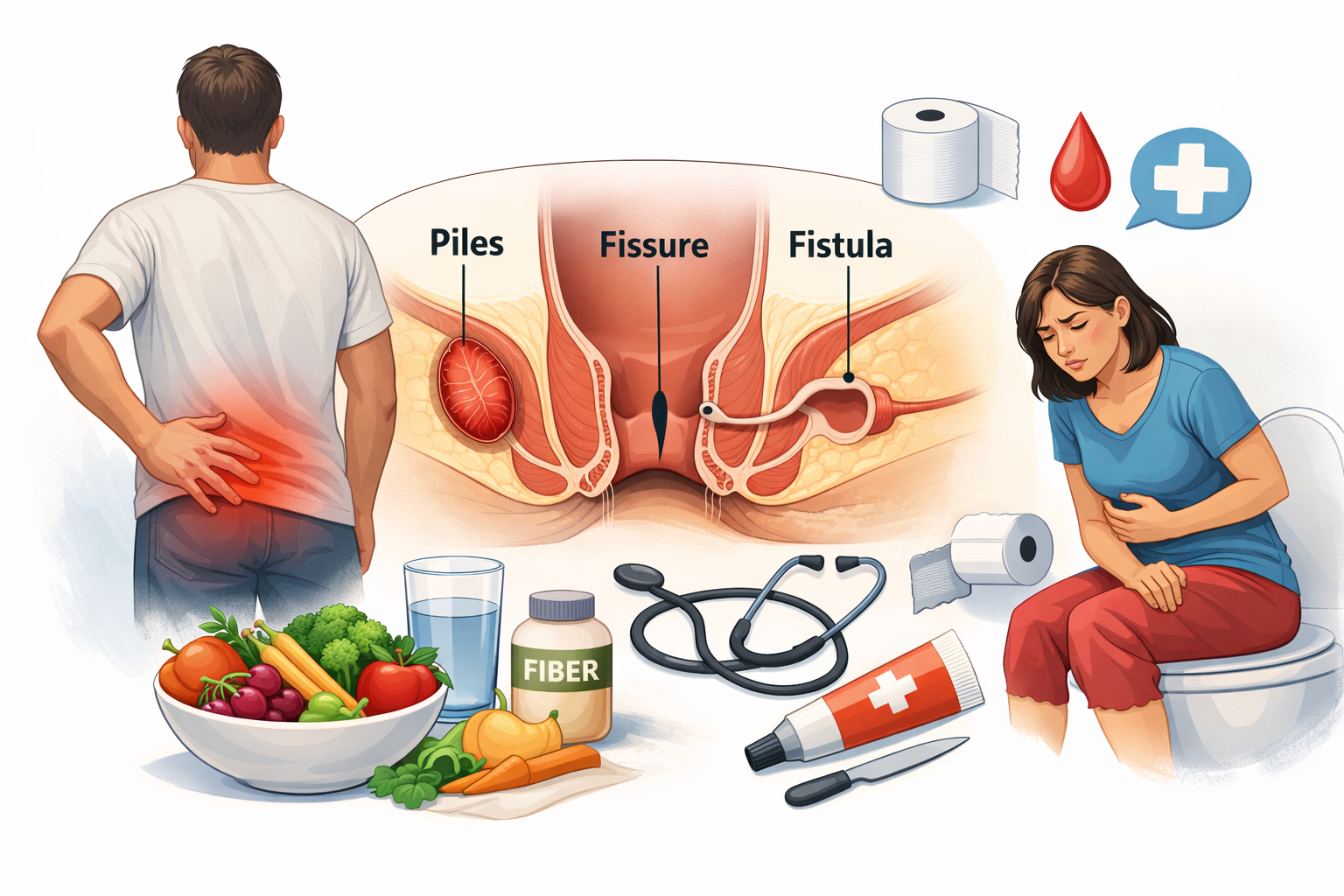
Pain, bleeding, or discomfort during bowel movements is something many people quietly deal with. In most cases, people ignore these signs out of embarrassment or assume the problem will go away on its own. However, doctors say that conditions like piles, fissure, and fistula are common health issues that should not be neglected.
According to medical experts, these three conditions affect the anal region, but each one is different and needs proper diagnosis.
Piles: More Common Than People Think
Piles, also known as hemorrhoids, happen when veins in the rectum or around the anus become swollen. This is often seen in people who suffer from constipation, sit for long hours, strain during stool, or follow a low-fiber diet.
Symptoms usually include bleeding during stool, itching, discomfort while sitting, or a small swelling near the anus.
Doctors say that in many cases, early treatment, better eating habits, more water intake, and medication can help control the problem.
Fissure: Small Tear, Big Pain
An anal fissure is a small cut or tear in the lining of the anus. Though it may sound minor, it can cause intense pain, especially while passing stool.
People with fissure often complain of sharp pain, burning sensation, and fresh bleeding. Many also begin avoiding bowel movements because of fear of pain, which can worsen constipation.
Experts say early care usually gives quick relief.
Fistula: A Condition That Needs Medical Attention
Fistula is a different condition where an abnormal passage forms between the anal canal and the skin nearby, often after infection or abscess.
Repeated swelling, pus discharge, pain, or boils near the area are common warning signs. Doctors advise not to ignore these symptoms, as fistula generally needs proper medical treatment.
Simple Habits Can Help Prevent Problems
Health professionals recommend a few simple lifestyle habits:
- Eat more fruits, vegetables, and fiber-rich foods
- Drink enough water daily
- Stay active
- Avoid delaying bowel movements
- Manage constipation early
Expert View
Dr. Anand Trivedi says many people come for treatment only after the pain becomes severe. He believes that if people seek help early, these conditions can often be treated more easily and comfortably.
Doctors advise that anyone facing repeated pain, bleeding, swelling, or discharge should consult a qualified medical professional without delay.

