




Not all big ideas start with a breakthrough. It may begin with a mere observation, something that repeats itself until it cannot be overlooked any longer. This is precisely how Kumar Surender Sinwar got into healthcare innovation.
With a solid background in Data and AI, Sinwar had witnessed the pace at which technology was changing industries. However, when he examined healthcare in India, he realized that there was a gap. There were sophisticated tools, but they were not getting to patients where they were most needed. This disparity between what could be done and what could be made available formed the basis of mlHealth360.
The startup is dedicated to helping doctors, particularly radiologists, to read medical scans more quickly and clearly with the help of artificial intelligence. When a physician looks at an object such as a CT scan, mlHealth360 AI points out areas that might require attention. This assists physicians to concentrate swiftly and make better decisions.
One thing is clear to Sinwar, the intention is not to substitute doctors. We are creating support systems, not substitutes, he says. It is as though providing doctors with an additional pair of trained eyes that is immediately effective and reliable.
But entering the field of healthcare was a different story. In contrast to other sectors where speed and efficiency are the primary objectives, healthcare requires a much greater degree of care and responsibility. All decisions have a direct impact on human lives.
Trust was one of the greatest lessons to Sinwar. A system may be very accurate but it will not be helpful unless doctors are comfortable with it. Technology must become part of their everyday routine, he says, and it cannot slow them down or introduce new processes.
To get a deeper insight into this, the mlHealth360 team collaborated with radiologists and healthcare professionals. They did not merely formulate solutions in theory, but they looked at real-world settings, hectic diagnostic centers where time and accuracy are both important.
There was one feedback that was outstanding. One radiologist informed him, “When your system causes me to stop, it slows me down. That line alone determined the development of the product. It emphasized the fact that usability is equally important as accuracy.
There are also common misconceptions about AI in healthcare. It is thought by many that it will substitute doctors. Sinwar disagrees strongly. He says that AI is most effective when it assists clinicians, as it can help alleviate fatigue and enhance consistency, but it cannot substitute human judgment and experience.
Similar to the majority of startups, mlHealth360 was not without its challenges, particularly in the initial stages. Implementation of technology in healthcare is not as quick as in other industries. All the solutions should be tested and validated.
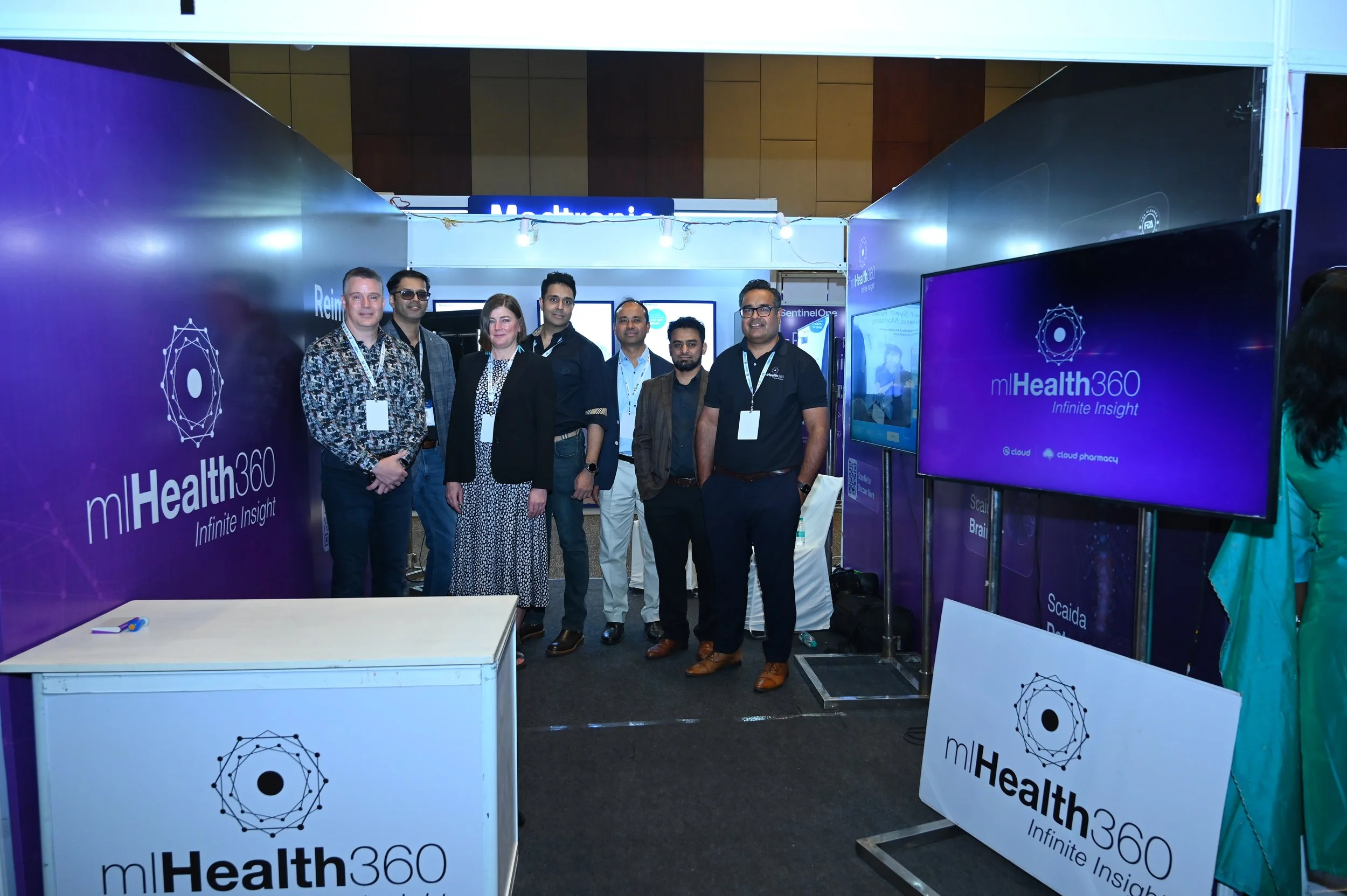
Sinwar tells us that there were moments when things were moving slowly. However, we came to understand that in healthcare, rushing without due validation is dangerous. Trust is a thing that you develop with time.
In the future, the mlHealth360 objective is straightforward yet significant, to decrease delays in diagnosis, particularly in smaller cities and underserved regions. Sinwar is of the opinion that location should not be a determinant of access to quality healthcare.
For him, real success will be when someone in a Tier-2 or Tier-3 city can get the same level of diagnostic support as a patient in a top metro hospital.
With digital healthcare steadily increasing in India, mlHealth360 is silently making strides towards a time when technology will not merely remain in laboratories or big hospitals, but will be taken to the people where it is needed.

