



Most of us think about health only when something goes wrong. A missed period, constant fatigue, sudden weight gain, or a health scare is often what pushes us to finally pay attention. But by then, the body has already been signalling for a while.
This World Health Day, experts are asking us to change that pattern. Instead of reacting late, the focus is shifting towards understanding our bodies earlier, building better daily habits, and making health a consistent priority.
From women’s health and heart care to mental wellbeing and lifestyle diseases, doctors and founders are highlighting one common idea: real health is not built in emergencies, it is built every day.
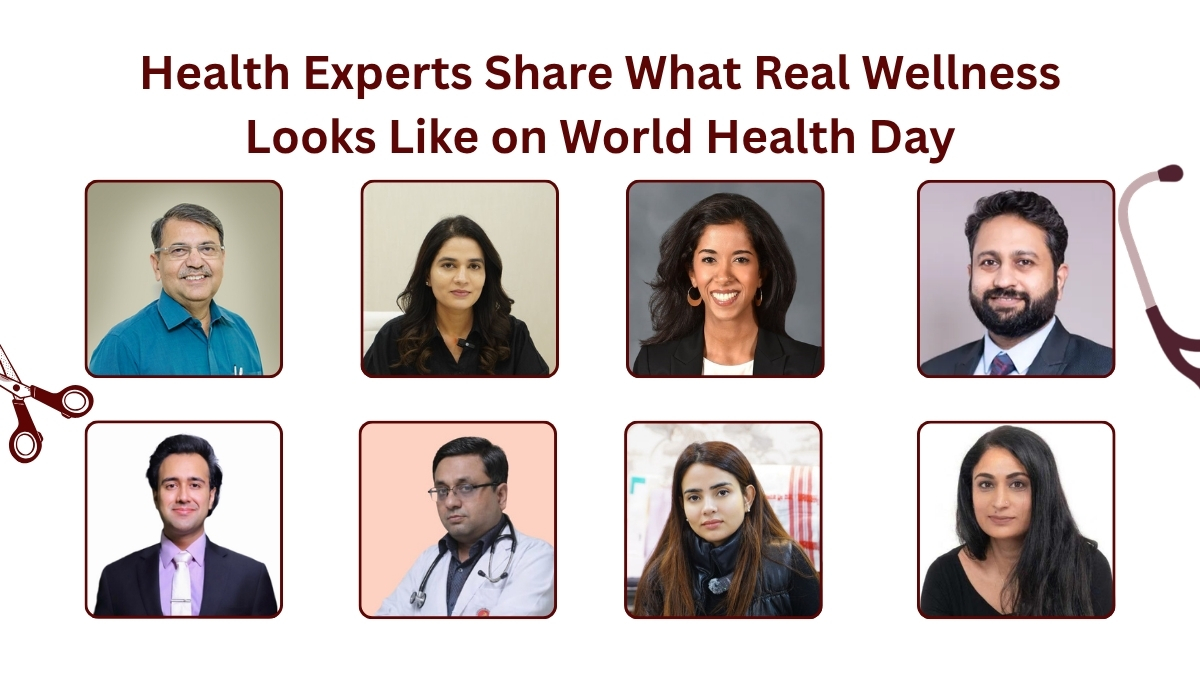
Here’s what leading experts had to say.
Ms. Anika Parashar, Founder and CEO at The Woman’s Company, and Founder Director at Organ India
Women’s health needs a deeper shift, not just in infrastructure, but in mindset. Only 1.9% of women in India aged 30 to 49 have ever undergone a screening test for cervical cancer. This shows that too often, women are conditioned to put themselves last, to normalise discomfort, delay check-ups, and seek help only when something becomes impossible to ignore. At the same time, gender norms, limited decision-making power, and even disrespectful or judgmental provider attitudes can inhibit care-seeking, which is why access alone is not enough.
What women need is a space where they feel safe enough to come in early, speak openly, and know they will be heard without dismissal or embarrassment. That applies across the spectrum, whether the concern is hormonal health, nutrition, lifestyle issues, functional medicine, fertility, menopause, mental wellbeing, or even cosmetic and intimate care. Women’s health is not a single conversation or a single department. It is lifelong, layered, and deeply personal.
It also cannot be episodic. Women do not move through life in isolated health moments, and their care cannot be reduced to one-off consultations or symptom-led interventions. What is needed is specialised, continuous support that understands the full arc of a woman’s health journey and responds to it with depth, sensitivity, and expertise.
This is the shift I believe in: care that is designed for her, for life.
Real progress will come when more women and the healthcare industry see women’s health not as secondary but as something worth prioritising, protecting, and investing in.
Dr. Anu Lala, Co-Editor-in-Chief, Program Director, Advanced Heart Failure & Transplant Fellowship, Director of Heart Failure Research
Women do not present with heart disease in the same way as men. Their symptoms can be atypical, such as fatigue, nausea, or breathlessness, which are often mistaken for stress or non-cardiac issues.
Dr. Vijay Kumar Sharma, Consultant – Internal Medicine, Regency Hospital, Gorakhpur
World Health Day is an important reminder that upcoming future of healthcare cannot remain limited to just treating illness only after it appears. The main need of the hour is to build a particular culture that values factors such as prevention, early diagnosis, and long term well being just as much as treatment. Across entire India, we are also witnessing a steady rise in certain lifestyle related conditions such as diabetes, hypertension, obesity related disease and stress related disorders as well. Many of these conditions are also now impacting people at a much younger age than before. This shift also makes it clear that healthcare has to move beyond the hospitals and also become the part of everyday life. Preventive healthcare mainly begins with awareness but it must lead to action as well. Factors such as constant level of health check-ups, better nutrition, physical activity, quality sleep, mental wellness, and timely medical consultation can reduce the burden of serious diseases. At the same point of time, we should also ensure that quality healthcare is accessible, affordable, and understandable for each and every individual regardless of any geography or background as well. Health literacy is just as critical as health infrastructure. The message should be simple, good health is mainly built through consistent level of choices, timely medical interventions and a collective commitment from individuals, families, healthcare professionals and institutions as well. A healthier society is not created only through the medical advancements but through the well-informed communities that prioritise the wellness before any kind of illness. The more we invest in the prevention today, the stronger and healthier our future will be.
Dr. Amanpreet Singh Wasir, MPH Candidate, Johns Hopkins Bloomberg School of Public Health
Gender-based differences in cardiac symptoms and disease patterns often result in delays in diagnosis and treatment. Women are also less likely to receive evidence-based therapies despite having similar risk profiles.
Dr. Khushboo Jha, MBBS, MD, Chief Dermatologist Consultant Metro Hospital and Founder of One Skin Clinic On this World Health Day, let’s shift the conversation from perfection to awareness. Health is not just about how you look, it’s about how your body functions, how your mind feels, and how consistently you show up for yourself.
In a world chasing quick fixes, detox trends, and crash diets, real health often gets ignored. It’s in your daily habits, the meals you choose, the sleep you prioritise, the stress you manage, and the movement you include even on low-energy days. There is no one-size-fits-all approach. Your health journey is deeply personal, shaped by your body, your lifestyle, and your environment.
We often wait for symptoms to take action, but prevention is where true power lies. Regular check-ups, balanced nutrition, and listening to your body can change outcomes long before problems arise. Health is not built in extremes; it’s built in consistency.
Today is a reminder to check in with yourself, not critically, but consciously. Are you nourishing your body? Are you giving your mind the rest it needs? Are you making choices that support you long-term?
Because health is not a goal you achieve once, it’s a relationship you build every single day.
Dr. Milind Gadkari, FRCP- Fellow of Royal College of Physicians, UK, FACC- Fellow of American College of Cardiology
There is a pressing need for regular screening, especially in women above 40 years of age. Unfortunately, social biases often delay timely referrals, leading to misdiagnosis and late detection.
Dr. Rupika Singh, MBBS, MD, Dermatologist and Founder of Akiya Aesthetics
World Health Day is not about adding pressure to be “perfectly healthy.” It’s about understanding that small, mindful choices can create a big impact over time.
Skipping meals, ignoring stress, overworking, or relying on quick fixes may seem harmless in the moment, but your body keeps a record of everything. Hormones, metabolism, skin, gut, and mental health are all interconnected. When one area is neglected, others follow.
True health is not just physical fitness — it includes emotional stability, hormonal balance, and internal well-being. Drinking enough water, eating nutrient-dense foods, moving your body, and setting boundaries are not luxuries, they are essentials.
You don’t need to overhaul your life overnight. Start small. One balanced meal. One mindful break. One step toward better sleep. Over time, these choices compound into something powerful.
This World Health Day, instead of asking “How do I look?”, ask “How do I feel?”
Because when you feel well, everything else aligns.
Dr. Sujit Sawadatkar, Head of Department & Senior Consultant Department of Cardiology
It is important for the medical community to unlearn existing biases and adopt gender-sensitive diagnostic approaches. Women’s heart health is a distinct clinical reality and needs focused attention.

