



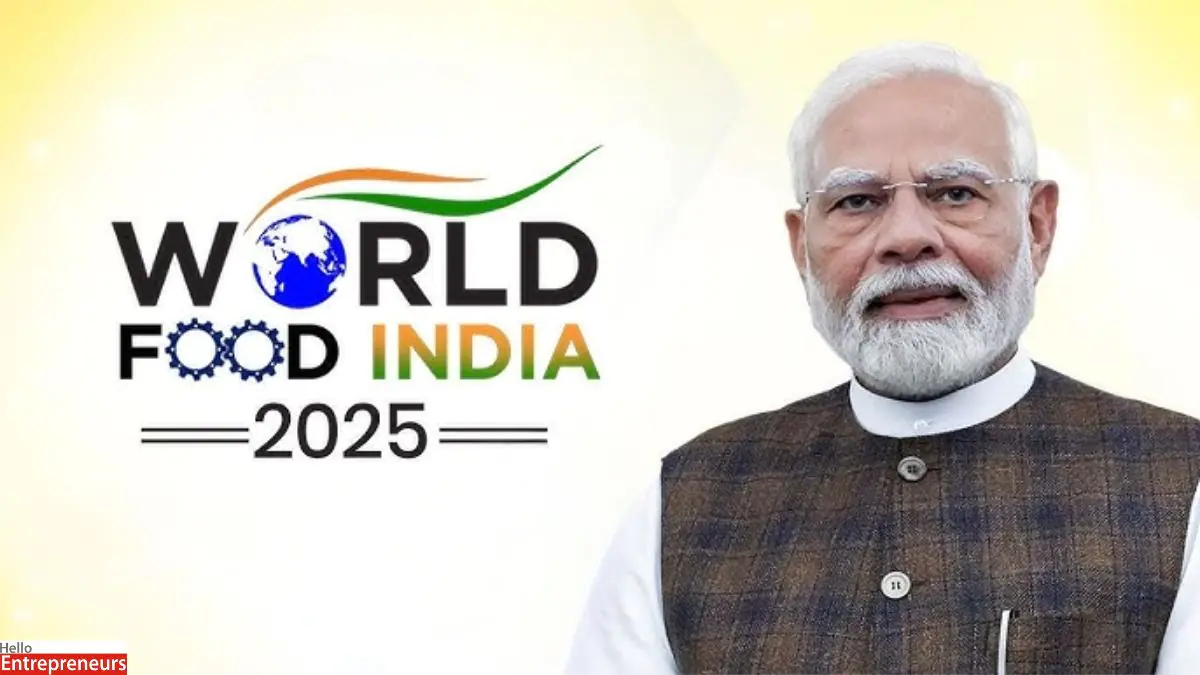
New Delhi: The fourth edition of World Food India 2025, which took place in Bharat Mandapam, New Delhi, on September 25, 2025, marked a turning point in the history of the food processing industry in India, which was inaugurated by Prime Minister Narendra Modi. The flagship event, which was hosted by the Ministry of Food Processing Industries, backed India as the food basket of the world, and attracted commitments of investments on a scale never seen before.
The summit marked a tremendous success during its inaugural day, which helped in signing Memorandums of Understanding valued at over 76000 crore with the top domestic and international organizations in the food processing industry. These large investments cover key sub-sectors such as beverages, dairy, and confectionery, and across a wide geographical span, such as Gujarat and Maharashtra to the North-Eastern states.
World Food India 2025 Showcases Innovation and Health Focus
In his opening address, PM Modi stressed the importance of the event and said, World Food India has become the event of context, content and creativity. India is unique in its competitive advantage, its diversity, demand and scale, which gives it a definitive competitive advantage in the global food economy. The comments of the Prime Minister pointed to the strategic benefits of India in the fast-changing global food arena.
The Prime Minister was impressed by the exhibition pavilion, especially in its focus on nutrition, minimised oil use and highlighted the health features of packaging. Such areas of focus are in line with the overall Indian public health goals and are also indicative of the industry’s efforts to produce healthier food options for consumers in the country.
Russian Deputy Prime Minister Dmitry Patrushev was present at the opening function alongside Union Ministers Chirag Paswan and Prataprao Jadhav, which highlighted the international importance of the occasion. Russian presence has underscored the increasing bilateral co-operation in food processing and agricultural technology between the two countries.
Strategic Leadership and Industry Collaboration
Industry leaders and government officials were gathered during a high-level CEO roundtable, which was co-chaired by the Minister of Road Transport and Highways, Nitin Gadkari, and the Food Processing Industries Minister, Chirag Paswan. Minister of State Ravneet Singh and senior officials from various central and state ministries were present at the roundtable.
Minister Gadkari presented an effective speech as he linked the vision of Atmanirbhar Bharat proposed by the Prime Minister with the increased agro-processing input in the GDP of India. Gadkari stressed that the vision of the Prime Minister of Atmanirbhar Bharat can only be achieved through an increase in the proportion of agro-processing in the national GDP, which is of strategic value to the industry.
Minister Paswan promised industry players government assistance, which made him act as an intermediary between the requirements of the industry and government policies. It is this partnership that has been significant in securing the huge investment decisions that have been made over the event.
Major Corporate Participation and Investment Commitments
Major companies, including Britannia, PepsiCo, Amul, ITC, Nestle, Mondelez, Tata Consumer Products, Coca-Cola, and Marico, were all attendees of the summit. Their CEOs were able to communicate useful information on industry trends, technological advancements and market opportunities in interactive exchanges.
The 76,000 crore investment commitments are a massive improvement in the food processing capacity of India. The investments will generate jobs in various states such as Uttar Pradesh, Andhra Pradesh, Telangana, Karnataka, Punjab, West Bengal, and the northeastern regions, leading to balanced development of the region.
Knowledge Sharing and International Cooperation
The event had extensive knowledge events arranged by the Manipur state, Russia, the Ministry of Rural Development, DPIIT and the Department of Animal Husbandry. The sessions were used to share best practices, technological developments and policy frameworks that help in the development of the industry.
The importance that PM Modi placed on India’s historical role in resolving global issues was echoed throughout the proceedings. In situations like this, where there has been a need in the past, Bharat has come out to play a positive role, he pointed out, which further strengthens the role of India in international food security efforts.
The morning sessions in Bharat Mandapam gave a wide scope of networking among the government officials, industry leaders and international delegates. Such interactions are likely to bear long-term relationships, which will make India strong in global food value chains.
Future Implications for the Food Processing Industry
The success of World Food India 2025 indicates that the sector has huge growth prospects and fits the national development agenda. The fact that the event has given nutrition, sustainability, and technological innovativeness puts Indian food processing companies at a competitive position in the international markets.
The huge investment commitments made at the summit will speed up the building of infrastructure, adoption of technology, and capacity building of the food processing value chain. This holistic strategy guarantees sustainable development and quality standards, which are equivalent to those of global standards.
World Food India 2025, the fourth edition, has been effective in strengthening its position in India in food processing and has created a wave of growth in the industry with its strategic partnerships and financial investments.