



If there’s one person who knows how to use existing strengths to dominate the market, it is Mukesh Ambani. Most think it is. But sometimes, a tried-and-tested strategy may or may not work. At least that’s what some sceptics think.
Mukesh Ambani had to transfer control of the company’s telecommunications business to his younger brother Anil after a bitter succession tussle in 2006. But he knew how things worked, and his comeback with Jio’s disruptive 4G services in 2016 helped Mukesh regain control of the telecom market, along with other businesses thanks to the clever use of Jio’s suites of mobile apps, acquisitions and Jio’s eventual status as the country’s leading mobile services provider.
A brute advantage no one can match
Mota bhai now wants to replicate this model in the FMCG sector as well. Since inception in 2006, Reliance Retail has grown to become a $100 billion behemoth, using its financial muscle to expand through brand collaborations, acquisitions and aggressive expansion. Now that it has almost reached every corner of the country with its 19,000-plus stores, it aims to use this reach to create its own brand in the FMCG space.
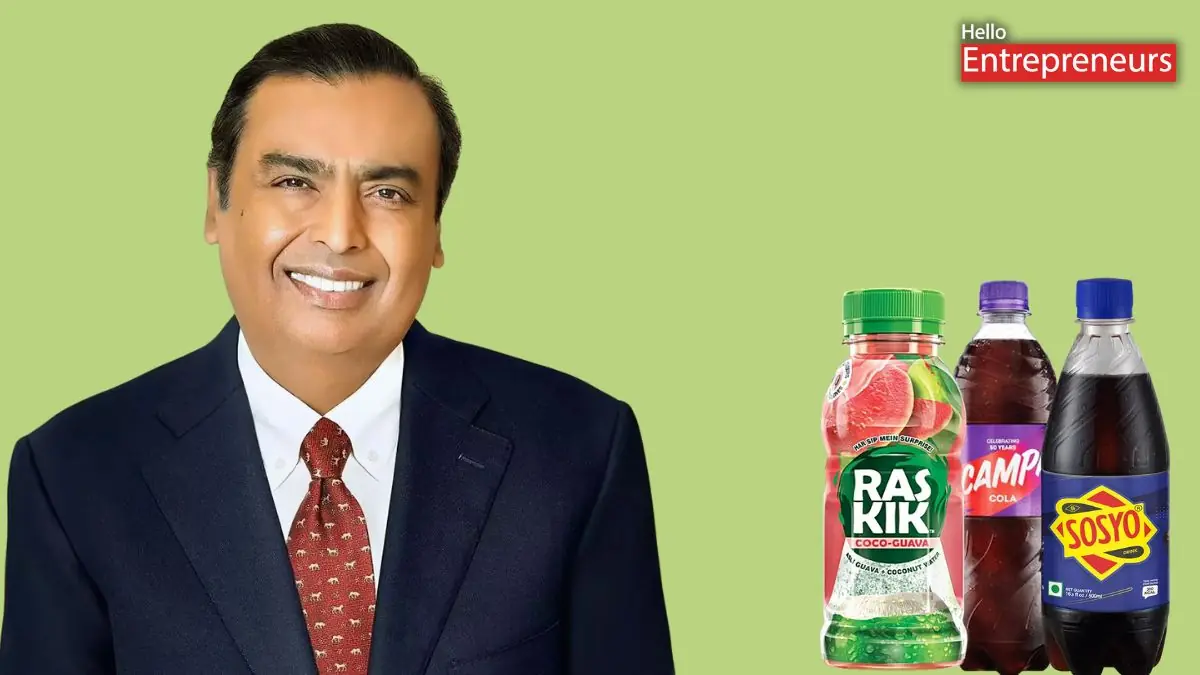
To start this, Reliance’s consumer products division acquired the long-forgotten Campa Cola brand for a measly Rs.22 crore. Along with this, the company also bought half of the locally popular Gujarati soft drink brand Sosyo, which has a 22% market share there. Furthermore, Reliance has also acquired the Raskik brand, which specialises in rehydrating drinks.
With all of this in its kitty, Reliance is going all out to secure these brands’ presence wherever a thirsty customer would choose to buy them.
Expanding to scale
Reliance is looking to spend Rs.8000 crore to set up 10-12 new bottling facilities by March 2027. Along with that, it is leaving no stone unturned to highlight its brands across every medium it owns- IPL, OTT, Jio Mart and its network of stores.
With most of its customers coming from Tier 2 and 3 cities, Reliance is going all out to offer it at a price point they’re comfortable with-Rs.10. Campa Cola was initially revived with a 200ml bottle at this price, undercutting Coke and Pepsi whose lowest priced offerings start at 250ml.
This undercutting is already showing signs- Reliance has achieved more than 10% market share in some states, even as profitability takes a backseat.
This price war will surely affect the competition, with smaller players Dabur and Tata being forced to slash prices for their Real juices and Tata Gluco+ offerings as well.
These efforts have shown results. Reliance Retail Ventures, which houses these beverage brands has achieved a net profit of Rs.3519 crores, even as established players like Coca-Cola have seen their profits fall 30% due to the price war.
What next?
Though things are looking promising, for now, there are some developments that aren’t in Reliance’s favour. First, sugar sweetened beverages (SSBs) are taxed at 40% in India, eating into their margins. Though India’s soft drink penetration rate is just 1/20th that of the US, higher awareness of soft drinks’ health concerns and restrictive government policies will affect every brand in the sector.
Also Read: Why the Jio brand won’t help BlackRock disrupt India’s MF industry

