



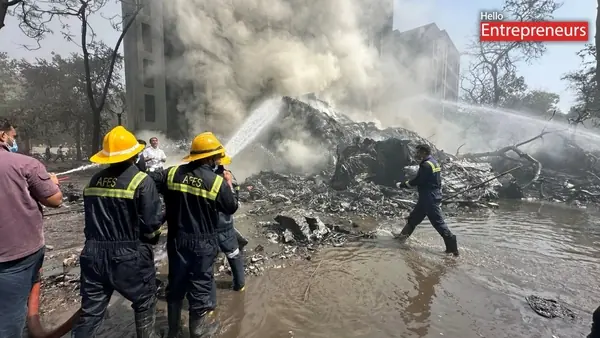
New Delhi: The Ahmedabad Air India crash has left individuals in India and around the globe stunned. Such a sad incident not only shatters dreams but questions large issues of airline safety, maintenance, and whether companies take their responsibilities seriously.
What transpired in Ahmedabad?
On June 12, 2025, Air India Boeing 787 Dreamliner flight AI171 took off from Ahmedabad to London Gatwick. But soon after the take-off from Sardar Vallabhbhai Patel International Airport, the plane crashed into a medical college hostel in Ahmedabad’s Meghani. The flight carried 242 individuals, and unfortunately, nearly all the passengers lost their lives. One British passenger survived and is at present admitted to the hospital.
The plane also crashed on the ground and damaged things, killing people. The site was filled with black smoke as the aircraft caught fire. Rescue teams arrived at the scene and worked throughout the night. One of the black boxes has been recovered, but it is not yet known if it is the flight data recorder or cockpit voice recorder.
Though Air India’s aircraft was a Boeing, the other large plane manufacturer, Airbus, also released a statement. Christian Scherer, who heads up Airbus’s commercial aircraft, stated that the tragedy should not be interpreted as an opportunity to take down Boeing, but as a warning to the whole aviation industry. He described the crash as a reminder that every single accident is unacceptable now and that safety has to be first at all times.
Scherer also spoke of how hard it is to manufacture and deliver aircraft with the global supply problem, but safety would never be compromised regardless.
The Tata Group, the current owner of Air India, reacted quickly. Tata Sons Chairman N Chandrasekaran and Air India CEO Campbell Wilson were spotted at the crash site, assisting rescue efforts and communicating with the victims’ families. This quick reaction is a far cry from the past when Air India, being a government-owned company, was frequently criticized for slow service.
Nevertheless, questions are being raised. Is Air India doing as much as it can regarding aircraft maintenance and safety inspections? The airline is attempting to reform at present with a five-year makeover plan, but recent stories and DGCA warnings indicate that there have been violations of safety regulations between 2023 and 2025.
One passenger who was on the same flight on a previous flight reported that the AC did not work, there were electrical problems, and the inflight equipment was inoperable. If so, why was the aircraft permitted to fly?
What’s next?
The Aircraft Accident Investigation Bureau of India and the U.S. National Transportation Safety Board (NTSB) are now investigating the crash. The key questions are:
Why was the plane unable to gain sufficient altitude?
Were there already reported technical issues?
Was this preventable?
This accident is India’s worst airline crash in years. It illustrates the need for enhanced safety regulations, tighter inspections, and clear explanations. We should learn from it, or such accidents can recur.