



In 1999, during the height of the Kosovo war, an American F-117 Nighthawk, a fighter jet well known for it stealth, was shot down by a Serbian anti-aircraft missile. Though the pilot survived, the wreckage was strewn a wide area of farmland. This development made headlines but only just. Because it was more than just a wreck, it offered an opportunity like no other.
The US wasn’t going to give access to anyone for this top secret stealth technology which took more than a decade to develop. But where there is a will, there is a way, especially when you are on your own here.
There was no way anyone could access this technology, especially for adversaries.
But this wreckage was a golden opportunity that couldn’t be missed, and the Chinese took it head-on. Following the news, Chinese agents combed the area, buying up pieces of the wreckage from local farmers.
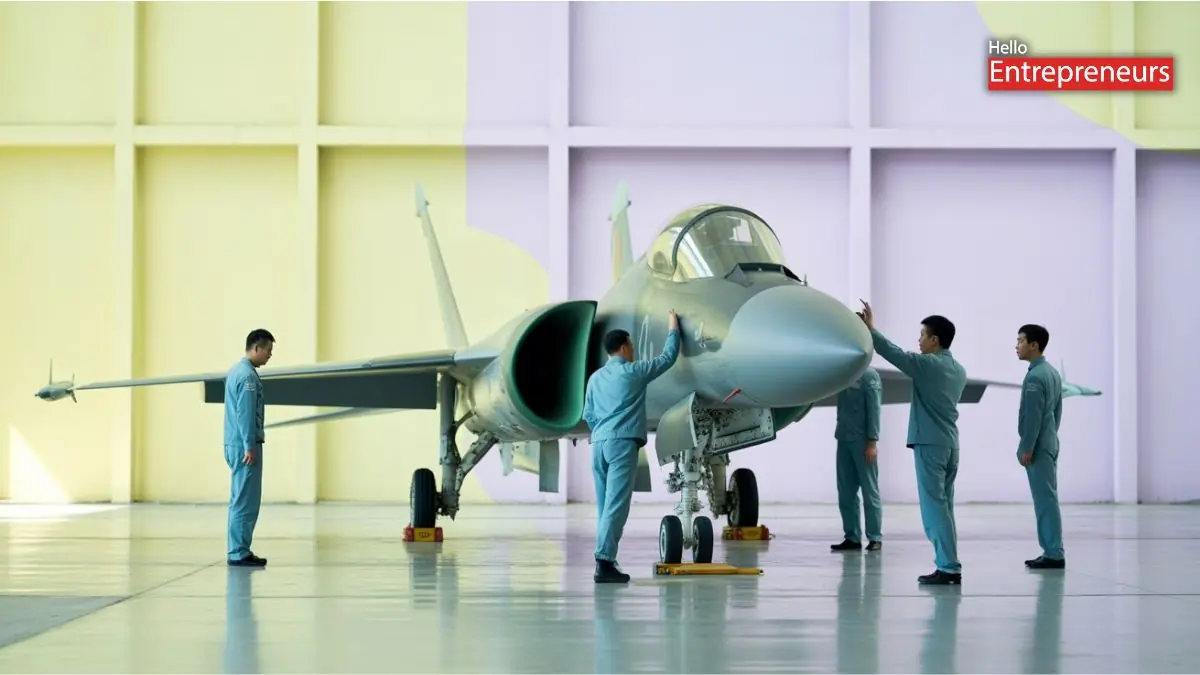
In January 2011, the Chinese inducted the Chengdu J-20, its version of a stealth aircraft that was eerily similar to the Nighthawk. The US and its NATO allies widely believe this is the result of ‘reverse engineering’ by the Chinese to gain critical know-how to pull up such a feat.
Reverse Engineering: A ‘shortcut’ to catch up in the arms race
For years, China has grown by leaps and bounds to become the world’s newest superpower, replacing Russia to take on the US. ‘Reverse Engineering’ has been its trump card to get there.
Though the concept is not new, the Chinese have taken this to great levels, prodded by its government. The Chinese usually don’t mind copying others, and have used this technique to an industrial scale, especially to develop its military technologies.
In fact, most of its military hardware has been reverse engineered- where it has accessed its rivals’ technology through unfair means and recreated it for its own use. Many times, the Chinese have had to pair these copycat designs with outdated components- mostly because reverse engineering can work only up to a limit.
“This mismatch results in systems that look formidable on paper but often fall short in real-world performance, lacking the necessary thrust and reliability demanded in high-stakes combat. As an authoritarian state, China maintains strict control over information. The true strength—or weakness—of its military capabilities remains shrouded in secrecy. What the world sees is often what the state wants it to see,” a widely quoted report that first appeared in Uganda’s daily newspaper, ‘Daily Monitor’ said.
“High-profile parades, state media coverage, and flashy demonstrations aim to convince both its citizens and the international community of its technological superiority. Yet, when these systems are put to the test under real-world conditions, cracks often appear. Equipment fails. Systems falter. And the carefully crafted illusion begins to waver,” it added.
A gradual, perfected approach
China has been using reverse engineering as a tool to kickstart its military engineering capabilites, that is years behind the West. Besides the F-117 Nighthawk debris, there have also been allegations that the Chengdu J-20 has been inspired by Russia’s now abandoned MiG 1.44 stealth fighter prototype.
For now, the J-20 has become China’s main stealth fighter, with more than 300 inducted into the military. China took a decade to perfect the design, and this wasn’t the only fghter jet it copied. In 2009, China acquired a prototype of Russia’s Su-33 from Ukraine after negotiations to buy from Russia failed. Though this was just a prototype that lacked engines and avionics, it offered Chinese engineers all they needed to develop its version, the Shenyang J-15.
A track record of cheating
Chinese reverse engineering feats have been reported as far back as the 1960s and has continued since. The Chinese have earned a reputation for such acts, even with its close friend Russia. Given the increasing cases of reverse engineering, Russia’s state agency for military import/export matters, JSC Rosoboronexport, has criticised China for its technology stealing, given that they have been almost 500 data breaches by China in the last 17 years. The agency has declared the creation of an agency to protect its intellectual property (IP) rights within a framework of military-techincal cooperations with other countries.
Legal standpoint
In the military context, reverse engineering could be unethical. But there can be instances of it being legal, if the licensor and receiving party pledge to keep up their commitments, even as the legal repercussions may not exist in such cases.
Since World War II, many countries, including Russia, China, Iran, Germany and India have been reversing other countries technologies to develop their own military capabilities. In many cases, the reverse engineering has helped to boost indigenisation, and reduce dependence on imports.
Other, non-controversial instances
Although reverse engineering may be considered a form of copying, all efforts are focused on keeping the technology confidential to prevent adversaries from recreating it. If engineers do manage to recreate a technology without harming the interests of the one who provided it, the whole exercise usually does not attract controversy.
In 2024, India’s Defence Research and Development Organisation (DRDO) announced the launch of its first indigenously made 1500 HP military tank engine, based on earlier Soviet tank engines. This was done to reduce the reliance on imports. India’s much-celebrated Akash anti-missile system was also based on the Soviet-era SA-6 Gainful (2K2 Kub) system.
Hindustan Aeronautics Limited (HAL), India’s premier military aircraft manufacturer, has successfully reverse-engineered the British-French manufactured SEPECAT Jaguar strike aircraft and improved on it, which it initially manufactured under license way back in 1979.
Why reverse engineering is here to stay
Though unethical, militaries have had to depend on reverse engineering primarily to stay updated in the military arms race. China has extensively relied on it to become a superpower, even though much of its equipment has faced multiple instances of malfunctions. Developing a new technology takes years, even decades, as in the case of the F-117 Nighthawk, but breaking up an existing plane and remaking it to gain access to a select few boasting of a technology is an incentive worth the time and effort, even if it could be unethical.

