



Dharmendra Pradhan’s resignation as education minister represents a moral victory for the Cockroach Janta Party (CJP) led protests against repeated exam paper leaks and an inept government that hasn’t worked to reform the education system. The protests mobilized popular support from the youth, funneled through the viral social media handles led by Abhijeet Dipke.
For the youth, social media represents a platform that offers a medium of venting out against the government and the status quo, while offering them a ray of hope for people looking to make a mark in the sector.
Arab Spring
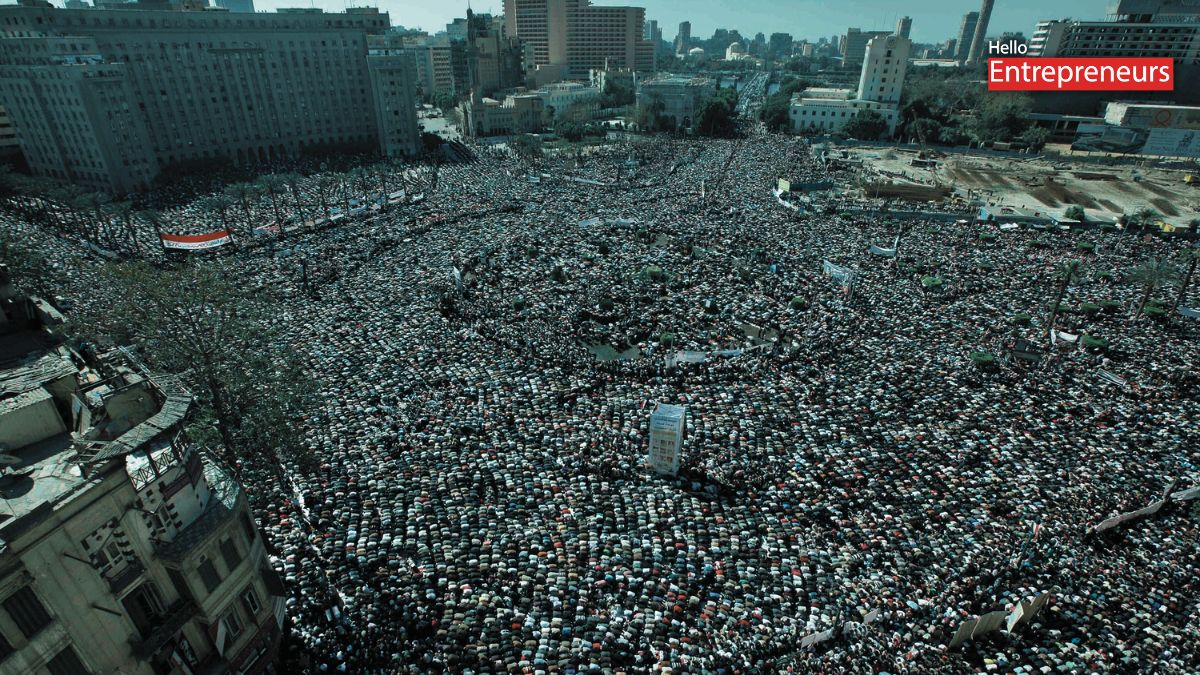
One of the earliest political realignments that came as a direct result of social media, the Arab Spring came after a street vendor in Tunisia self-immolated due to constant police harassment and arbitrary confiscation of his goods. Though Tunisia had been under autocratic rule for decades, this incident, amplified by social media, sparked mass protests against high youth unemployment and state corruption. This event led to a domino effect across the Middle East and North Africa region, with Egypt, Yemen and Libya also facing similar threats.
Timeline of the Protest
From the time the protests started in December 2010, Facebook became the alternative news source with activists sharing real time updates regarding police deployments, casualty counts and assembly locations. By January 2011, then President Zine El Abidine Ben Ali fled Tunisia for Saudi Arabia.
Shortly after that, Egypt witnessed its own protests, inspired by the events in Tunisia. Nationwide protests followed, leading to a mass occupation of Tahrir Square in Cairo. Even after the government imposed a near-total internet blackout on January 28, sustained pressure forced President Hosni Mubarak to resign on February 11, 2011
Outcome
While the primary outcome of the Arab Spring involved removing long-reigning autocratic leaders in Tunisia and Egypt, Similar social media-led protests changed the governments in Libya and Syria as well, though the long-term repercussions have been mixed for all these countries.
Hong Kong Protests against extradition laws
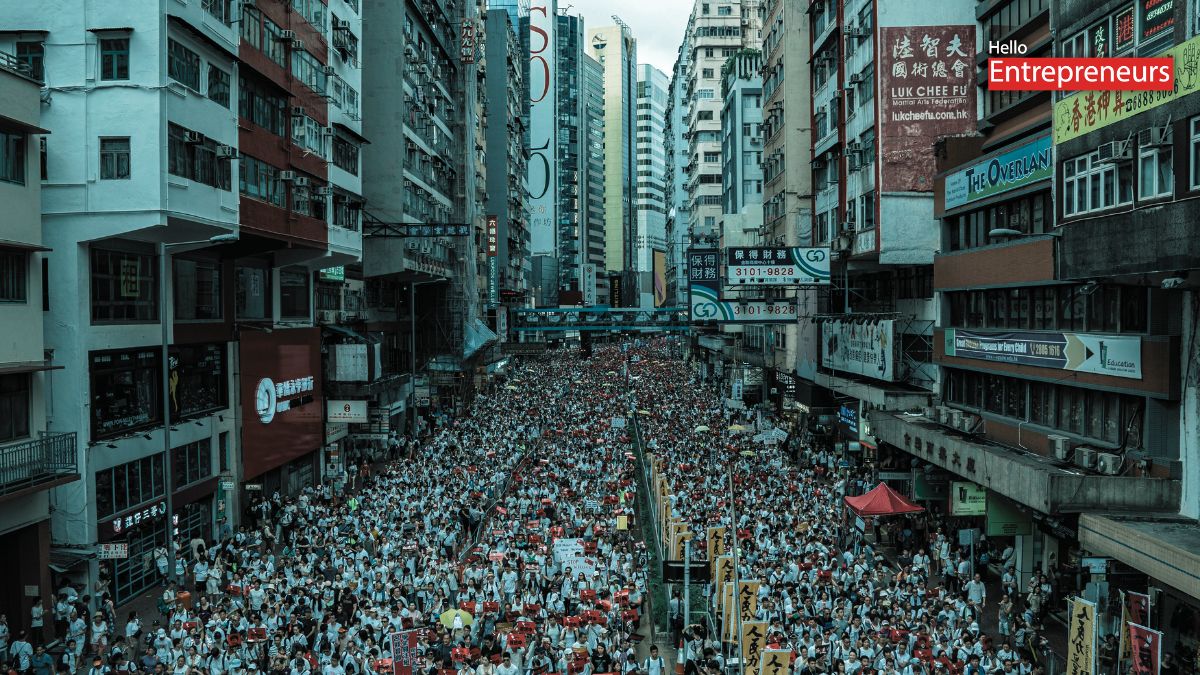
In February 2019, the Hong Kong Special Administrative Region (SAR) proposed the Fugitive Offenders and Mutual Legal Assistance in Criminal Matters Legislation (Amendment) Bill, which would have allowed extradition of criminal suspects to jurisdictions where Hong Kong had no formal treaties, most notably mainland China.
Hong Kongers argued that the bill threatened its judicial independence and civil liberties, under the ‘One Country, Two Systems’ framework used to govern the region by China. These concerns also brought to the fore challenges with housing costs, economic inequalities and political representation.
Timeline of the Protest
The Hong Kong protests started with mass rallies in June 2019, reaching almost 2 million on June 16. The government used tear gas and rubber bullets on the protestors, that’s when the protestors turned creative in their tactics.
Between July and September 2019, protestors started using encrypted apps like Telegram, protestors conducted unpredictable rallies across various urban districts while file-sharing tools like Apple’s AirDrop was used to circulate digital safety guides, real-time alerts on police positions and logistics maps Facebook and YouTube were used to showcase the police clashes and actions directly, shaping local and international public opinions.
Outcome
The extradition bill was withdrawn as a result of the protest, but the bill was enacted in essence by China, with the passing of the Hong Kong National Security Law (NSL). The digital platforms used to enable the protests were subject to heightened state oversight, with many activists forced to remove their digital footprints or alter their public operations as a result.
Bangladesh’s GenZ-led anti-government protest
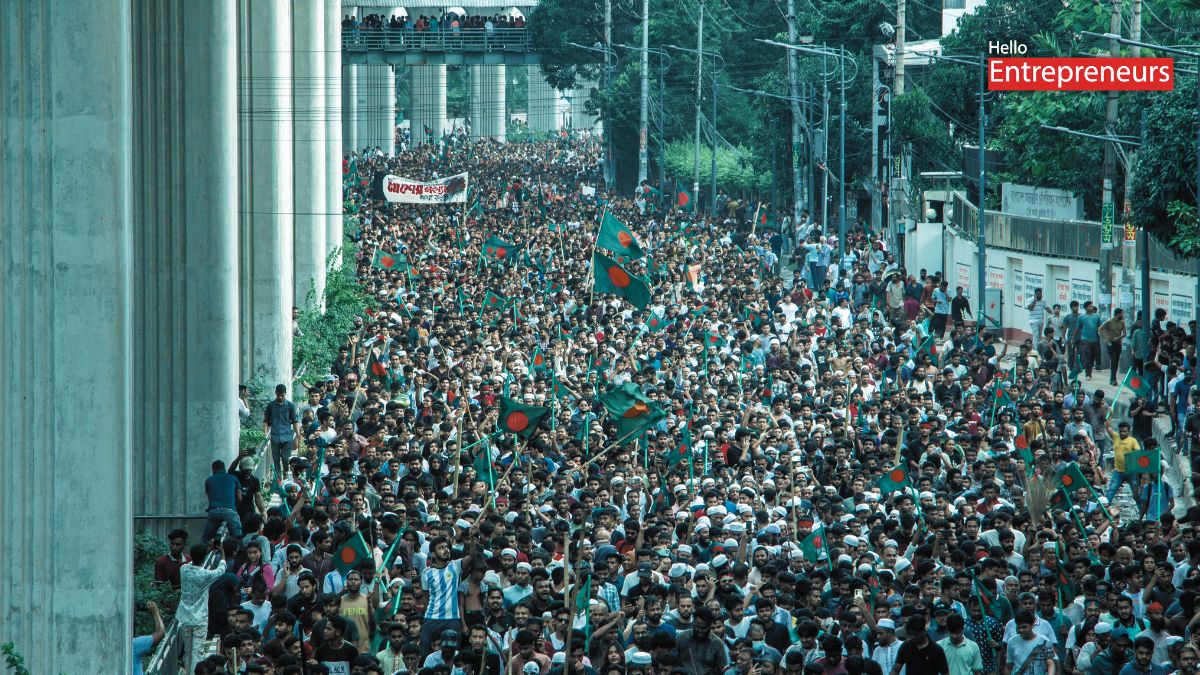
In 2024, a political crisis erupted in Bangladesh after the government reinstated a quota system reserving 30% of high-level government jobs for descendants of freedom fighters from the 1971 liberation war. Amid high unemployment and inflation, students viewed this quota system as an unfair mechanism to benefit the supporters of the ruling Awami League party.
Timeline of the Protest
From early June 2024, ‘Students Against Discrimination’ used Facebook groups, WhatsApp channels and TikTok to coordinate peaceful blockages of major transport corridors in Dhaka, Rajshahi and Chittagong. By Mid July, clashes broke out between student demonstrators and law enforcement, with smartphone footage showing the fatal shooting of an unarmed student activist in Rangpur triggering a broader public outrage. By late July, the government declared state curfews and enforced extended nationwide shutdown s of mobile and internet services to interrupt activist communication, but that backfired with more people getting on the streets, expanding the physical footprint of the demonstrations. The protesters started to call for PM Shaikh Hasina to resign.
Outcome
Eventually, the wave of protests led to Prime Minister Sheikh Hasina fleeing to India, with an interim technocratic government led by Nobel Peace Prize laureate Muhammad Yunus initiating structural reforms that aimed to address challenges with the country’s judiciary, electoral system and police service.
Nepal’s anti-regulatory GenZ protest
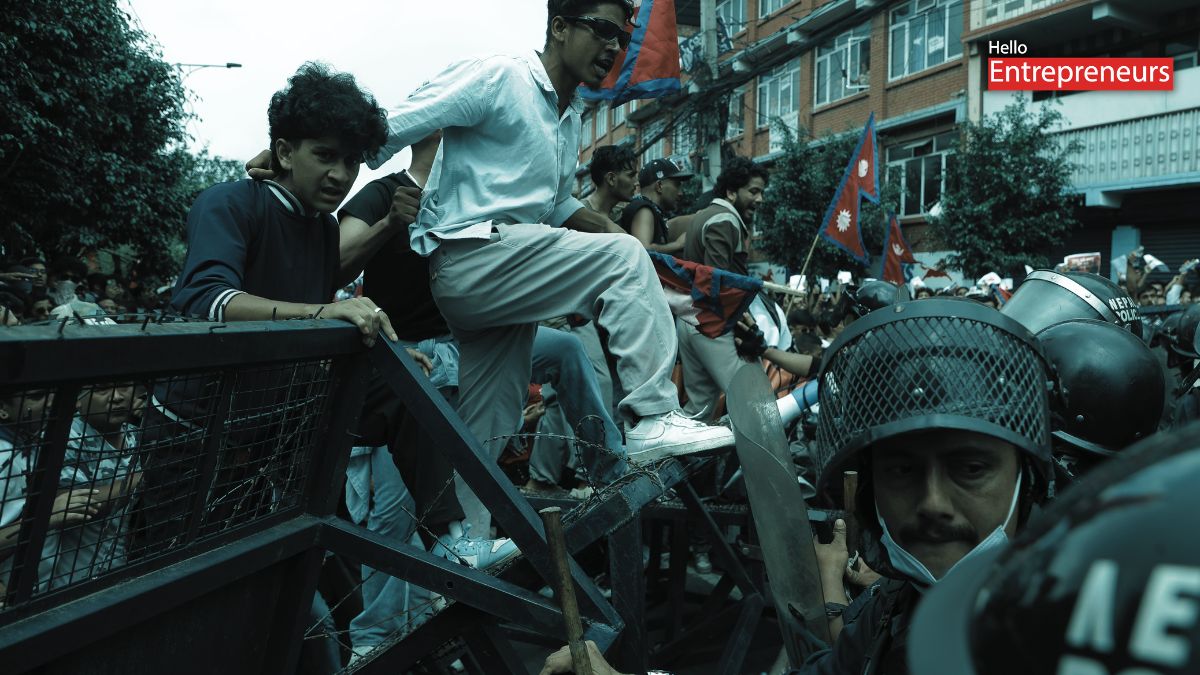
In early 2025, Nepal’s Ministry of Communication and Information Technology introduced guidelines that established regulatory oversight over digital platforms. On September 4, 2025, the administration of Prime Minister KP Sharma Oli ordered a nationwide blockade on 26 major social media platforms- Facebook, YouTube, WhatsApp, X, Instagram, TikTok, LinkedIn, Signal, Snapchat and Discord- as they failed to register locally under its new regulations.
For ordinary Nepalis, this amounted to a communication blackout, directly restricting their personal freedom and their connections to their families. This regulatory action added to the already growing frustrations over youth unemployment, corruption and the growing divide between the rich and poor.
Timeline of the Protest
Following the block on social media, youth activists migrated to alternative encrypted messaging services like Discord and Viber, with anonymous coordinators managing rallies and protests through the platform.
On September 8, 2025, tens of thousands of students who had assembled in Kathmandu for a peaceful rally were shot at by the security forces with at least 19 demonstrators losing their lives in one of the deadliest days of public protests in Nepal post-1990. This, in turn, transformed into an anti-government uprising, with demonstrators breaching, looting, and burning major government installations, including the Federal Parliament buildings, Singha Durbar, and the Supreme Court.
Outcome
With the situation getting out of control, Prime Minister KP Sharma Oli resigned a day later. An interim government took its place, with elections being held on March 5, 2026. The Rastriya Swatantra Party under 35-year-old rapper Balendra Shah secured a landslide victory, the first since 1999. For Nepalis, this GenZ Z-led revolution came at a time when the country remains highly dependent on remittances and social media to stay connected with its people.

