



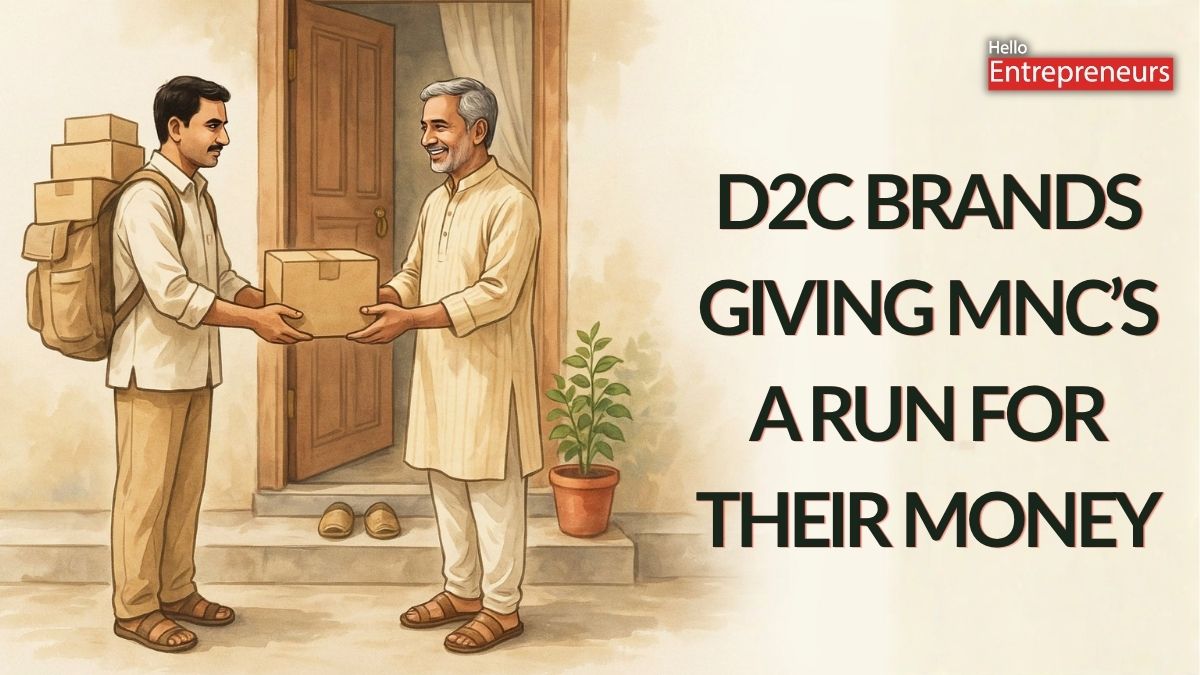
Recently, French cosmetics giant L’Oréal Paris acquired Indian Direct to Consumer (D2C) cosmetics brand Innovist, signaling a growing trend of multinationals acquiring successful D2C brands with a growing market share. The rise of quick commerce and e-commerce has disrupted the FMCG and consumer electronics segment, giving established multinational brands a run for their money.
These brands owe their success to nailing the e-commerce market, which is currently valued at about $160 billion and is expected to surpass $330 billion, according to market estimates. With time, some of them have now moved beyond D2C, depending on the markets they operate in, and have become established players in their own right. Here are ten brands that have managed to do this, while snatching market share from established brands.
Lenskart
Sector: Eyewear
Inception Date: 2008
Why it matters: Lenskart has emerged as a household name in the previously fragmented eyewear market. It has replaced the trip to the neighbourhood optician by offering prescription eyewear at competitive rates using an omni channel approach where customers can place orders online and collect them in store.
Over time, the Peyush Bansal-led company has expanded overseas, acquiring brands and moving production in-house to control the entire supply chain. It has successfully expanded in Tier 2 and Tier 3 cities as well, becoming a household name in the sector.
Current market status: After multiple fundraises and an IPO in 2025, the company now has about 40% of the market share, even as competitors like Titan Eye+, Fastrack, and Specsmakers struggle to compete.
boAt
Sector: Consumer Electronics & Personal Audio
Inception Date: 2016
Why it matters: Before boAt, personal audio devices were just a commodity that was either extremely cheap and unreliable (cheap Chinese imports) or premium made that was out of reach to most. With a Rs.1,000-5,000 price point, boAt’s affordable, youth focused audio devices focused on the youth who looked at it as an aspirational product that can be bought through its website or e-commerce portals.
Current market status: After scaling through institutional backing, the Aman Gupta led company has reduced reliance on imports by assembling its products locally through Dixon Technologies. It has also expanded beyond audio devices into chargers, trimmers and power banks, and is looking forward to its upcoming ₹1,500 crore IPO expected soon. Currently, the brand has about 34% market share in the audio devices segment, competing with Realme, Noise, Boult, OnePlus and JBL in the Indian market.
Sugar Cosmetics
Sector: Cosmetics
Inception Date: 2012
Why it matters: Earlier, most cosmetics bought in by Western companies were designed for Western customers without understanding Indian climate and preferences. Vineeta Singh, who led Sugar Cosmetics, addressed this by aligning the product formulations and color palettes to Indian skin tones and weather conditions. Through extensive use of influencer marketing, the company showed its customers the right way to use makeup and gradually expanded offline as well.
Current market status: Sugar Cosmetics currently holds about 15% market share, competing with Lakme, Maybelline, and Nykaa. It has faced challenges with intense competition lately, and has deferred its IPO plans as it looks to support its operations and protect its margins.
SNITCH
Sector: Apparel
Inception Date: 2018
Why it matters: SNITCH has shown that it is still possible to compete and make a mark in the highly crowded menswear market by introducing an ultra-fast, data-responsive fast fashion model that can challenge the market leaders. SNITCH uses an agile manufacturing network that can bring designs to the shelf in under 25 days. It launches almost 10-15 new SKUs daily, using real-time inventory tracking and small batch production runs. This technology-intensive, demand-driven procurement has helped SNITCH sell almost 90% of its inventory during prevailing trends, as against the industry average of 65-70%.
Current market status: Initially set up as a B2B wholesale brand, SNITCH pivoted to a D2C brand, gaining significantly from its Shark Tank India appearance in 2023. It has since aggressively expanded using investor money, launching its own application and expanding to offline retail. The company competes with the likes of XYXX, Rare Rabbit, and The Souled Store.
Country Delight
Sector: Fresh dairy and kitchen essentials
Inception Date: 2015
Why it matters: Country Delight has established itself as a brand promising fresh, quality local milk and kitchen essentials delivered to your home through quality and its vertically integrated cold chain network. The brand sources fresh milk and veggies directly from farmers and gets to its customers’ doorstep through its established supply chains for the same.
Current market status: Currently, the firm operates across 25 major Indian cities, serving about 1.5 million customers. It has developed its own infrastructure and cold chains to get premium kitchen staples, including fruits, vegetables, poultry and bakery products to its customers in the mornings while also entering the quick commerce market to compete with other hyper local platforms.
It has been growing well so far, with a 40% year on year growth rate. Country Delight competes with Amul, Mother’s Dairy and newer entrants like Milkbasket and Otipy.
XYXX
Sector: Men’s Innerwear, Loungewear & Athleisure
Inception Date: 2017
Why it matters: By making a rather simple utility into a lifestyle product, XYXX has shifted the narrative to make men’s innerwear into a lifestyle product. For years, the domestic hosiery market has been dominated by Jockey and Lux Cozi, which have focused on cotton-based, high-volume hosiery products across all ages. XYXX differentiates itself by targeting younger male customers with premium fabrics, performance, comfort and modern styling.
Over time, this Surat-based brand has now achieved a 30-35% repeat purchase rate, with the brand now expanding into physical retail channels after being online first.
Current market status: With competition intensifying from emerging brands like Bummer, Freecultr, and DaMENSCH, XYX has consistently grown its revenues through disciplined cost control and operational efficiencies. To tap seasonal demand, it has launched the youth-centric ‘Lovestruck’ capsule collection in February 2026 while launching a new seamless vest line using specialized knitting technology.
Mamaearth
Sector: Beauty, Personal Care & Baby Care
Inception Date: 2016
Why it matters: Honasa Consumer’s flagship brand, Mamaearth, has successfully challenged legacy personal care brands by pioneering the “safe, toxin-free, and natural” category in India. Before Mamaearth, global FMCG players dominated the personal care market with mass-produced chemical formulations. Recognizing a growing demand among millennial parents for safe baby products, the brand initially launched in baby care before expanding into adult personal care and cosmetics.
Operating on an asset-light model that outsourced manufacturing to certified third-party contract manufacturers, Mamaearth focused its capital on product development, digital marketing, and customer acquisition. It used influencer marketing as a core philosophy to leverage social proof and build direct customer trust. Over time, Honasa Consumer became a ‘house of brands’, acquiring other brands as it looks to expand further into the personal care segment.
Current market status: The brand currently has about 29% share in the D2C Beauty and Personal Care (BPC) market, competing with Nykaa, MyGlamm and other legacy brands from Godrej, Dabur and Colgate.
The company’s operating revenue has grown 15.7% to Rs.2,392 crore in FY26 as its flagship brand, Mamaearth has continued to steadily grow, while its acquired brands like The Derma Co and Reginald Men are growing consistently so far.
mCaffeine
Sector: Personal Care & Grooming
Inception Date: 2015
Why it matters: mCaffeine offered a unique proposition to the Indian personal care market. Instead of relying on herbal beauty or Ayurvedic formulations, mCaffeine uses coffee as the central theme behind its product range.
In a crowded market where the Ayurvedic or herbal formulation benefits have been an old playbook, mCaffeine’s coffee-based product line offers its millennials and GenZ customers a premium, affordable solution.
Current market status: mCaffeine has grown to become one of the leading skincare brands with venture funding funding valuing the company at over ₹1,000 crores. Though it leads in the caffeine-based personal care segment, the brand is now looking to enhance its product formulations through its ‘Caffeine 2.0’ campaign, combining caffeine with Vitamin C and hyaluronic acid. With competition intensifying from Pilgrim, MyGlamm, Plum, Minimalist, WOW Skin Science, mCaffeine is looking to double down on its strengths and boost its product range in the D2C market.
Licious
Sector: Fresh Meat, Seafood & Ready-to-Cook
Inception Date: 2015
Why it matters: Buying fresh meat or seafood meant taking an early morning trip to the market with dad as he negotiated the best price based on the quality. Licious is making these trips redundant as it invests in vertically integrated, technology-enabled cold chain infrastructure that allows home delivery of fresh meat, seafood, and ready-to-cook meals directly to your home. Given that almost 70% of Indians consume meat regularly, Licious has created a market for an untapped need that wasn’t explored seriously earlier.
Current market status: With successive funding rounds, Licious has become India’s first D2C unicorn in the meat and seafood space. Now worth in excess of $1 billion, the company is looking to transition to an omnichannel model, as it integrates the ‘My Chicken and More’ acquisition it made in October 2024.
The company competes with quick commerce players like Zepto’s Relish and other fresh delivery platforms like ZappFresh or FreshToHome, as it looks to move beyond its core metropolitan markets of Bengaluru, Mumbai and Delhi-NCR.
Atomberg Technologies
Sector: Consumer Durables & Smart Appliances
Inception Date: 2012
Why it matters: Atomberg Technologies started by disrupting the consumer durables market by introducing Brushless Direct Current (BLDC) motor technology in fans for the mass market. This results in almost 65% lower energy consumption for fans, while allowing greater innovations in a rather ubiquitous household utility. By promoting it as a lifestyle product, Atomberg Technologies has shown how basic utility consumer durables have resonated with tech-savvy buyers on e-commerce platforms, while also expanding to retail touchpoints with a wider portfolio of products.
Current market status: Incubated at IIT Bombay, Atomberg Technologies has shown how homegrown innovations can help solve domestic challenges. Besides fans, the brand has entered into kitchen appliances that use smart sensors to optimize motor speeds for blenders, grinders, and juicers. After launching its BLDC motors, it now faces competition from the likes of Havells, Crompton Greaves, and Orient Electric, as it looks to hold onto and increase its 10-12% market share.

