



Introduction
There are a few advertising campaigns that are alive in the world that are still relevant after a couple of decades. Consumer tastes get varied, media channels grow, and brands fight with each other for consumers’ attention all the time. But one of them has remained fresh and keeps it engaging and memorable, the Amul girl campaign, for more than 50 years. Amul Girl, who is being noted for her blue hair and polka-dot dress with her humorous commentary on current affairs, is one of the most successful advertising icons in India.
This is the most brilliant campaign, which demonstrates the power of creativity, consistency, and cultural relevance in fostering a connection with the consumers. The original commercial for butter in the 1960s turned into a marketing phenomenon that has continued to be featured in newspapers, billboards and digital media. The Amul Girl embodies several important principles that marketers, business professionals, and students can learn from: The lessons from the Amul Girl can be valuable to marketers, business people, and students in understanding the strategies of positioning the brand and reaching out to the consumers in the Indian population through on-topic marketing. This case study will look at the origins of the Amul Girl, the inspiration for the success, the effects she had upon brand recall, and what lessons can be learned by modern brands for her iconic campaign.
Background of Amul
Amul is one of the most popular and trusted dairy companies in India. It has been set up in a cooperative exercise with the objective of improving the condition of milk producers in Gujarat. In the years that followed the company grew to offer butter, milk, cheese, ice cream and many more dairy products. The 20th century in India had dawned upon the butter market and it was becoming competitive during the 1960s. In order to be different from its competitors and establish a unique place in consumers’ minds, Amul had to bring in an effective advertising strategy. Not only was the challenge to sell the product of butter, but to create a brand personality that would be easily recognized and remembered.
This requirement for a different brand image in the end gave rise to one of the most successful brand icons in India, Amul Girl.
In 1966, a new advertisement agency, ASP (Advertising and Sales Promotion), headed by Sylvester daCunha, created the Amul Girl. The goal was straightforward to develop a character that would be memorable so Amul Butter will be distinctive in the market. So the little blue-haired girl with her ponytail was creating the proper image of her wearing the dress with red polka dots, in a cheerful manner. She was not designed to be a glamorous or very sophisticated advertising token, as many other mascots of the time were. Rather, she looked friendly, relatable, and funny.
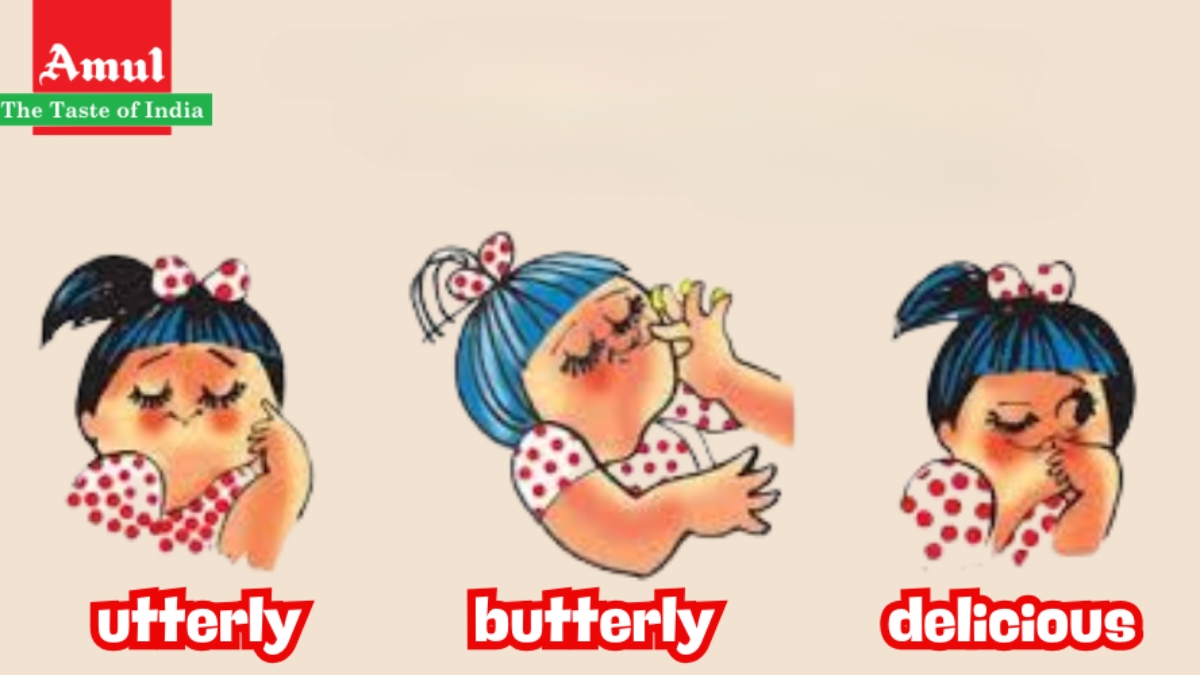
She was known immediately for her fun-loving nature and very expressive face. More importantly, she was the voice of the brand. Clever one-liners and puns intertwined to bring alive the news of the day and subtly to sell Amul Butter. The phrase “Utterly Butterly Delicious” was fitting for both the cake and the character. When combined with the tag line, the mascot became an easily recognizable brand image for consumers to identify. A History of Topical Advertising. A chronological look at the evolution of Topical Advertising.
One of the most innovative features of the campaign was that it made use of topical advertising. Rather than just promoting product attributes, Amul started designing ads around current events, political happenings, sporting triumphs, film releases, and social issues.
When any big event takes place, the Amul team would come up with a billboard that would display the Amul Girl with a clever and humorous headline around the news. In every big event scenario, the Amul team would bring up a billboard with Amul Girl and a witty headline along with the news. Many of these ads came out within a few days of the event and were very timely and relevant.
For instance, when a cricket team wins a big day, the Amul Girl would be featured in an ad with a goofy pun. Likewise, also huge political incidents, Bollywood blockbusters, as well as global activities were frequently transformed into imaginative advertising message. This made Amul commercials a social commentary. Since they weren’t just viewing them as advertisements for a product, they were expecting to see how a brand would respond to the new information.
The campaign enabled the content to be kept relevant and interesting each year. The ability to use humor and wordplay. Amul Girl’s core, since its inception, has always been about humor. The jargon, puns and banter in the advertisements is cleverly used and is capable of resonating with a wider audience.
It is true that humor evokes positive emotions, which presents a way it works. Messages that impact people with a smile are more likely to be remembered. Amul, as a brand knew this much earlier than these became common marketing tactics. The puns tend to be easily understood by everyone but not too obvious to just dismiss or repeat. This balance has enabled the campaign to reach a diverse audience, crossing age and educational demographics.
Another is the fact that the jokes do not generally offend or have a negative aspect. The ads are always at play and good-humored, even in more serious situations. This has ensured that the brand does not get into any big scandal, but it is still relevant. Amul successfully turned mundane billboards into the very aisle of the cultural space with regular use of humor. With the regular use of humor, Amul converted the normally dull billboards into regular cultural activities.
Consistency Across Decades
Consistency is one of the biggest factors that made this campaign so successful. Many brands often alter their communication strategy and visuals while advertising, but Amul kept the same communication and motivating presence of its mascot for decades. The FPM of Amul Girl doesn’t change much over the years. Her recognizable appearance attracts customers’ attention to the advertisement at first glance without reading the headline. It’s also always included topical humor and news as its focus. The concept of a media platform hasn’t changed since the good old days of billboards, but the mediums used for communicating the message have.
Consistency builds trust. Overtly display a brand personality in front of the consumer repeatedly for many years in a row, and the consumer’s emotional attachment to a brand increases. Caring for the consistency and recognizability of Amul’s identity has significantly contributed to its ongoing success.
Impact on Brand Recall
Brand recall is the consumer’s ability to recall the brand in relation to the product category in his or her mind. Immersed in this world of Indian butter, Amul has a tremendous recall value in this country and developing this image of Amul Girl has played a big part in contributing that value. This is a way to keep the brand relevant all year long. The campaigns are repeated in Amul ads and it happens every time there is something to comment on, unlike mass campaigns done during seasons.
The brand is constantly reminded on each of these billboards. The Amul name is still all around the consumers, be they ready to purchase a product or not. The use of humor, topical relevance, and visual consistency enhances the retention of memory. The people remember not just the joke but also the brand. As the years went on, the Amul Girl transcended her role as a marketing mascot. She became a cultural icon one day. That’s a level of recognition that’s very few in marketing and an effective campaign.
Achieving the transition to the Digital Age. Making the transition to the Digital Age. With all the shifts in consumer media consumption, many advertising campaigns found themselves out of step. But Amul has managed a successful transition to digital.
The brand started doing social media advertisements on their products, but it is a topical advertisement, which means it is shared on social media with a larger audience. In addition, digital platforms allowed users to share, give their opinion about, and comment on the ads.
The transition here was relatively simple because the idea of the campaign is very in line with the rapid pace of modern social media. People love being bombarded with topical content as it is easy for people to get involved, and enjoying trending topics and interesting events.
In fact, some of Amul’s ads today get quite a lot of interaction on social media, showing that a good creative concept can sail through new technology. The campaign clearly shows that brands don’t always have to turn a new leaf. With some ideas, it’s also a case of just altering an already successful idea to fit the new platform. The difficulties faced as part of the campaign.The fundamental difficulty of the campaign. Even though the campaigns were a success, the Amul girl campaign has faced problems over the course of the years. A problem is to remain creative, even though running a plethora of ads every year.
The campaign is dependent upon its freshness and the required cost of the campaign means that the creative team needs to be agile and come up with new concepts at frequent intervals. This means the ability to see the world around them and how it has changed in social, political and cultural ways; this needs to be at a profound level.
The other issue is making sure that the jokes don’t get out of hand. Advertisements are subject to criticism and misunderstanding in the public because a lot of the time they deal with sensitive matters. The campaign also happens within a context of media usage in which consumer attention is at an all-time low. The constant evolution of social media allows for infinite opportunities for creators to improve their products. With the viral content and influencers present, there’s an endless way to make products more engaging on social media. But Amul has overcome these in a way that it has remained true to its brand voice and has made the necessary adjustments to meet the expectations of consumers.
Marketing Lessons for Today’s Brands
There are many lessons we learned from the Amul Girl campaign that are important lessons for Modern marketers. Create a strong brand personality. Develop a solid brand personality. More people can connect to a personality than to a product. Amul Girl gave it a human face that people could identify with and understand Amul. Establishing unique and consistent brand personalities can be a useful tool for modern brands.
Stay Relevant
Through this, Amul has continues to stay relevant in day-to-day discourse, a feat made possible by its topical advertising. Brands that are tuned into the news and culture trends are likely to be able to produce content that’s relevant and captivating.
Consistency Matters
Lots of firms update their content on a regular basis, leaving the individuals to forget them. Amul demonstrates the benefits of continuity in visual and covers strongly in its communication style over time.
Use Humor Wisely
Advertisements can be memorable and share-worthy when presented in a humorous way. In terms of the content, though, it needs to be in line with the brand’s voice and respectful toward the audience. Prioritize brand-building efforts for the long haul. Emphasize Branding efforts for the long-term. It wasn’t a campaign that was created just for short sales. It centered on establishing a long-term brand image. The emphasis is often placed on fast results with modern brands, but slowing results for brand building can foster deeper consumer loyalty.
Adapt Without Losing Identity
Amul’s brand and message have been transferred onto digital screens with the city transforming from billboards into a cult phenomenon. The billboards became a part of the past and now the core of the message has been successfully transferred to the digital platform. Brands should accept the innovations, but not give up those qualities that define them. How has the Campaign been successful? What makes the Campaign so successful?
This is why the Amul Girl campaign continues to be a success; it’s a combination of several of the effective marketing principles. Simple, easy to remember, timely and consistent. The advertisements entertain the consumer while driving the brand message. The Amul Girl campaign does not rely on expensive celebrity endorsements or a big promotional budget, but rather on creativity and cultural relevance. It has enabled the campaign to continue to be effective from generation to generation.
The campaign is also symbolic of the evolving narrative of India. It has expressed opinions on political matters, sports, inventions and other achievements of the human spirit over the past several decades. This has led to the advertisements being looked upon as part of the social and cultural fabric of India. This exclusive consumer connection has left the campaign more than just a marketing campaign; it’s a nation’s icon.
Conclusion
The Amul Girl Campaign is one of the most successful and long-running advertising campaigns in India. Since her launch back in the year 1966, she has been instrumental in the development of Amul’s brand awareness, outreach, and growing its presence through generations. It was an innovative campaign with topical advertising, catchy humor, and the same branding, and it established a brand whose name became synonymous in the Indian culture.
That’s the power of good ads, and, great ads don’t have to be costly or complicated. Sometimes, a simple idea, applied as consistently over time, can produce extraordinary results. For marketers, business leaders and students, the Amul Girl stands as a beautiful demonstration of how creativity and taking a long-terms perspective on marketing coupled with relevance can create an iconic brand. It has been over five decades since her maiden appearance, but the Amul Girl has ensured smiles, conversations, and reminded consumers of the brand of the nationwide favorite dairy product.

