



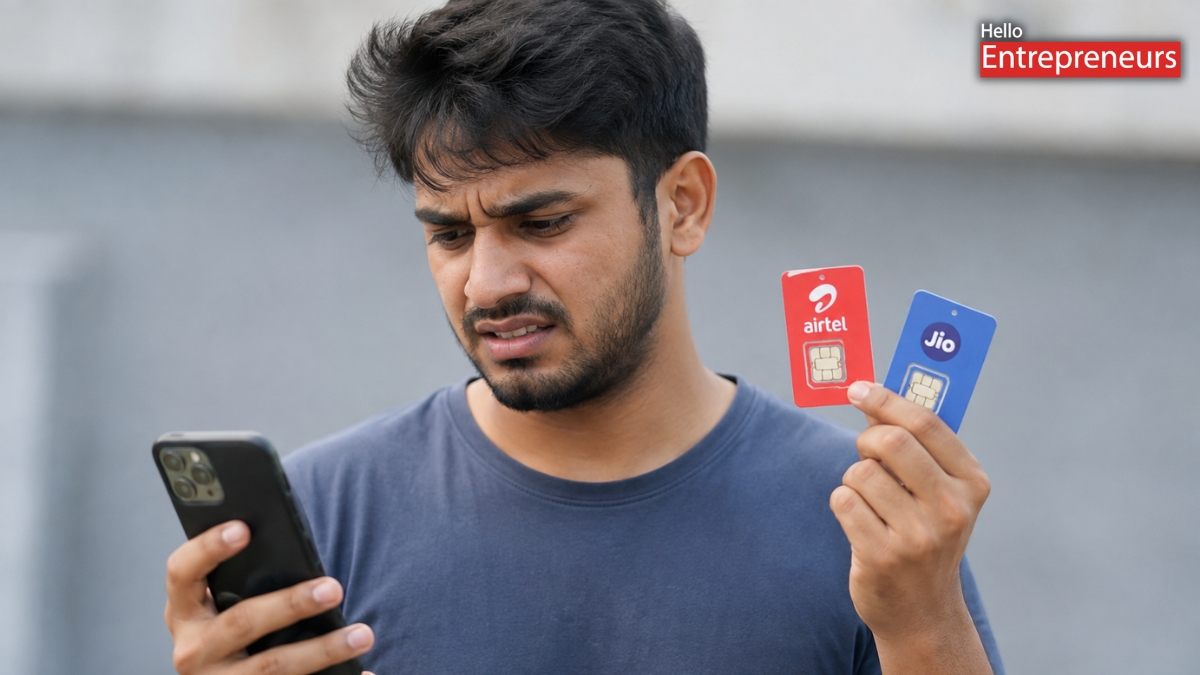
New Delhi: India’s telecom sector has massively changed sharply over the past decade. While companies such as Reliance Jio and Bharti Airtel has helped make mobile internet faster and more widely available for the users, with a growing number of consumers are now unhappy with the rising recharge prices and fewer choices in the market. This biggest change began in 2016, when Reliance Jio entered the Indian telecom market.
Jio has offered very cheap data and free voice calls, by forcing existing operators to reduce their prices to compete. This shift was completely changed the way the Indians used the mobile internet and made data much more affordable for the users. However, the intense price competition has created problems for some telecom companies. Whereas, smaller operators struggled to survive, while other major players such as Vodafone and Idea eventually merged to created Vodafone Idea, now which is known as Vi. Some other operators also exited the market.
Over the time, Jio and Airtel has became the two most strongest private telecom companies in India. This has given the consumers fewer major options when the chooing a mobile network. This frustration became more visible in 2024, when Jio, Airtel and Vi announced a significant increases in their prepaid and postpaid tariffs.
Jio raised prices across some plans, while Airtel also increased the cost of many of its popular plans. And for millions of the users, it means paying more for mobile services that they were already using. This is one of the main reasons behind the growing criticism of Jio and Airtel. Consumers argue that the telecom companies are increasing prices at the time when mobile data has become as essential part of everyday life.
For millions of users, a mobile recharge is no longer an optional expense because smartphones are used for work, education, banking, entertainment and communication. At the similar time, telecom companies said higher priced are necessary. By building and maintaining large 4G and 5G networks which requires huge investments. Operators also have to spend money on spectrum, network equipment, maintenance and technology upgrades. Telecom companies thereforr they want customers to generate more revenue via higher average spending.
Another major issue was the lack of strong competition. Vi continues to face financial and network-related challenges, while BSNL is working to extend and improve its 4G and 5G services. This actually leaves Jio and Airtel in much stronger position. Despite the complaints, millions of Indians continue to use Jio and Airtel because of their network coverage, speeds and availability. This actually creates an unusual situaiton where the customers might dislike the higher prices but still they are depend on the same companies for their daily connectivity.
Now, the story of Indian telecom is therefore not simply about the people hating Jio and Airtel. It is now all about how the market that once became famous for the extremely cheap data has gradually moved toward fewer major players and higher prices. Now the future of the sector will going to depend massively on whether companies such as Vi and BSNL can become more stronger competitors and give consumers more choices.

