



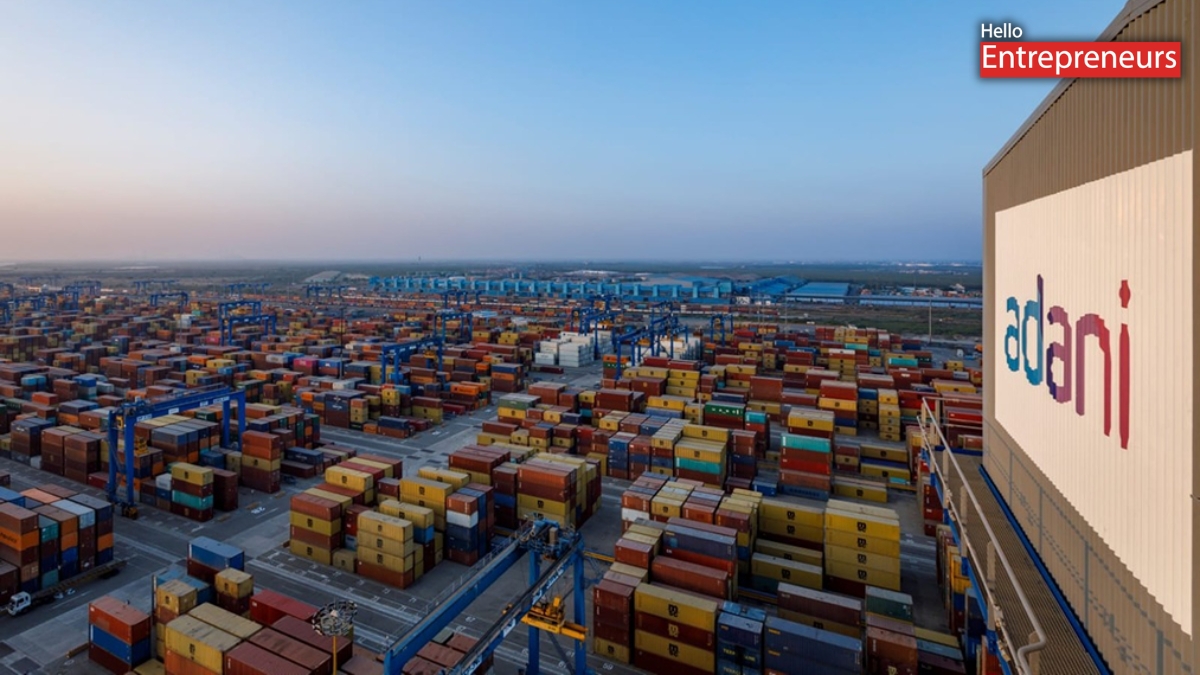
New Delhi: When Adani Ports announced on Thursday that it would buy Netherlands-based Evos B.V., the headline number was €2.56 billion, or about ₹27,000 crore. The deal is all cash, and the seller is Igneo Infrastructure Partners. It’s a lot of money for a company that built its name on Indian coastlines and container yards.
The asset itself is clear enough. Evos runs eight terminals across the Netherlands, Germany, Spain, Belgium and Malta, with 6.3 million cubic metres of storage. It handled 37 million tonnes last year at a reported 56% EBITDA margin. That’s a fat margin for anything port-adjacent.
More tanks than home?
Here’s the part worth sitting with. Adani’s liquid storage business in India has always been a sideshow next to coal, containers and bulk cargo. The company hasn’t published a neat side-by-side, so I can’t say for certain that its overseas tankage now beats its domestic tankage. But 6.3 million cubic metres arriving in one transaction makes that comparison very plausible. If it isn’t true yet, it’s close. For a group so tied to Indian trade flows, that’s a real shift in where the assets sit.
What the tanks are really for
Storage tanks sound dull. In Europe they aren’t. Evos describes itself as the continent’s second-largest independent liquid storage operator, and its terminals sit at Rotterdam-style gateways where fuels, chemicals and increasingly new-age energy products move through. Whoever controls that tankage controls a chokepoint. Adani isn’t just buying steel cylinders. It’s buying a seat inside the plumbing of European energy, and that seat comes with long-standing customers and regulatory standing that would take decades to build from scratch.
That 99% number
The company says average commercial occupancy is 99%, and that a large share of revenue is take-or-pay and inflation-linked. Good news, obviously. But it also makes you ask why a business that full is changing hands, and what Adani can add. Tanks that are already near capacity don’t leave much room to grow volumes. The upside has to come from pricing, expansion, or new products. It also says something about Adani’s playbook. This is a buyer paying for stable, predictable cash rather than a turnaround, and 11.7 times 2025 EBITDA isn’t cheap. Whether that discipline holds in the next deal is anyone’s guess.
Why a Japanese bank
MUFG is the sole underwriter, with financing commitments of up to €2.8 billion. Equity value is €1.18 billion against the €2.56 billion enterprise value, so most of the price is debt assumed or refinanced. Japanese banks have been comfortable lending against infrastructure with contracted cash flows, and take-or-pay revenue is exactly that. It also keeps the funding away from the Indian domestic bond market and away from the sort of scrutiny Adani group paper has attracted before. Adani says pro forma net debt to EBITDA will land around 2.76 times and drift toward 2.5 times by FY27. That’s manageable on paper. Closing is expected in about 15 months, pending regulatory approvals and consultation with Evos’s works council, so plenty can still move.
Beyond conventional fuel
The most interesting line in the company’s own pitch is the one about exposure to the long-term transition toward new-age fuels. Evos’s tanks can in principle handle more than oil products. If Europe’s energy mix shifts toward things like ammonia, biofuels or hydrogen carriers, existing licensed terminals become valuable fast. Karan Adani called the deal a milestone toward a billion tonnes of cargo and a truly global integrated transport platform. It’s reasonable to read the transition angle as the long game, and possibly a larger one than the conventional fuel business over time. But that’s a bet on timing, and energy transitions have a habit of running late.
For now, Adani’s network stands at 28 ports and terminals in 10 countries, 16 of them in India. The harder question comes after closing: can a company known for building at speed in India run a mature, heavily regulated European business without breaking what makes it valuable?