



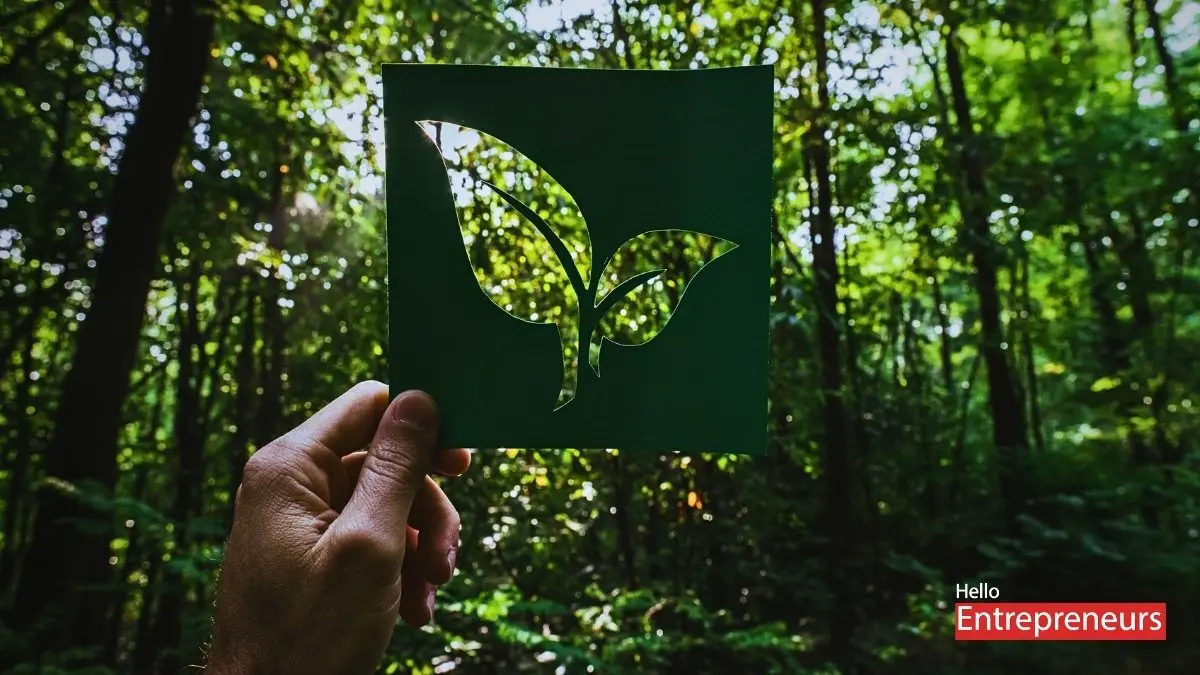
India: If you blinked, you probably missed it: the startup world has already pivoted from chasing hockey-stick growth at all costs to designing moonshots that might actually save the planet. In 2025, “disruption” doesn’t mean building yet another overpriced food delivery app. It means compostable circuit boards, hydrogen made from factory sludge, and yes, solar panels in your kid’s school.
Entrepreneurs everywhere have traded in the pitch decks of yesterday for purpose-driven playbooks. And the headlines don’t lie.
The Rise of Green Grit: Startups Saving the Planet (and Making Bank)
Once upon a time, calling a startup “green” meant you couldn’t find a real investor. Today, it gets you a meeting with BlackRock before lunch.
Look at Biome Makers, whose soil analytics tech is making old-school farming practices feel like rotary phones. Or Aurora Solar, which isn’t just helping people put panels on their roofs – it’s writing the software that runs the whole solar economy. This isn’t corporate charity; it’s clever capitalism with a conscience.
And if you want biodegradable batteries (because, why wouldn’t you?), Nexus Power is cooking them up from crop waste in India, proving once again that the next billion-dollar ideas might start in a paddy field instead of Palo Alto.
India’s own climate-tech boom is leading the charge with startups like Ecozen, empowering rural farmers with solar cold chains, and Carbon Masters, which turns restaurant leftovers into clean-burning bio-CNG. Sustainability is no longer a CSR tab on the website – it’s the product, the pitch, and the profit plan.
AI: Not Just for Brogrammers Anymore
While Silicon Valley is busy arguing over who can say “AGI” the loudest, entrepreneurs across Asia and Europe are quietly turning AI into an engine for real-world sustainability.
In India, ReNew Power is syncing up smart grids with machine learning to manage renewables more efficiently. Agri-tech startups are using AI to forecast crop diseases before they strike, while the health-tech crowd is harnessing it for diagnostics in places that never had hospitals to begin with.
The promise of AI in 2025 isn’t about replacing humans. It’s about enhancing impact – doing more, faster, and smarter, with less carbon and fewer resources.
Circular Economy: The Startup Buzzword That Finally Means Something
Once dismissed as academic jargon, “circular economy” is the toast of startup town. And no, it’s not just recycled jeans.
Startups like Ravel and Maicelium Biomaterials are manufacturing closed-loop alternatives to plastics and textiles, giving the fast fashion industry a much-needed guilt trip. Cocoon is making homes that breathe better with low-carbon insulation, and Seacork Studio crafts acoustic panels from ocean waste.
Meanwhile, Ossus Biorenewables is extracting hydrogen from industrial sludge. Yes, literal toxic waste is being turned into clean fuel – because why not, it’s 2025.
EVs, Bioenergy, and the Electric Hustle
If you think the EV revolution is all Tesla and no torque, you haven’t met Euler Motors. They’re electrifying last-mile logistics with three-wheelers built for chaos-ridden Indian traffic and congested city lanes.
But transportation isn’t the only thing getting a green facelift. Kitchens across India are now firing up stoves powered by bio-CNG, courtesy of startups like Carbon Masters. It’s a cleaner, circular fuel made from organic waste – and no, it doesn’t smell like compost.
The Corporate Green Awakening (Yes, It’s Real)
Sustainability has officially gone from activist talking point to shareholder obsession. TIME’s list of the “World’s Most Sustainable Companies of 2025” reads like a who’s-who of industrial titans gone green – ABB, Ricoh, and yes, Indian giants like ICICI Bank and Shriram Finance, now recognized for putting ESG at the heart of their balance sheets.
Financial institutions aren’t just reducing paper usage. They’re embedding sustainability into credit, compliance, and consumer lending – betting big on the fact that the next generation of customers actually cares where their rupees go.
Schools, Students, and the Net Zero Curriculum
While adults squabble over carbon credits, startups like NetZero India are schooling the next generation – literally. With solar installations and green curriculums rolled out to over 10,000 institutions, they’re proving that climate literacy is as essential as calculus.
In an age where kids stage climate strikes and code their own carbon trackers, it’s not just the startups that are evolving – it’s the audience.
From Crisis to Opportunity: Entrepreneurs Rewrite the Rules
The old cliché says necessity is the mother of invention. But in 2025, necessity is the business plan. From AI-powered farming systems to eco-conscious fintech, the new entrepreneurial playbook fuses data with ethics, code with carbon accountability.
Said best by Manish Aggarwal, CEO of FINQY: “Startups will utilize AI, blockchain, and open banking platforms to improve efficiency and accessibility in the financial ecosystem.”
Translation? Innovate, or get left behind by the world that’s already changed.
The Final Word: Sustainability Isn’t a Side Hustle – It’s the Main Event
2025 has clarified what the last decade only hinted at: green is the new gold. Sustainability isn’t the soft stuff anymore. It’s hard tech, hard problems, and hard ROI.
Entrepreneurs who marry ethical ambition with technological execution aren’t just changing markets. They’re rewriting capitalism for a hotter, drier, more crowded planet.
And for once, the hype might actually be real.
Also Read: Tariff Deadline: Trump’s August 1 Ultimatum to Global Trade Partners

