



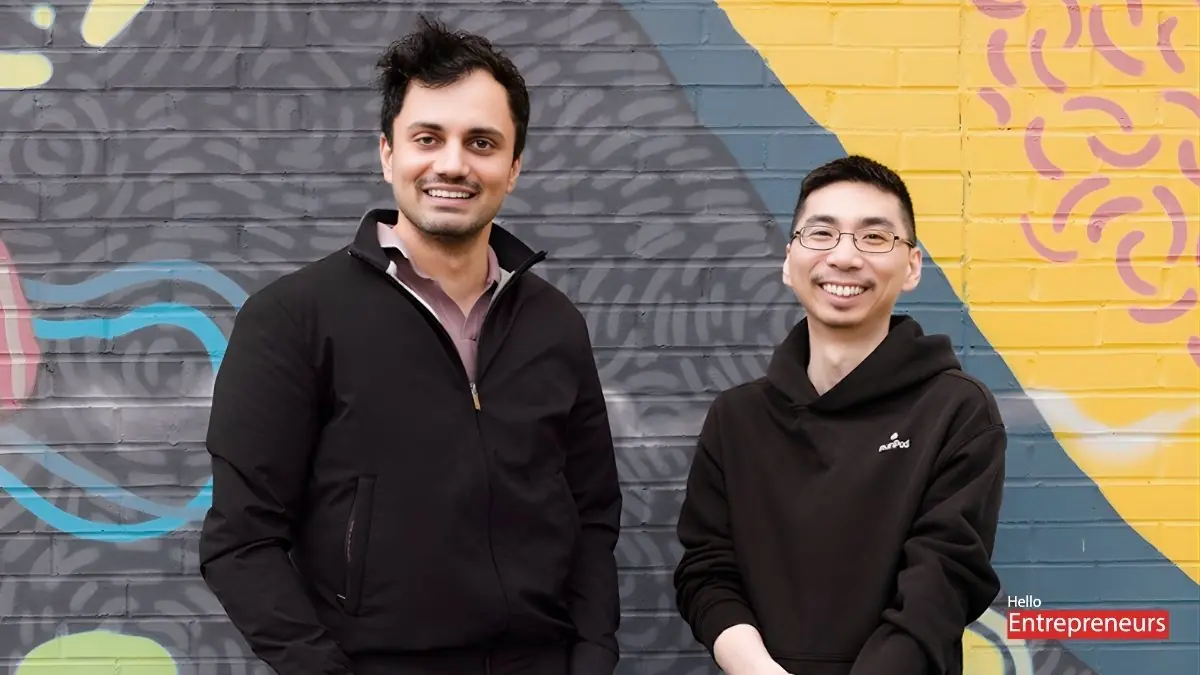
New York: No hype deck. No free tier. Just two developers, unused GPUs, and a Reddit post. Four years later, Runpod is clocking $120 million in ARR.
The origin story doesn’t start in Silicon Valley. It starts in New Jersey basements.
In late 2021, Zhen Lu and Pardeep Singh were corporate developers at Comcast. Nights and weekends were spent mining Ethereum on custom GPU rigs. It was a hobby. An expensive one. Roughly $50,000 between them, by their own estimate. Convincing their wives required optimism and a loose definition of “investment.”
The returns never came. Ethereum mining barely dented the hardware costs. Worse, everyone knew “The Merge” was coming. Proof-of-work was living on borrowed time.
Then boredom kicked in.
Mining, Lu admitted later, was dull after a couple of months. No challenge. No creativity. Just heat and noise. But those GPUs still mattered. Domestic peace depended on them doing something useful.
So the two did what developers do. They repurposed.
This was before ChatGPT. Before DALL-E 2. Before AI became dinner-table conversation. At work, both were already touching machine learning systems. Turning mining rigs into AI servers felt logical.
What wasn’t logical was the software.
As they tried to actually build on top of those GPUs, the experience was brutal. Setup pain. Fragile tooling. Clunky workflows. The stack, as Lu bluntly put it, was “hot garbage.”
That irritation became the company.
Runpod was born to fix the GPU developer experience. Speed mattered. Configuration mattered. Control mattered. And the platform needed to respect developers’ time.
By early 2022, they had something real. Runpod launched as an AI app hosting platform with configurable hardware, APIs, command-line tools, integrations, and eventually a serverless option that automated the ugliest parts of deployment.
But building is one thing. Finding users is another.
Neither founder had marketing experience. No launch playbook. No community manager. Just a product they believed didn’t suck.
So Lu did the most unglamorous thing possible. He posted on Reddit.
A couple of AI-focused subreddits. No hype. No pitch deck language. The offer was simple: free access to GPU servers in exchange for honest feedback.
It worked.
Beta users showed up. Feedback poured in. Bugs got fixed. Features shipped. Those beta users became paying customers.
Within nine months, Runpod crossed $1 million in revenue. Both founders quit their jobs.
That success exposed a bigger problem.
Business customers started knocking. Real workloads. Real stakes. And a hard no to running production systems on servers sitting in someone’s basement.
This is where many startups sprint to VCs.
Runpod didn’t.
Raising money hadn’t even crossed their minds. Instead, they struck revenue-share deals with data centers. Capacity grew. Stress grew faster.
Singh described it simply. If GPUs weren’t available, sentiment flipped. Users left. The market punished hesitation instantly.
Meanwhile, Runpod’s community quietly expanded on Reddit and Discord. Then ChatGPT launched. Interest exploded. Demand followed.
Investors noticed.
Radhika Malik, partner at Dell Technologies Capital, saw Runpod through Reddit posts. She reached out. It was their first VC call ever.
Lu had no idea how to pitch. Malik didn’t push. She explained how VCs think, how they evaluate risk, how growth stories are framed. She stayed in touch.
Still, Runpod stayed bootstrapped.
For nearly two years, there was no outside funding. No debt. No free tier. The business had to pay for itself. Period.
That choice mattered.
Unlike other AI clouds born from crypto mining operations, Runpod refused leverage. Every GPU needed revenue attached. Discipline wasn’t optional. It was survival.
By May 2024, timing finally turned in their favor.
AI app development went mainstream. Developers flooded in. Runpod crossed 100,000 users. The product had traction. The numbers spoke clearly.
They raised a $20 million seed round, co-led by Dell Technologies Capital and Intel Capital. Angel investors included Hugging Face co-founder Julien Chaumond, who discovered Runpod the least “VC” way possible. He was already using it and reached out through support chat.
Today, Runpod hasn’t raised again. But it’s not standing still.
The platform now serves over 500,000 developers. Customers range from solo builders to Fortune 500 teams spending millions annually. The cloud spans 31 regions worldwide.
Names on the customer list include Replit, Cursor, OpenAI, Perplexity, Wix, and Zillow.
Annual revenue run rate: $120 million.
Competition? Ruthless.
AWS. Google Cloud. Microsoft Azure. Specialists like CoreWeave and Core Scientific. Plenty of options. Deep pockets everywhere.
Runpod doesn’t pretend it’s winning on brand size. It’s betting on developers.
Lu and Singh see coding evolving, not disappearing. Developers become AI agent designers, operators, orchestrators. Less boilerplate. More intent.
Their ambition is blunt.
They want Runpod to be the platform the next generation of developers grows up on.
No fluff. No free lunch. Just tools that work.

