



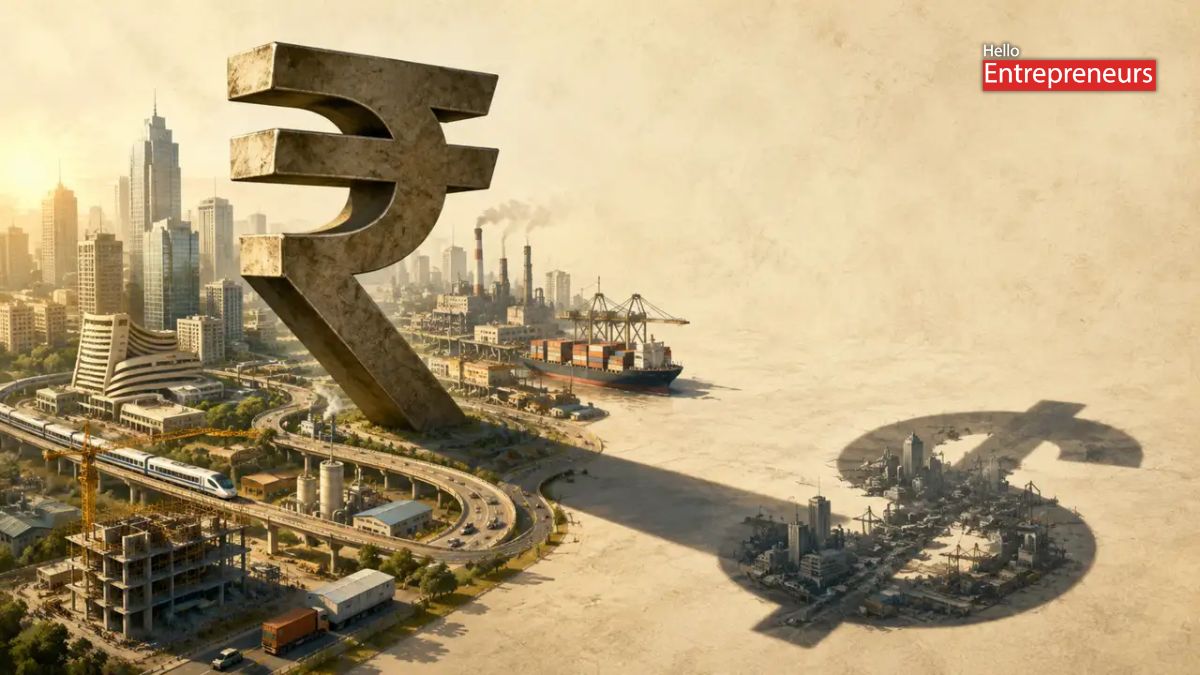
New Delhi: India’s next major economic expansion is unlikely to come from a single industry. Instead, several sectors and AI, electronics, renewable energy, healthcare, manufacturing, financial services and digital infrastructure which could collectively create the next wave of business growth…
India’s economy is already among the world’s largest, and its young population, rising incomes and urbanisation continue to support demand.
One of the clearest opportunities is artificial intelligence.
Indian companies are investing heavily in data centres and AI infrastructure. Reliance and Adani alone have announced plans involving around $210 billion in AI-ready data-centre infrastructure, although these are long-term commitments rather than immediate spending.
Semiconductors and electronics could become another major engine.
The Indian government approved 31 electronics-component proposals worth ₹7,877 crore in August 2026. The objective is to build more domestic production capacity and reduce dependence on imported components.
India’s semiconductor opportunity is especially large because almost every major future industry, from electric vehicles and smartphones to AI servers and industrial robots, requires chips…
Renewable energy is another critical sector. India has already crossed 300 GW of non-fossil-fuel power capacity and is working toward its 500 GW target for 2030.
The opportunity extends beyond solar and wind. Battery storage, green hydrogen, transmission infrastructure and clean-energy manufacturing could create entire new supply chains.
Healthcare and medical technology could also expand rapidly. Industry leaders have suggested that India’s MedTech sector could reach $20 billion by 2030, while the country is attempting to shift from simply manufacturing medical devices to designing and exporting them.
Manufacturing could be the connecting industry.
India wants to become a stronger alternative in global supply chains for electronics, automobiles, pharmaceuticals, defence equipment and industrial products.
Then there is the consumer economy.
As incomes rise and millions of people move into cities, demand for housing, financial services, retail, travel, entertainment and digital services is expected to increase.
The common factor across these industries is technology.
A modern manufacturing plant needs AI. AI data centres need renewable power. Electric vehicles need semiconductors and batteries. Healthcare increasingly depends on digital infrastructure. Financial services are becoming more data-driven.

