



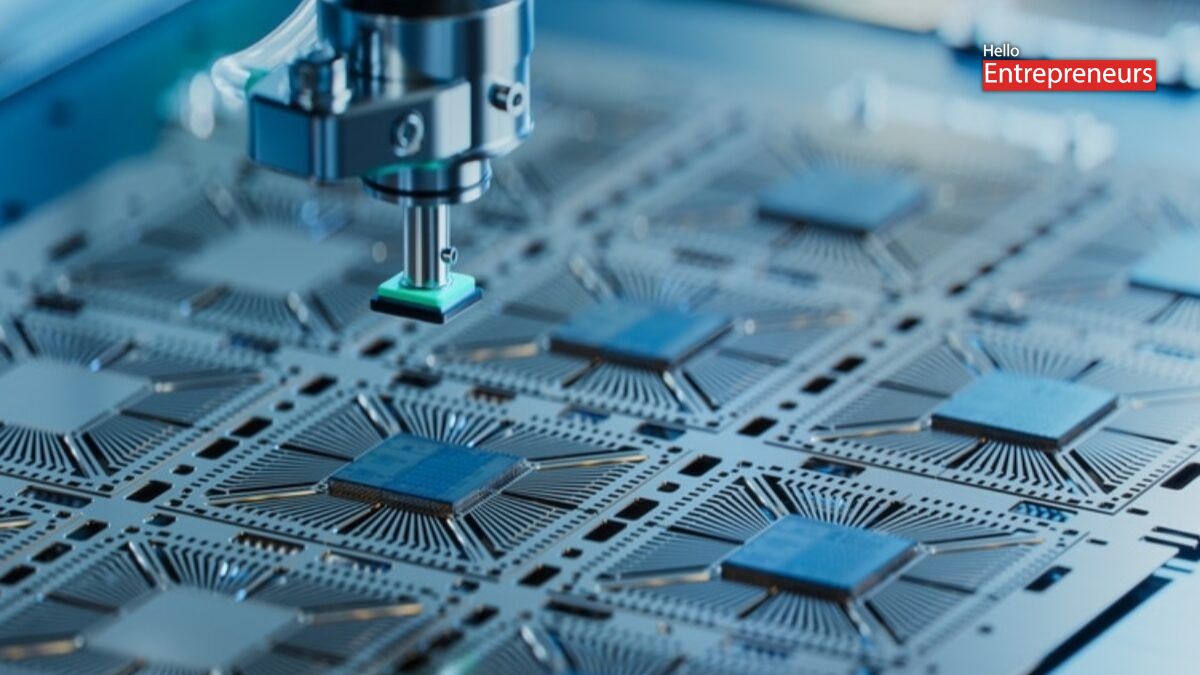
New Delhi: Tata Group is making one of India’s largest investments in the semiconductor industry and this is aimed at making the nation a contender in the global field.
Tata Electronic’s $11 billion semiconductor manufacturing unit or “fab” is located in Dholera, Gujarat. The plant will produce chips for automotive, smart phone, computer and artificial intelligence industries, among other applications.
The project is significant because India has always relied on foreign nations for producing semiconductors.
Today, a chip is used in virtually everything that makes up modern economies, such as cars, smartphones, servers, medical equipment, defence systems and infrastructure for artificial intelligence. For this reason, a lack of chips can cause problems with entire industries.
India’s first significant front end semiconductor manufacturing facility could be Tata’s Dholera project. The government in April 2026 announced that it had notified a particular economic zone for Tata’s chip plant labeled as India’s first chip fab plant. The facility will be expected to create about 21,000 jobs.
It’s not a simple matter of constructing a fab, though.
The production of semiconductors involves very sophisticated machinery, skilled engineers, reliable electric power and water supplies, close quality control and an extensive supply chain.
That’s why Tata is inviting global technology partner to the project.
In May 2026, Tata Electronics entered into a deal with one of the world’s biggest and most crucial companies for semiconductor equipment, ASML. ASML will provide lithography technology and training, and other technical assistance, to the Dholera fab.
A partnership of this sort is significant, as lithography is one of the most essential processes in semiconductor manufacturing. Billions of dollars do not necessarily ensure a successful chip factory if there is no equipment and expertise to back it up.
Tata is also working on creating the ecosystem around the factory.
The company has been collaborating with universities and institutions to provide training courses for semiconductor engineers in manufacturing, VLSI, packaging, electronics and so on.
The larger opportunity is more than the fab itself.
In the event of the success of Dholera, India can draw in more chip designers, equipment suppliers, materials and electronics manufacturers. That might develop an entire semiconductor cluster instead of just one big factory.
The project is also in keeping with Tata Group’s overall manufacturing initiative. Tata has already gone a step ahead in electronics manufacturing and is making iPhones in India! Semiconductor manufacturing forms part of the group’s overall thrust on advanced manufacturing, says Tata Chairman N. Chandrasekaran.
But there are considerable dangers also.
It costs a lot to establish semiconductor plants and chip technology evolves rapidly. Competition also is strong on a global basis, especially Taiwan, South Korea, China and the United States.
That said, the $11 billion wager may end up being a game-changer.
With this success, Tata may be able to shift India’s profile in the technology supply chain from being a large assembly market to a market for producing some of the key components found in electronic goods.