



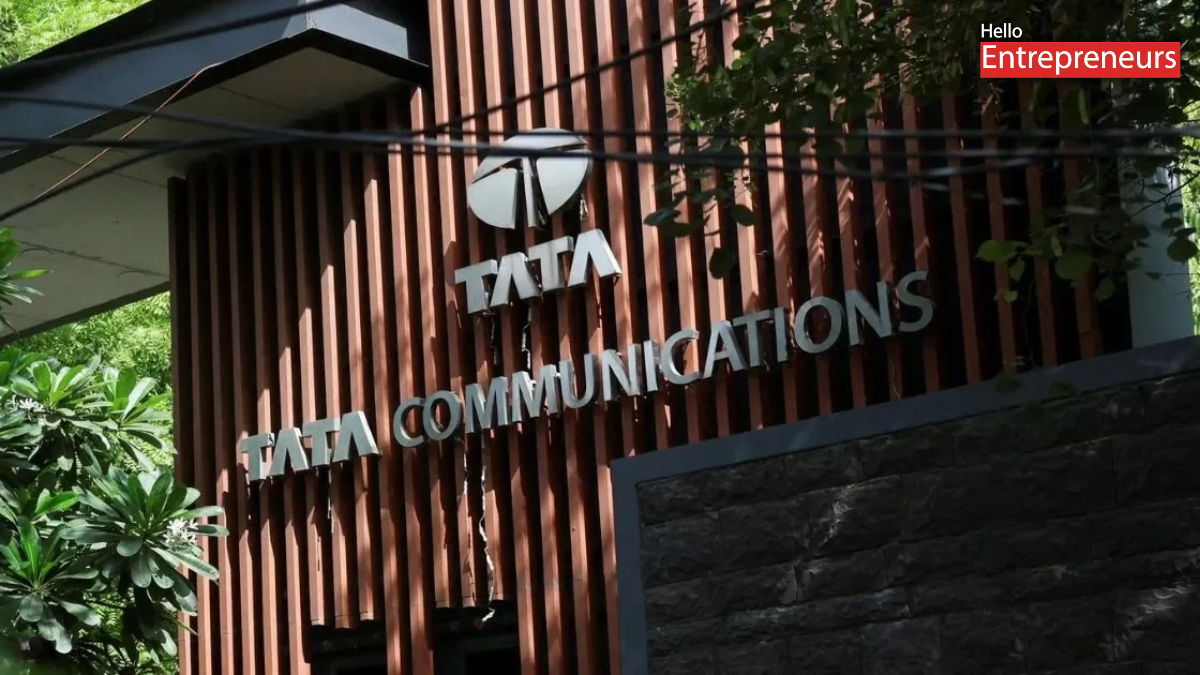
New Delhi: Tata Communications has announced plans to invest up to $450 million, equivalent to ₹4,500 crore, in a new 10,000km AI-specific fiber network. The company revealed the initiative on October 26 and has dubbed it the “AI Super Highway.”
The number in the headline is large, but the logic is simply described. India generates approximately 20% of the global data and has around 3% data centre capacity. That’s a mismatch that’s been long known about. Then some data is generated here, and much of the heavy processing takes place, and/or is distanced from the users. That distance takes time and money for AI workloads that exchange many gigabytes of data between facilities.
Tata’s response is to join the existing and under construction facilities with a network which can catch up.
Where it starts
Phase one connects Mumbai, Pune, Hyderabad and Chennai. It’s a smart starting point as those four cities have already captured much of the country’s data center and cloud activity. The company then intends to expand the network to other centres, including the cities of Visakhapatnam and GIFT (Gujarat International Finance Centre) in Gujarat.
The target is 6–7.2 petabits per second, expected to be achieved in 3–5 years. So, a petabit is a million gigabits, which is challenging to imagine, but a better comparison would be ambition. This is infrastructure for the AI workloads that are likely to arrive, most of which don’t run right now.
Speed matters as much as size
The announcement also adds to the pressure on latency, the time it takes for the data to move from one point to another. According to Tata, the Mumbai-Chennai route should provide about 15-16 milliseconds. If there is a demarkation between the instant and the slow AI service, then latency will dictate this. Huge models training also requires fast and reliable links between locations.
The network will also tie into Tata Communications backbone across the globe. That, in turn, enables Indian AI infrastructure to go global without depending upon other pipes, an indirect but tangible benefit if the company actually delivers.
Who pays
The money will be provided by operating cash flow of the company. It’s important to point out that detail. As per the announcement, Tata is not relying on a handsome external boost in the form of a hike or a new loan. It implies that management treats this as an integral part of the business, not a side project, and that this is paired with all the other things it wants to do in the same years.
What we don’t know yet
There are some gaps in the announcement. As of yet there is no specific date for Phase 1 completion, and the 3-5 year slated for full capacity is fairly broad. Not quite certain either of what percentage of the 10,000 kms are new construction and what percentage is on top of existing routes. I would say that the time frame needs to be taken in perspective for large fibre projects in India as it involves securing road clearance for the project and also obtaining state-level permission and usual time delays while clearing roads.
There is the subject of demand, too. Capacity becomes important only when the customers show up to use. The bet is not a bad one given how the cloud provider, AI developers and enterprises are all growing in India, but that’s not to say it is a sure bet.
Why it’s worth watching
India has been yearning to be a major AI market for years now. Talk is cheap, power, land, data centers and the fiber that binds them together are hard work. That $450-million pledge to the final one of those is a substantial piece, albeit a small part of the big picture.
Should Tata pull it off, the path between the Indian cities of Mumbai and Chennai will become the spine for a significant portion of the country’s AI traffic. In case of a stall, India’s data-divide with its capacity remains large.
For the moment it is an announcement with real money. The next milestone in the search is when the first length of fibre becomes live.

