



Surat: If all goes well, then the diamond city of India, Surat, is all set for a ‘white revolution’ of a different kind. Surat is poised to become a major hub for mushroom production, converting local farmers and enthusiastic youngsters into agri-entrepreneurs.
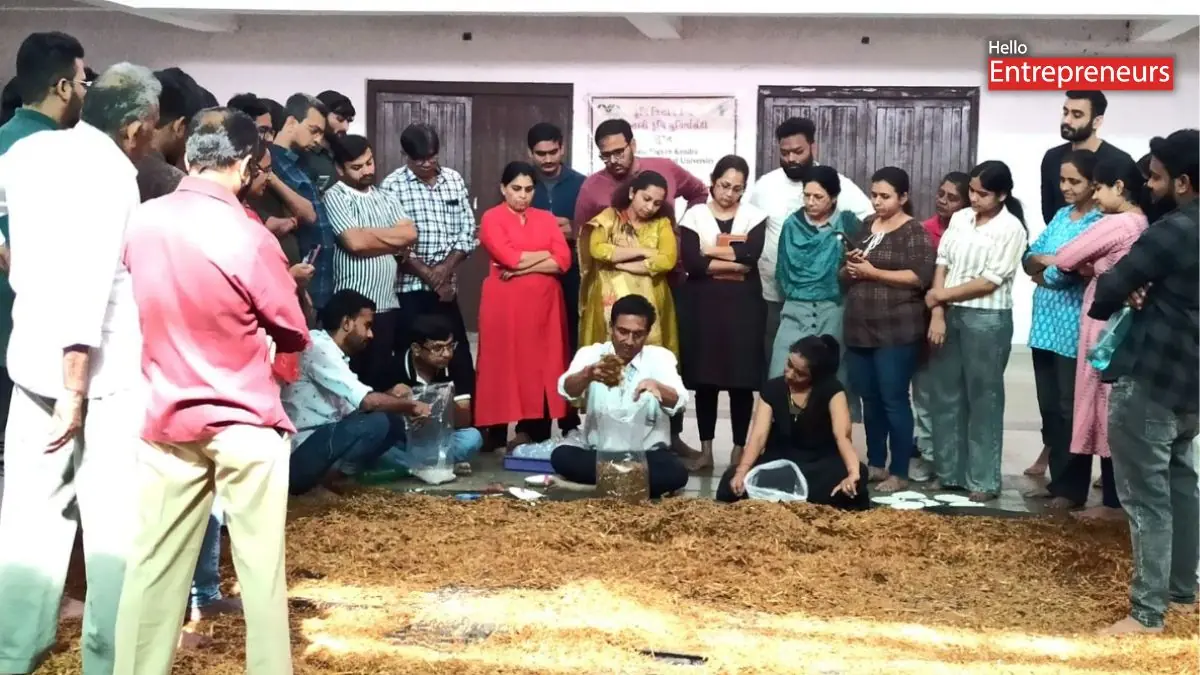
A recently concluded five-day vocational training programme on mushroom cultivation at Krishi Vigyan Kendra (KVK)-Surat has laid the groundwork for this transition. Organised under the expert guidance of Dr. T. R. Ahlawat, Vice Chancellor of Navsari Agricultural University (NAU), the workshop aimed to bridge the gap between India’s vast agricultural potential and its currently modest mushroom output.
A Golden Opportunity for Entrepreneurs
During the session, Dr. Hemant R. Sharma, Director of Extension Education at NAU, spoke about the untapped market waiting for local producers.
“There is currently very little production and use of mushrooms in the country compared to global standards. This creates a massive opportunity for farmers and budding entrepreneurs to establish a footprint in the mushroom cultivation business,” Dr. Sharma noted.
The training provided a deep dive into the technical aspects of the trade. Jatin Hirpara, an expert from Kribhco, explained cultivation cycles in detail, while successful practitioners such as Chetan Mistry, Ravi Saliya, Anitaben Mistry, and Sandeep Patel shared practical insights on scaling a mushroom startup
Why Mushrooms? The ‘Complete Food’ Advantage
Mushrooms are increasingly being recognised as a “complete food”, especially important for a country prioritising nutritional security. With a protein digestibility of 70%, they offer a high-quality alternative to meat.
Key nutritional highlights:
Vitamins: Rich in vitamins B and C, including thiamine, riboflavin, niacin, biotin, and pantothenic acid
Rare nutrients: Presence of Vitamin B12 and folic acid, which are typically absent in most vegetables
Mineral balance: High potassium and phosphorus content with negligible sodium, making them suitable for managing high blood pressure and obesity
The South Gujarat Edge: Oyster Mushrooms
For Surat and the wider South Gujarat region, Oyster (Dhingri) mushrooms have emerged as the most viable option. Mushrooms do not require soil or direct sunlight and can be cultivated using agricultural by-products such as paddy straw, which is abundantly available in the region.
“The climate of South Gujarat is particularly well-suited for Oyster mushrooms,” said Dr. J. H. Rathod, Senior Scientist and Head of KVK-Surat.
The low-calorie, high-fibre profile of oyster mushrooms also makes them a preferred choice for health-conscious and diabetic consumers in urban Surat.
The event witnessed strong institutional participation, including Shri N. G. Gamit (Project Director, ATMA-Surat), Dr. Rakesh Patel, and Horticulture Officer P. G. Malviya, reflecting growing support for diversification into high-value agriculture.
As farmers transition from traditional crops to high-potential mushroom cultivation, Surat’s agricultural and economic landscape appears set for a sustainable and nutrition-driven transformation.

