



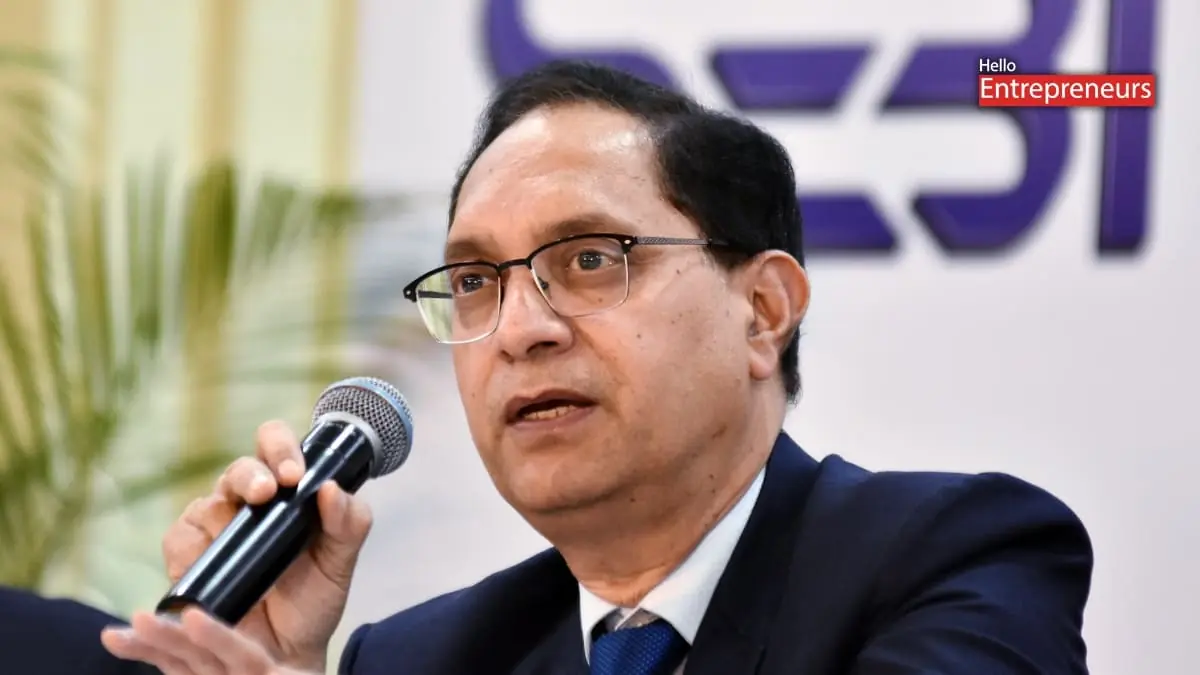
New Delhi: Recently, SEBI Chairman Tuhin Kanta Pandey was interviewed on the current state of the mutual fund industry in India and he had something significant to say. He explained how despite the fact that the mutual fund industry has reached an all time high figure of assets under management, the penetration of the industry amongst the Indian households is still very low. To say it in simple terms the amount invested in mutual funds has increased significantly but this has not been enough to invest in the amount of people.
Pandey elaborated that half of the Indian families now know about the existence of mutual funds, but few of them actually invest in mutual funds. Only seven households have investments in mutual funds out of every hundred. This demonstrates the gap between awareness and action is still large. He stated further that even the overall size of the mutual fund industry is however very small in comparison to that of the Indian economy. In some countries such as the United States, the mutual fund business is a huge sector of the entire economy of a country but in India, it is less than 25 percent of the total GDP in the country. It implies that there is immense potential to develop should there be an increase in the number of people who can be motivated to join.
Pandey has mentioned inclusion and trust as the two most crucial things to do in the future. Inclusion involves the inclusion of increasing numbers of people into the mutual fund system and particularly the poor in small town and rural regions. He also discussed the need to encourage more women to invest. Most women continue to store their money in their savings or fixed deposits since they are not convinced with the market-linked investment. SEBI and mutual fund industry have begun making efforts to ensure that women investors joining in large numbers are first time investors. They also attempt to encourage distributors to contact smaller cities, and therefore even those who are not in the top 30 towns can begin to invest.
The second objective that was targeted by Pandey was the establishment of trust. He cautioned against the use of counterfeit applications, unqualified advisers, and internet frauds that may be detrimental to the investors and make them lose trust in the system. SEBI has begun new campaigns and tools in order to combat these issues and safeguard investors. They are assisting citizens to be aware of authentic platforms by conducting awareness campaigns and Internet checks before they commit their finances. The investors can now be assured when an intermediary or payment link is safe before they can transfer money. These measures are among the initiatives by SEBI to ensure the investment world is made clean and safe.
Pandey also indicated that the first step to safeguard the investors is through education. Individuals need to know what they are putting their money into, how mutual funds operate, and what its risks are. It is then that they are in a position to make financial decisions that would be better. He also remarked that mutual funds should always be transparent, easy to understand, and be dependable to the small investors. The idea is to transform mutual funds into a reliable means of families investing their savings to invest in the economic development of India.
In his opinion the journey of mutual funds India is assuming a different face. The industry has expanded in size but it will rely on its ability to access new investors and retain their confidence in the next growth. The capital market in the country will be more stable as more Indians begin to invest on a regular basis. The message that Pandey gave was very straightforward but still extremely effective, the mutual fund story in India will really work when the inclusion and trust are hand in hand.

