



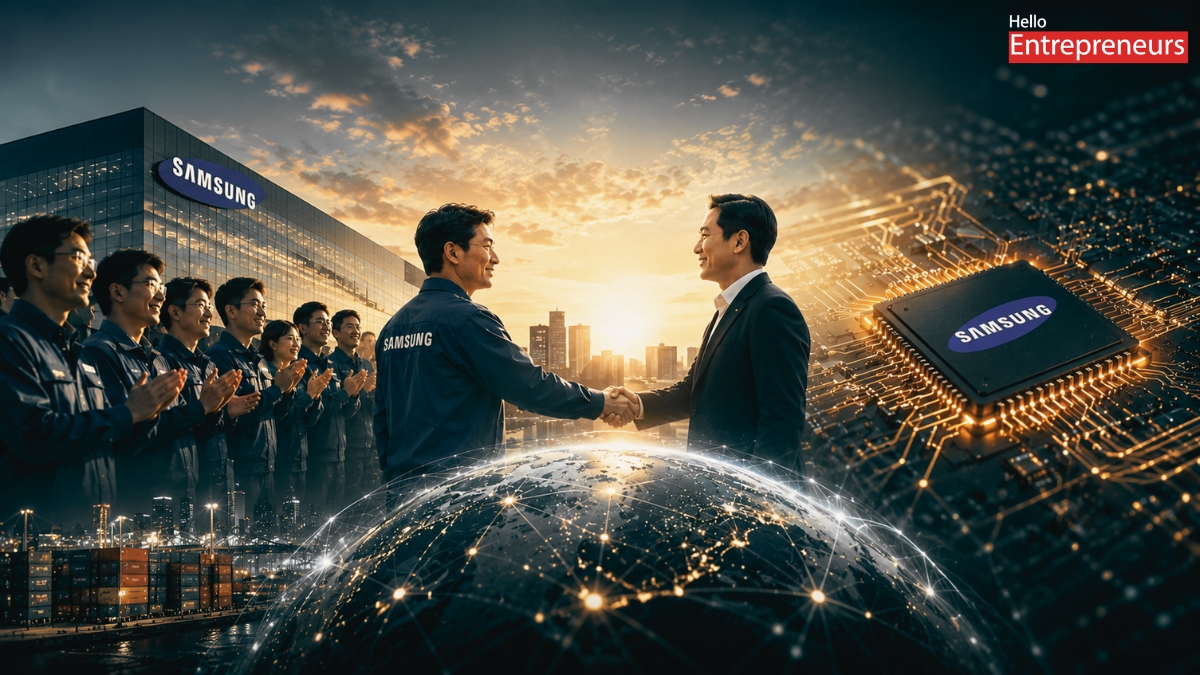
On May 21, 2026, mitigate against a global tech supply chain disaster as the nearly 47,000 (40%) Samsung Electronics workforce in South Korea are step away from an 18-day strike.
This wasn’t a localized labor dispute, but rather a direct threat to the global AI infrastructure. Samsung holds 36% of the global DRAM market and is the global leader in high-bandwidth memory (HBM). A strike would have bottlenecked the AI hardware boom, but thanks to an 11th-hour radical settlement we now know as the era of stock-peace, this will not happen. Here is how Samsung’s deal changes employee pay for the future of semiconductor manufacturing.
The High Stakes of a Semiconductor Strike
This size walkout presented unprecedented financial and operational risk. JPMorgan analysts estimated that a strike would have cost Samsung between $14B and $20B in operating profit.
However, the global DRAM supply would have been reduced by 3%-4%, causing AI leaders such as Nvidia to have their global data centre deployment halted as demand for agentic AI hit the ceiling. The global supply chain literally collapsed.
The Root Cause of the Friction: The Samsung v SK Hynix Bonus Gap
This was caused by the massive disparity between Samsung and its key domestic competitor, SK Hynix.
After restructuring in 2025, SK allocated 10% of its profits to bonuses, leading to average worker payouts of $477,000 a year. In contrast, 2024 employees were paid zero performance bonuses from Samsung because of a brutal semiconductor downcycle. Instead of a catalyst that would bankrupt the company in an instant, Samsung and union representatives, under the mediation of Labour Minister Kim Young-hoon launched an alternative, equity-based compensation model.
The Blueprint: “Golden Handcuffs” and Equity Compensation
At the heart of the seminal Samsung labor settlement is a new style of performance bonus that is funded out of 10.5% of business profits in the semiconductor division. On the basis of 2026 projections, the average award to labor workers can exceed $340,000 in terms of purchases.
The clever twist? Instead of pure cash, the awards will be paid out in Samsung stock on a 10-year horizon.
This creates a “golden handcuffs” scenario, so that labor’s compensation is fully aligned with long-term shareholder value. In order to qualify for the payouts, the semiconductor division will need to produce brutal profit levels (i.e., 200 trillion won or $135 billion a year from 2026-28).
Immediacy: Workers can liquidate one-third of shares immediately.
Lock-up: The remaining three-in-fifths is subject to a two-year lock-up.
This ensures that the workforce remains financially handcuffed to Samsung’s continued survival in the hyper-competitive HBM and DRAM arenas.
A New Era in Tech Labor Relations
This editorial considers the Samsung settlement as far from a short-term cease-fire; it is a watershed moment in the way we value human capital in an “AI Factory” era.
By turning 48,000 workers into long-term equity holders, Samsung has hedged against the blown-out volatility of the semiconductor cycle. Workers were no longer to be treated as “category” overhead for management’s clumsy use to buy down success. Instead, they were turned into pulse-pleasers for the hard core institutional investors, as they are now aligned with the exact same profit metrics.
Long-Term Payback vs. Short-Term Courtesy
Much needed, this supply chain sighs in relief, but market pundits hardly miss telling us what will come out of the cave: This equity model puts Samsung’s labor costs up the up, round the booleans and into a high-fixed-cost environment that begs for spilling growth, any time, any second. Moreover, a missed profit target and the “equity air pocket” was popped and the union can once again cloud back to its old tricks in the booming world of bonus failure.
But for now, OEMs, already dealing with energy grid chokepoints and geopolitical changes, can relax, because Samsung’s peace plan is a kind of landmark, exhausting of 21st-century dispute resolution. You can tell, that in a world with bate physical resources, coupled with the zero-sum technology-race, the most important thing you can own is the will to build the future.

