



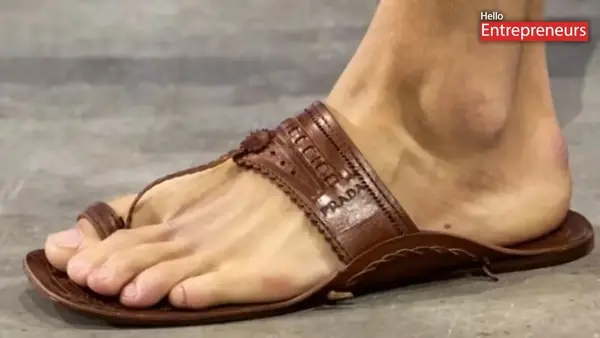
That’s exactly what happened with Italian luxury brand Prada, which recently found itself in a bit of hot water after revealing its Spring-Summer 2026 Men’s collection. Among the many fancy outfits and sleek accessories, one particular item stood out, a pair of leather sandals that looked way too similar to India’s beloved Kolhapuri chappals.
Now here’s the twist, Prada’s official show notes just called them “leather sandals.” No mention of India. No nod to Kolhapur. No credit to the artisans. That silence? It didn’t sit well with many people.
Why this hit a nerve
For a lot of Indians, especially in Maharashtra, Kolhapuri chappals aren’t just footwear, they’re a part of our history, culture, and identity. These hand-stitched leather sandals have been crafted for generations, with stories dating back to the 12th century when social reformers like Vishwaguru Basavanna uplifted the cobbler communities. Fast forward to the 20th century, and Chhatrapati Shahu Maharaj helped make Kolhapuri chappals a proud local product, traded across India.
By 2019, these sandals were officially granted a Geographical Indication (GI) tag by the Indian government. That means only artisans from certain parts of Maharashtra can rightfully call their product “Kolhapuri chappal.” It’s like how Champagne can only come from France — not just any sparkling wine gets the name.
So, when Prada rolled out their similar-looking sandals without any mention of India or Kolhapur, it sparked outrage, and rightly so.
The first major response came from MACCIA (Maharashtra Chamber of Commerce, Industry and Agriculture), whose president Lalit Gandhi shot off a letter to Prada demanding an explanation. Soon after, BJP MP Dhananjay Mahadik led a team of artisans to meet the Chief Minister, urging the government to protect this cultural legacy and ensure artisans get their due respect, and maybe even global recognition.
Prada responds (finally)
After a few days of public pressure, Prada did respond. In a letter to MACCIA, Lorenzo Bertelli, the company’s global CSR head (and part of the founding family), admitted that their sandals were “inspired by traditional Indian footwear,” and specifically acknowledged the Kolhapuri chappal.
They also clarified that the design is still “in progress” and hasn’t been finalized for mass production. More importantly, they expressed willingness to engage in dialogue with Indian artisan communities and claimed they’ve worked with Indian craftspeople in the past too.
That’s at least a step in the right direction.
Look, cultural borrowing isn’t new. Fashion, like food or music, often crosses borders. But the difference between inspiration and appropriation lies in one word: credit.
Kolhapuri chappals take days, sometimes weeks, to make. Families have been doing this craft for generations, earning their livelihood from it. When a global brand like Prada uses the same design and doesn’t even acknowledge its roots, it feels like stealing someone’s homework and signing your own name on it.
But if they collaborate, give proper credit, and share the benefits? That’s when cultural exchange becomes respectful and meaningful.

