



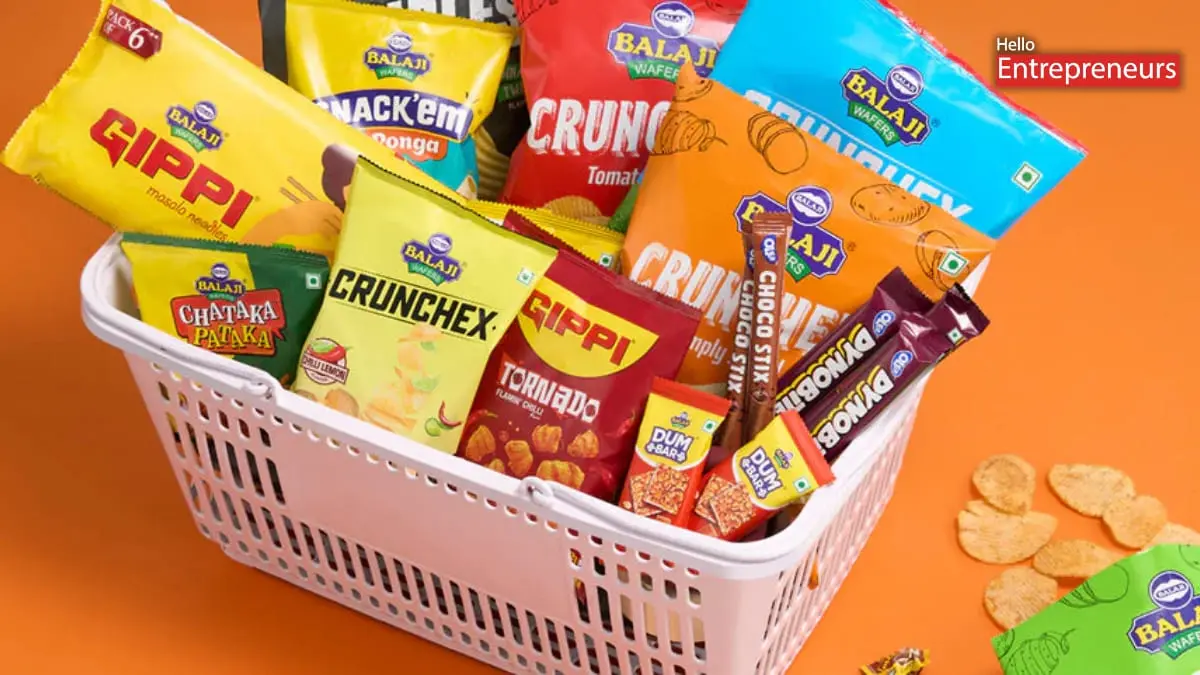
New Delhi: PepsiCo is among several big companies and private equity (PE) firms now in the race to buy a stake in Balaji Wafers, the Rajkot-based snacks maker. Reports say the deal being discussed is for about 10% ownership, valuing the company at around ₹40,000 crore, making it one of the highest valuations ever for an Indian snack brand.
The interest comes at a time when Balaji is looking to expand across India beyond its stronghold in western and central regions. For FY24, the company posted revenues of nearly ₹5,453.7 crore, growing 10–11% year-on-year, while its profit after tax jumped 41% to ₹578.8 crore. The Virani brothers, who built Balaji from scratch, are believed to be considering this stake sale to raise funds for nationwide growth and to bring in professional management to prepare the brand for its next phase.
What makes this round of talks different is the strategy of big companies like PepsiCo. More than a decade ago, PepsiCo had tried to acquire a majority share in Balaji, but the Virani family resisted, choosing to retain control. This time, PepsiCo and others appear ready to settle for a minority stake, a move that reduces risk while still giving them access to Balaji’s powerful distribution network and loyal customer base.
The deal also follows the recent valuation benchmark set by Haldiram’s, which sold a minority stake to investors like IHC and Temasek at around $10 billion. Balaji’s promoters are said to be using that as a reference point, pushing Indian snack companies into the league of global FMCG valuations.
Market watchers say Balaji’s biggest strength lies in its low-cost structure and competitive pricing. Unlike large multinational snack companies, Balaji spends far less on advertising yet manages to dominate shelves with affordable packs and deep regional reach. This is precisely what makes it so attractive for giants like PepsiCo or ITC, who would otherwise spend years and heavy budgets to build the same scale from scratch.
The buzz has already hit social media. Market analyst Anisha Jain tweeted that Balaji is likely to sell 10% stake at a ₹40,000 crore valuation. Investor Aditya Kondawar also shared similar insights on LinkedIn, calling it one of the most important deals in India’s FMCG space. Other users on X pointed out that this is not just about raising money, but also a sign that regional Indian brands are no longer being ignored by the global majors.
Still, the deal is not final. Talks could fall apart if valuation expectations don’t match, or if investors push for greater control than the Virani family is willing to give. Rising costs of raw materials and the challenges of scaling nationwide are also risks that analysts are keeping an eye on.
If PepsiCo or ITC does come on board, the partnership could change the face of India’s snack market. Consumers might see new flavours, premium packaging, and stronger marketing campaigns, while Balaji’s affordable products reach more corners of the country. More importantly, this signals a larger trend: Indian regional brands are now strong enough to make global players compete for a share in their success.

