



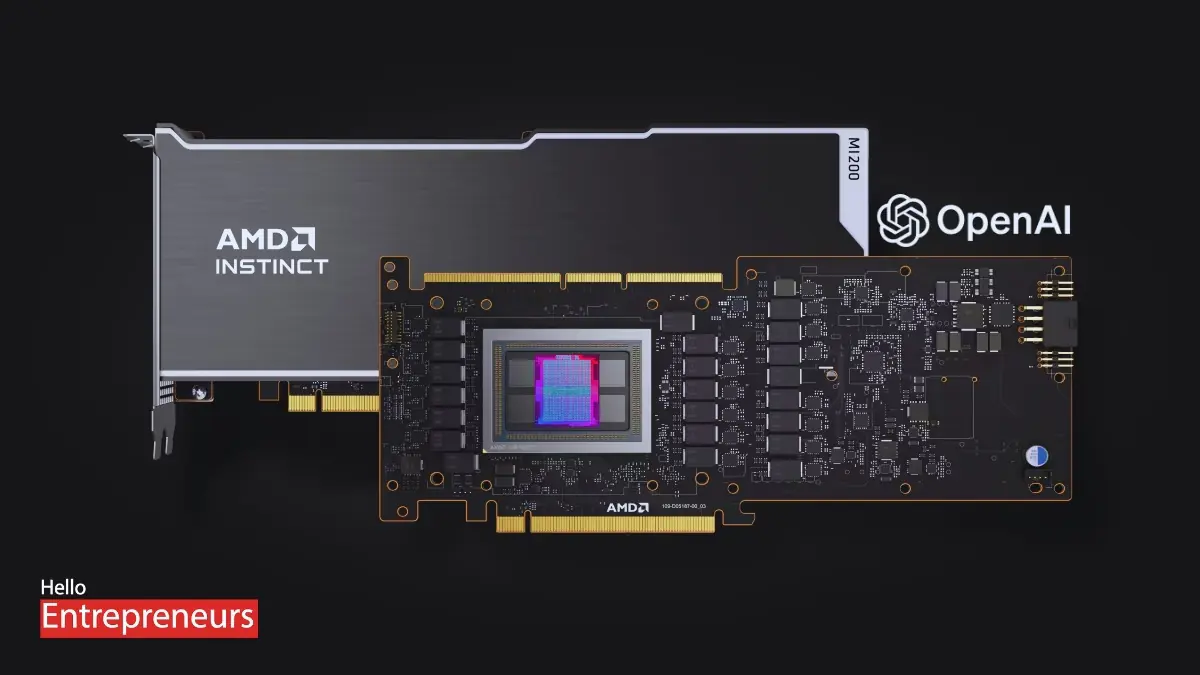
Mumbai: OpenAI just made a move that screams dominance: tens of billions in AMD chips and a potential 10% stake in the $270bn chipmaker. ChatGPT isn’t just learning, it’s building an empire.
OpenAI Goes Big on Chips
OpenAI, the San Francisco AI juggernaut, has signed a deal to buy AMD processors with a total power draw of 6 gigawatts. For context, that’s roughly the electricity Singapore consumes on average. Let that sink in: one start-up is about to demand the energy of a small country just to feed its AI appetite.
The dollar figure? The companies are tight-lipped. But OpenAI’s own math estimates $50bn per gigawatt, with two-thirds going straight to chips and the supporting infrastructure. Translation: OpenAI isn’t buying; it’s building a foundation for a computing empire.
This move comes just a fortnight after Nvidia dropped $100bn on OpenAI. Between AMD and Nvidia, ChatGPT is essentially locking down the next decade of AI compute power before anyone else even hits “Go.”
The 10% Stake Gambit
AMD isn’t just selling chips; they’re handing OpenAI a warrant to acquire up to 160 million shares at $0.01, contingent on stock performance and chip deployment. If fully exercised, OpenAI could own roughly 10% of AMD.
The markets loved it: AMD shares jumped 15% pre-market. Analysts see this as a double whammy: AMD locks in a massive customer, while OpenAI secures strategic influence over a key supplier. In other words, OpenAI isn’t just buying chips, it’s buying leverage.
Powering ChatGPT’s AI Hunger
OpenAI CEO Sam Altman framed it bluntly: “This partnership is a major step in building the compute capacity needed to realise AI’s full potential.”
Potential is one thing. Reality is another. Critics are wary of the circular financing setup: OpenAI invests in chipmakers, chipmakers benefit from AI hype, repeat. Funding these mega data centres isn’t trivial.
Still, OpenAI’s footprint is already massive. Alongside AMD, it has committed $300bn in computing power from Oracle and is working with SoftBank and other partners to add another 7GW of US data centre demand. They’re also dabbling in their own chips with Broadcom.
Altman’s strategy is simple: control the pipeline, stimulate infrastructure growth, and ensure OpenAI sits at the centre of the AI universe.
AMD Eyes the AI Throne
AMD has been trailing Nvidia in AI chips but sees a chance to steal market share. Its upcoming MI450 chip is designed to challenge Nvidia’s Blackwell lineup. OpenAI is likely to be one of its biggest customers. The two teams have collaborated on specs to ensure the chips fit OpenAI’s monstrous compute appetite.
Jean Hu, AMD CFO, made it clear: “This agreement creates significant strategic alignment and shareholder value for both AMD and OpenAI.” Translation: it’s a win-win if the world of AI computing continues to explode, and everything points to “yes.”
OpenAI’s Multi-Front Expansion
Altman isn’t playing small. Beyond AMD, OpenAI’s deals with Oracle, Nvidia, SoftBank, and Broadcom commit to 23GW of new computing capacity, a mind-boggling figure that, by OpenAI’s estimates, would cost over $1tn to develop.
Revenue has surged, with the company generating an annualised $13bn since ChatGPT’s 2022 release. But don’t mistake growth for profitability: OpenAI remains in the red due to astronomical model development, marketing, and hiring costs. The solution? Spread payments over time, lean on partner balance sheets, and use equity from major investors like Nvidia to secure better financing terms.
Betting on ChatGPT’s Growth
OpenAI is counting on ChatGPT’s steady rise from 700 million weekly users and a still-tiny 5% paid subscription rate. New revenue streams include a shopping feature and an AI device designed with former Apple designer Jony Ive.
If OpenAI can convert more users into paying customers, its infrastructure bets start to look less insane and more visionary. But until then, it’s a high-wire act with hundreds of billions of dollars on the line.
India’s AI landscape is watching closely
With data localisation regulations and burgeoning AI startups, a potential influx of OpenAI’s AI infrastructure could influence cloud pricing, chip access, and innovation hubs in India. AMD chips powering ChatGPT-scale AI could eventually filter into Indian tech firms and research labs, accelerating adoption.
Circular Deals and Scepticism
Not everyone is clapping. Critics highlight the circular nature of these arrangements: OpenAI invests in chipmakers, chipmakers sell chips back, and the valuation feeds itself. Some question whether OpenAI’s ambitious plans can be financed sustainably without bottlenecks or geopolitical constraints on chip supply.
Yet, in true Silicon Valley style, Altman’s team is betting big and thinking five moves ahead. If anyone can pull it off, it’s a company with a $13bn revenue stream, tens of billions raised, and access to the world’s best chip tech.
What This Means for the AI Race
The OpenAI AMD deal underscores the widening gap in the AI arms race. Nvidia, AMD, Oracle, and now OpenAI are setting the rules: whoever controls compute, controls the models. It’s a lesson in strategic vertical integration. OpenAI is no longer just a software player; it’s becoming an infrastructure powerhouse.
Expect competitors to react. Microsoft, Meta, and other tech giants may either double down or risk being locked out of next-gen AI compute.
In short: the AI future is being built now, in silicon and power lines, and OpenAI wants first pick of the tools.
Final Take
OpenAI isn’t asking permission. It’s staking a claim. With AMD chips, Oracle contracts, and billions in future commitments, it’s building a computing fortress around ChatGPT. Profitable yet? Not yet. Dominant? Very likely.
The AMD deal is more than a purchase; it’s a chess move. And in this game, Altman just turned the board in his favour.
Also Read: Qualcomm Lawsuit Shockwave: £480m Payout Hit Tech Giants?

