



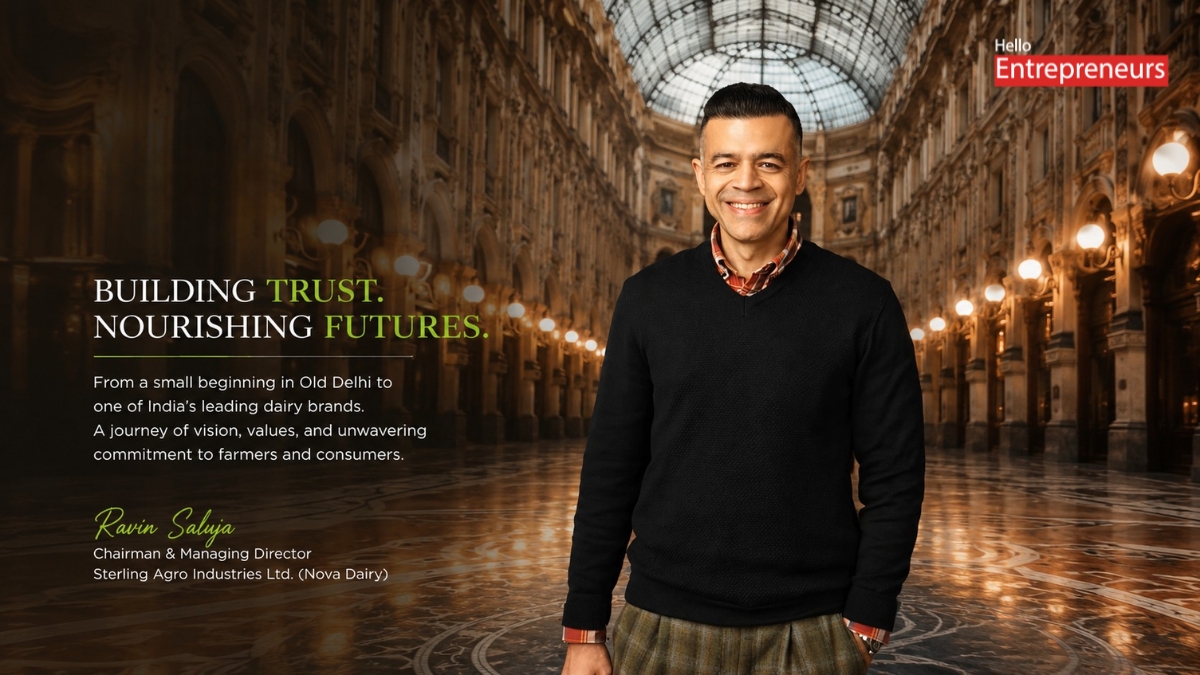
New Delhi: The dairy industry of India has changed quite drastically since the economic reforms of 1991. In recent years, the country has become the largest milk producing nation of the world, accounting for more than 24% of total global milk production, according to the government estimates. Growing demand in urban areas, organized retail, and changing consumer preferences have forced the dairy companies to adopt modern technologies and expand their scope beyond just milk products.
Among such firms, one can point out Sterling Agro Industries Ltd, better known by its brand name Nova Dairy. The company was founded and is headed by Ravin Saluja, who managed to transform his family-owned retail store in Old Delhi into one of the leading dairy processors of India.
Speaking about the beginnings of the firm, Saluja stressed that the move from retail to manufacturing was driven by long-term observations of industry trends. Retailing helped the company learn about consumer demand, shortages in supply, and the need for consistency of dairy products. Nevertheless, Saluja believed that the biggest opportunity in dairy lies in processing and procurement, not retailing.
During the 1990s, when the Indian dairy sector was opening up for new entrants, the company made several important decisions. While other firms were mostly concerned with growing the distribution network, Nova Dairy was focusing on milk procurement, building processing capabilities, and establishing connections with farmers. According to Saluja, developing milk procurement network was crucial for gaining long-term operational advantages.
At present, the company collaborates with more than 1 lakh farmers across various regions. Maintaining the procurement network is challenging in terms of quality control and technology. Saluja told that the company has been setting up village-level milk procurement centers equipped with necessary facilities for testing milk quality before procurement. The training of farmers regarding cattle health, fodder quality, and proper milking practices has also been undertaken.
Digital technologies and traceability tools have become increasingly important for dairy firms trying to enhance transparency and food safety standards. This is particularly true in India where the organized dairy sector keeps growing rapidly but issues of product adulteration and counterfeiting remain topical.
Currently, Nova Dairy operates with the help of a balanced business model generating almost half of its income from institutional customers and the rest from retail consumers. At the same time, the company supplies dairy products to several big FMCG corporations like Nestlé and Danone, thus developing its own consumer brand at the same time.
Saluja believes that institutional customers care about product standardization, technical precision, and timely delivery, while retail consumers focus on taste, affordability, and credibility. Running a business targeting both groups is quite complicated and requires proper planning and different pricing strategies.
Dairy business experiences frequent disruptions due to seasonal changes, rising prices for cattle feed, floods, and fluctuating prices of milk. In order to minimize risks, the company diversified its sourcing regions and invested in storage and logistics networks. According to Saluja, maintaining financial discipline and monitoring costs are also crucial for protecting company’s margins in such a volatile industry.
Operational efficiency is another aspect that matters. Milk is extremely perishable product requiring special attention to logistics and temperature control. Nova Dairy reports wastage of 0.5-1% due to the use of automation and cold chain, preventive machine maintenance, and standardized plant operations.
Sustainability is another aspect that became important for the company in recent years. The company is positioning itself as a carbon-negative dairy player implementing projects related to renewable energy sources, efficient water consumption, and waste management. Saluja is confident that being sustainable has become an important financial advantage allowing reducing expenses and enhancing corporate image in foreign markets.
In future, Nova Dairy is going to focus on developing value-added dairy products, improving traceability system, innovative packaging solutions, and digital technologies. With Indian consumers becoming increasingly concerned about convenience, nutritional value, and authenticity of products, dairy firms will be competing not only based on prices.

