



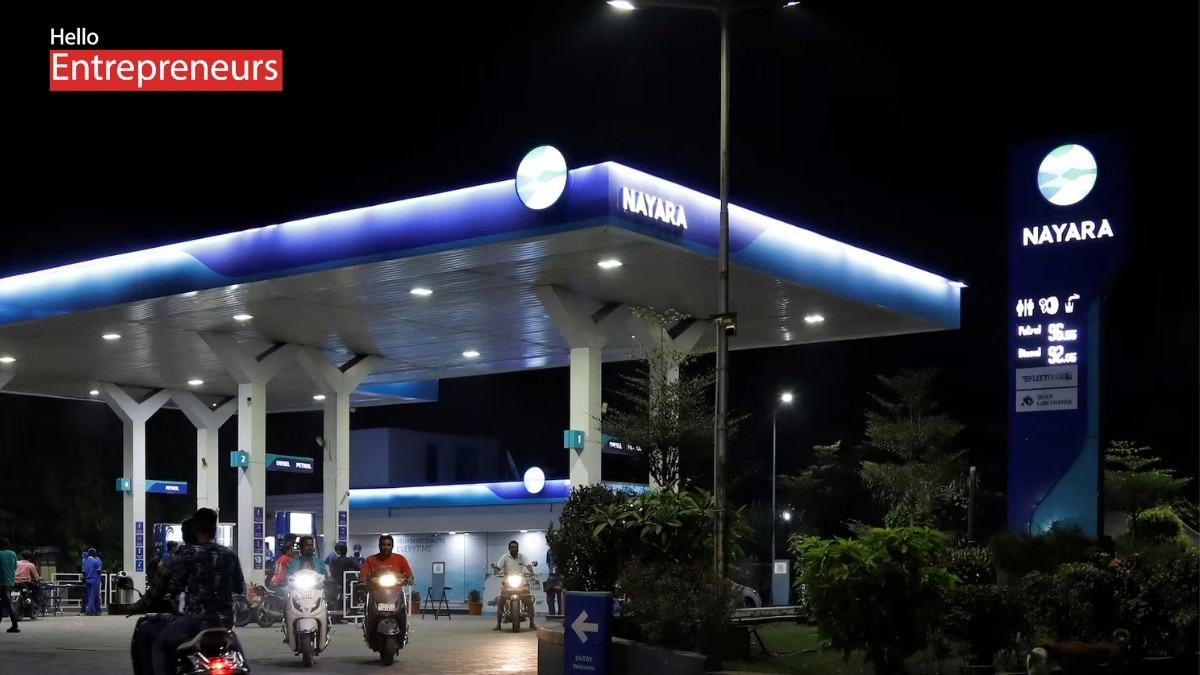
New Delhi: Fuel prices are not just a consumer issue for oil companies. For fuel retailers, changes in crude oil and refined-product prices can quickly affect the margins they earn at the pump. When that gap becomes too wide, companies have to decide whether to absorb the cost or pass some of it on to customers.
Nayara Energy has now opted for the latter.
The private fuel retailer has increased petrol prices by ₹5 per litre and diesel prices by ₹3 per litre with immediate effect, according to Moneycontrol. The increase comes as private fuel retailers face pressure from higher international crude and refined-product prices.
The latest move also comes after Nayara changed prices in both directions earlier this year.
Nayara’s fuel prices move with market conditions
Nayara had increased petrol and diesel prices by ₹5 and ₹3 per litre respectively in March, when international oil prices rose sharply following disruptions in energy markets.
It later reversed those increases. On July 1, the company reduced petrol prices by ₹5 per litre and diesel by ₹3 as global crude prices eased.
The latest increase effectively brings the pricing issue back into focus. For private retailers, the cost of buying and refining fuel can change faster than domestic pump prices, creating pressure on margins.
That has become particularly important in recent months as international oil prices have remained elevated.
Why fuel retailers are under pressure
The challenge for companies such as Nayara is balancing fuel prices with customer demand.
State-owned oil marketing companies control the majority of India’s petrol pumps and have generally kept domestic fuel prices relatively stable. Private retailers, meanwhile, have less room to absorb prolonged losses if international prices remain high.
ICRA estimated in September that oil marketing companies were facing negative marketing margins of around ₹8 per litre on petrol and ₹9 per litre on diesel. The rating agency estimated combined losses of about ₹530 crore a day across petrol, diesel and LPG under the prevailing conditions.
For a fuel retailer, continuing to sell at such margins for a long period can become difficult.
Nayara’s latest price increase can therefore be viewed as an attempt to recover part of those higher costs.
The impact goes beyond the petrol pump
The immediate impact for customers is simple. Anyone buying fuel from Nayara outlets will now pay more.
The wider effect could be more gradual. Diesel is widely used by transport operators, logistics companies, farmers and businesses. Higher diesel costs can raise the cost of moving goods, particularly if higher prices continue for an extended period.
Whether other retailers follow Nayara will depend largely on how international crude and refined fuel prices move in the coming weeks.
Jio-bp, another major private fuel retailer, had not changed its petrol and diesel prices at the time of the Moneycontrol report.
What comes next for Nayara
Nayara operates a 20-million-tonne-a-year refinery at Vadinar in Gujarat as well as a nationwide fuel retail network of more than 7,000 outlets.
The combination of refining and retail gives the company exposure to different parts of the fuel business, but it does not remove the pressure created when retail margins weaken.
For now, Nayara has chosen to pass some of that pressure to customers. The bigger question is whether global oil prices remain high enough to force further price changes across the private fuel retail market.
For consumers and businesses, that will be worth watching, because fuel costs eventually feed into much more than the price paid at the pump.