



New Delhi: India wants to make more products at home and become a bigger part of global supply chains. But producing more will not be enough. Indian companies will also need to focus on cost, quality and the ability to make products on a larger scale.
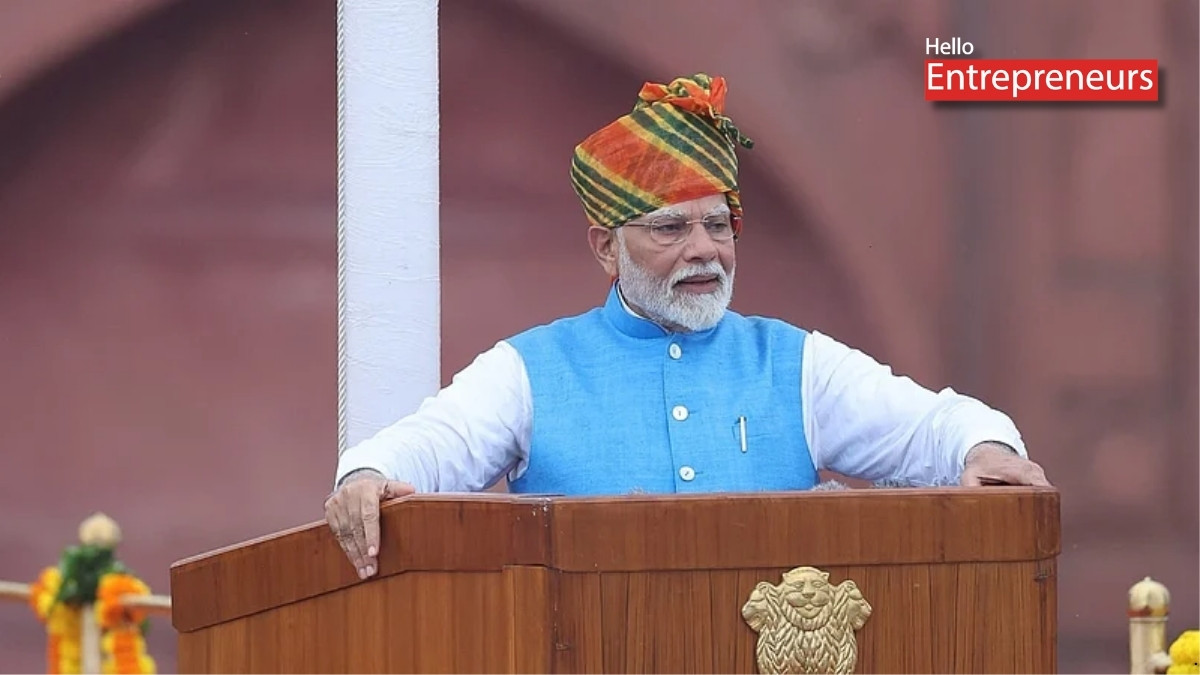
Prime Minister Narendra Modi raised this point in his Independence Day address on Saturday. Speaking from the Red Fort, Prime Minister Narendra Modi said India needs to significantly increase manufacturing and make products that are reliable, easy to use and meet global standards.
He also placed manufacturing at the top of a seven-point framework called ‘Sapta Dhara’, which he said would support India’s journey towards becoming a developed nation by 2047.
India needs to make more products
Prime Minister Narendra Modi said India should increase production of both small components and large products.
This is important because a product often needs many parts before it reaches a customer. If Indian companies can make more of these parts locally, they can play a bigger role in global supply chains.
Prime Minister Narendra Modi said Indian manufacturers need to compete on cost, quality and scale.
In simple terms, Indian products need to be reasonably priced, made well and produced in enough numbers to meet demand.
He also said Indian factories should make products that are easy for people to use and should pay more attention to packaging.
Quality is a key focus
Producing more is only one part of the challenge. Companies also need to make sure that their products work properly and meet the same standards every time.
Prime Minister Narendra Modi called for zero-defect and precision manufacturing to become a hallmark of Indian industry.
He also said Indian manufacturers, entrepreneurs and MSMEs should build their reputation in global markets through reliability and quality.
“There should be no compromise on quality,” Prime Minister Narendra Modi said, stressing the importance of quality in manufacturing.
For smaller companies, reaching global standards can mean spending more on better machines, testing, technology and worker training. But it can also help them become suppliers to larger companies in India and abroad.
MSMEs have a big role
Small and medium businesses are an important part of Indian manufacturing.
According to the figures cited in the address, MSMEs account for about 35.4% of India’s manufacturing, 48.58% of exports and 31.1% of GDP.
These businesses make a wide range of products and components. Many also work as suppliers to larger companies.
India’s manufacturing sector currently contributes around 16-17% of GDP and employs more than 27 million workers, according to the figures cited by PTI.
That means growth in manufacturing can have a wider impact on jobs, businesses and local economies.
Manufacturing is part of a bigger plan
Manufacturing is one of seven areas included in Prime Minister Narendra Modi’s ‘Sapta Dhara’ framework.
The other areas are agro-food production and food processing, technology and innovation, logistics, defence, the green and blue economy, and soft power.
These areas are closely linked to manufacturing. For example, better logistics can make it easier and cheaper to move goods, while technology can help factories improve production and develop better products.
The focus now is not simply on making more goods. India also wants its companies to become trusted suppliers in global markets.
That will depend on how well businesses can control costs, maintain quality and produce at scale. For manufacturers, especially MSMEs, the opportunity is large, but so is the need to improve.
Prime Minister Narendra Modi’s message from the Red Fort was simple: India needs to manufacture more, make better products and build a reputation for quality.

