



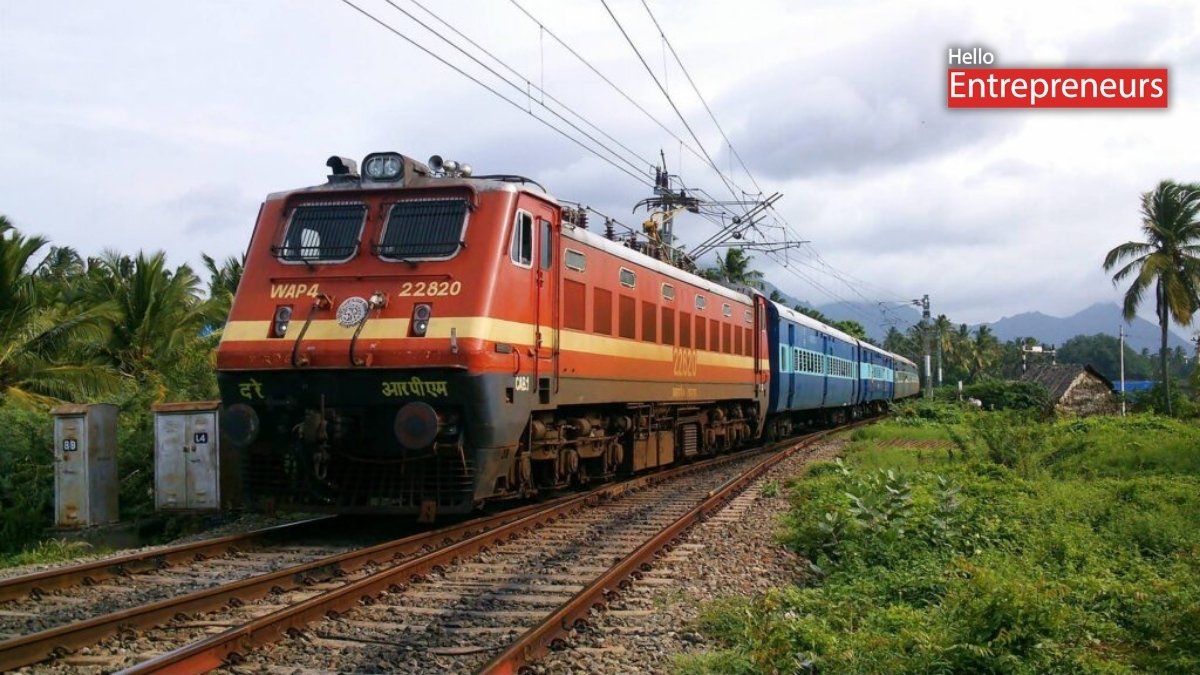
New Delhi: Road transport has been the primary mode of freight transport in India, particularly for the movement of agricultural commodities from mandis to warehouses or export hubs. Although logistics costs and supply chain constraints continue to make rail an attractive choice for moving bulk goods, the decision will take some time to become a reality. Indian Railways is keen on diversifying its freight business, which has been dominated by coal, to include agricultural goods as well.
That shift can be seen in the recent case of the “Jeera Express,” which transported around 420 tonnes of cumin from Gujarat. The report indicated that Indian Railways earned almost ₹25 lakh from the consignment, and it has caught the interest of the way organized rail logistics have begun to penetrate areas that were almost entirely truck-dominated.
The trade in cumin seeds is also one of the most important businesses in Gujarat, and the state is one of the largest producers and traders of cumin in India, making it a major market center for spice transport. Road transportation has traditionally been preferred by traders for its flexibility and quick shipment handling. Railways, by contrast, were seen as appropriate primarily for transporting industrial materials such as coal, metal, and cement.
In this instance, the scale and specialization of the movement is the important thing. The cumin shipment was consolidated in a single shipment rather than many smaller ones traveling in several different transports. It is a reflection of Indian Railways‘ overall endeavor to make its freight operations more flexible to market requirements.
In recent years, railway companies have been striving to attract new types of traffic, such as agricultural, FMCG, and parcel traffic. The plan is quite feasible: if railroads can offer dependable schedules and lower rates for bulk goods, traders could shift some of their long-haul loads off the road.
There are relevant economic aspects to this push. Logistics costs remain a threat to the profitability of agricultural traders, especially for commodities like cumin, which is a seasonal, export-oriented crop. For longer distances, bulk rail transport can be a good alternative to reduce transportation costs if there is sufficient cargo to warrant separate operations.
Meanwhile, there are continuing difficulties for railways in this part. Agricultural supply chains are out of step with industrial cargo chains. Road transport still has an edge in fast turnaround, flexible shipment sizes, and smooth last-mile connectivity, which are important to traders.
But the change has become apparent in several areas. Railway areas have begun working more closely with commodity traders, warehouse operators, and local business associations to identify where special freight services might be effective. This is a critical testing ground for such initiatives in Gujarat, which has a well-established agriculture ecosystem with an export focus.
While projects like the “Jeera Express” might appear to be small-scale undertakings on India’s list of freight projects, industry participants have said it holds symbolic significance. Indian Railways is trying to redefine itself as a more business-friendly logistics provider than just a bulk industrial provider.
This shift is also embedded within a broader policy context. The government has repeatedly stressed that India needs to reduce its logistics costs, which are relatively high compared with those of several manufacturing-driven economies. The expansion of rail-based cargo transport is viewed as one means of making things more efficient, and of decreasing reliance on long-haul trucking.
However, from time to time these operations must be scaled up, and that doesn’t come easily. To establish long-term trust among the agricultural traders, railways must be equipped with more robust infrastructure for cargo loading and unloading, provide better integration with warehouses, and guarantee reliable service timings.
Currently, the cumin consignment is a glimpse into the evolving freight landscape in India. Indian Railways does not seem to be shooting at road transport in each segment but appears to have selected commodity clusters that can give the railway scale and cost advantage. While the “Jeera Express” is unlikely to change the landscape of agricultural logistics overnight, it indicates that the railways are moving towards a new vision of using the rail corridor for freight transport in emerging sectors.

