



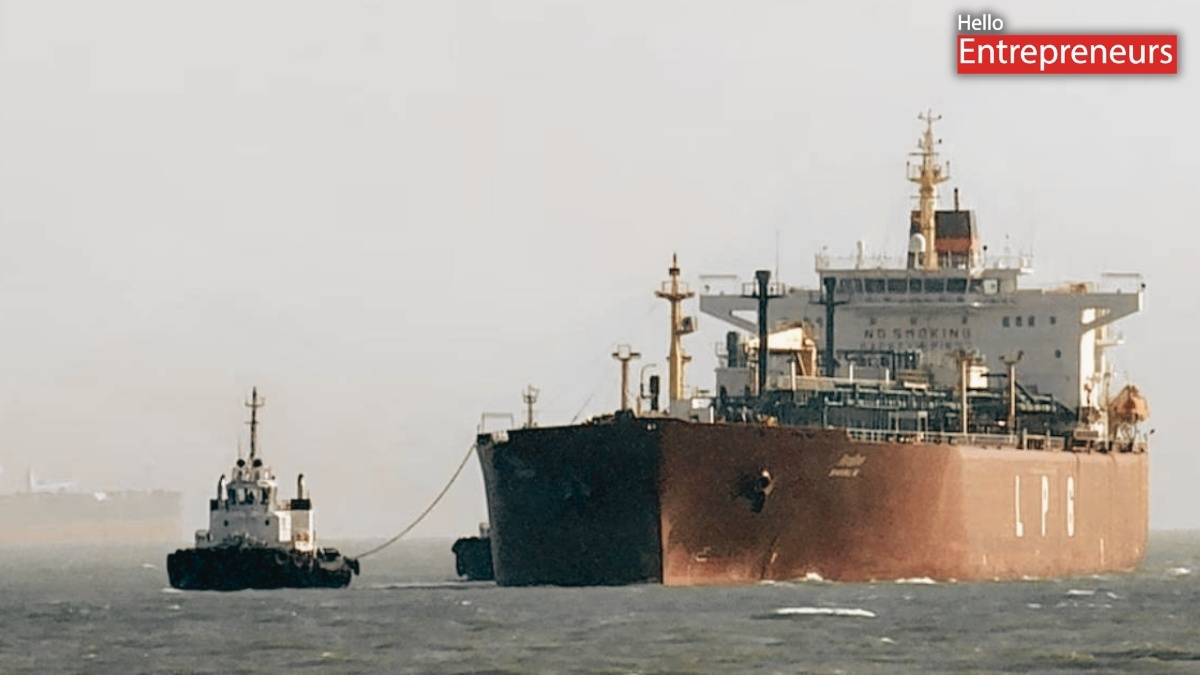
New Delhi: A recent incident near the Strait of Hormuz has once again brought attention to one of the world’s most critical trade routes. Iran has seized two vessels in the region, including one that was reportedly on its way to Gujarat.
While the development is geopolitical in nature, its business implications are immediate. The Strait of Hormuz carries nearly 20% of the global oil supply, making it central to energy trade. Any disruption here, even temporary, can influence shipping costs, insurance premiums, and oil prices.
Why this matters for India
India is one of the world’s largest crude oil importers, with close to 85% of its oil needs met through imports. A significant share of this supply moves through the Hormuz route.
That makes India directly exposed to any instability in the region. Even a short disruption can affect import timelines, increase costs, and create uncertainty for refiners and traders.
The fact that one of the vessels was headed to Gujarat adds a more immediate concern. Gujarat is home to some of India’s largest ports and refineries, making it a key entry point for crude oil and industrial cargo.
Impact on shipping and trade
Shipping companies tend to respond quickly to such risks. When tensions rise:
- Insurance costs, especially war-risk premiums, usually increase
- Some operators may reconsider routes
- Freight rates can move higher if capacity tightens
These changes may not be visible immediately, but they gradually affect overall logistics costs.
Oil markets react faster
Oil markets are often the first to respond. Prices can move not just because of actual supply disruption but also because of the fear of disruption.
Even if shipments continue normally, traders factor in risk. That alone can push prices upward in the short term.
For India, this can have wider economic effects. Higher oil prices increase the import bill, can add to inflation, and may put pressure on the currency.
A pattern that keeps returning
Incidents in and around the Strait of Hormuz are not new. There have been multiple episodes in the past involving ship detentions and regional tensions.
What is noticeable now is the frequency. Such risks are appearing more often, making them harder for businesses to ignore.
Companies have tried to adapt by diversifying their supplier base and maintaining buffer inventories. However, for critical routes like Hormuz, complete risk avoidance is not possible.
What to watch
In the near term, the situation will depend on how tensions evolve. If the issue remains limited, the impact may be short-lived. If it escalates, the effects could spread across oil markets and global shipping.
The larger takeaway
This incident is a reminder of how dependent global trade is on a few key routes. Most of the time, these routes function smoothly. But when disruptions happen, the impact can travel far beyond the region.
For India, it highlights the continued importance of energy security and stable trade corridors.

