



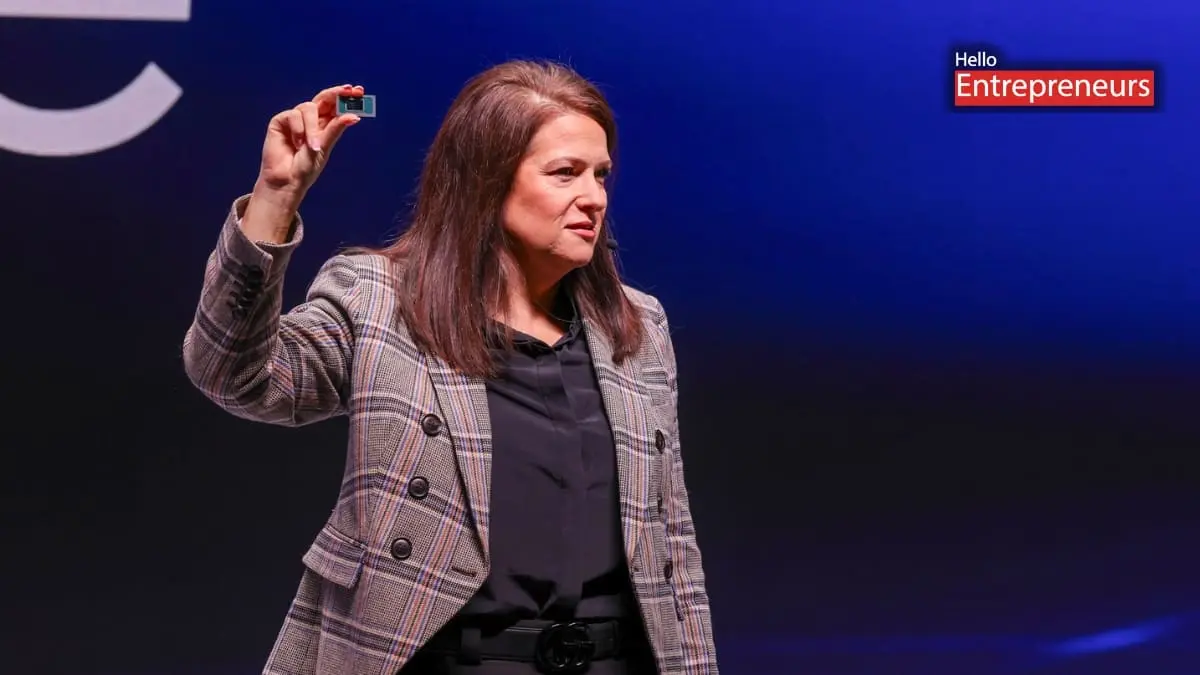
New Delhi: Intel, one of the world’s biggest chipmakers, has announced one of the largest leadership changes in its history. The most eye-catching news is the exit of Michelle Johnston Holthaus, Intel’s products chief, after working for the company for nearly 30 years.
Holthaus is not just any executive. She was a stabilizing face inside Intel, even serving as interim co-CEO when the company went through a sudden leadership crisis last year. Recently, she became Intel’s Chief Executive of Products, a role that placed her at the heart of the company’s future strategy. Her departure shows how serious Intel is about reshaping itself under new CEO Lip-Bu Tan, who took charge earlier this year. Interestingly, Holthaus is not cutting ties completely, she will stay on for some time as a strategic adviser, guiding the company during this transition.
Fresh Appointments at Intel
But this is not just about one person leaving. Intel has filled up some major positions with both fresh faces and insiders:
Kevork Kechichian will now lead Intel’s Data Center Group. He has decades of chip industry experience, including at Arm, Qualcomm, and NXP.
Srinivasan Iyengar will head the new Central Engineering Group, focusing on Intel’s custom silicon business, an area that is becoming very important worldwide.
Naga Chandrasekaran, already in charge of Intel’s technology and operations, will now also handle Foundry Services.
Jim Johnson becomes the new head of Intel’s Client Computing Group, which looks after chips used in laptops and personal computers.
These moves clearly show that Intel is mixing outside talent with inside leadership to create a faster and more flexible company.
What’s Changing Inside Intel?
CEO Tan is bringing in a “flatter” structure, this means most big departments will directly report to him. The idea is to speed up decisions and make different teams work more closely. But the tough part is that Intel is also cutting 25,000 jobs worldwide (around 15% of its staff). The company wants to reduce costs and focus only on its strongest businesses. Alongside this, Intel has also announced a return-to-office rule to improve discipline and teamwork.
Politics and the Bigger Picture
There’s also a political angle here. The US government may step in more directly, with discussions around a possible 10% ownership stake in Intel. At the same time, some criticism has been raised against CEO Tan, with calls for him to resign over conflict of interest concerns.
Still, the company is not slowing down. Intel has made it clear that it wants to double down on AI chips, custom silicon foundry services, and efficiency in operations, three areas where the future of technology is being written right now.
For Indian readers, this is not just American corporate drama. Intel’s chips power everything from smartphones and cars to computers and data centers. The leadership change and restructuring could affect supply chains, partnerships, and even job opportunities across the world, including India.