



New Delhi: For most travellers, an airport is simply where a journey begins. You check in, clear security, grab a coffee, perhaps browse a bookstore or duty-free shop, and wait for boarding. But behind that familiar routine lies one of India’s fastest-growing retail businesses.
Today’s airports are not just transportation hubs. They have become commercial destinations. Amenities such as retail, dining and premium services now compete with the movement of aircraft. As a result, the more time each of our customers spends inside the terminal, the more opportunity we have to generate an additional stream of revenue.
The numbers.
Belmont Retail Estimate 2017-2023: The airport retail market in the country is worth about ₹7,000 crore and is expected to grow at 15-18% CAGR till 2023. According to a separate estimate by Research and Markets, the duty-free market in India is almost ₹10,000 crore and is poised to grow rapidly in the coming years due to the rise in international travel and high consumer spending power.
Passenger growth is creating the demand for this expansion. Indian airports served more than 41 crore passengers in FY25, with India becoming one of the world’s fastest-growing aviation markets, according to Airports Authority of India (AAI). Every passenger walking into an airport has now been rebranded as a potential customer by airlines, as well as retailers, restaurants, lounges, advertisers, and parking operators.
Airports are now less dependent on aviation revenue, thanks to this new business model.
Industry forecasts say 35% to 50% of the revenue for the country’s major private airports is now from non-aeronautical sources: retail outlets, food courts, duty-free shops, premium lounges, advertising and commercial leasing. And as passenger number continues to climb, retail becomes increasingly pivotal to an airport’s profitability.
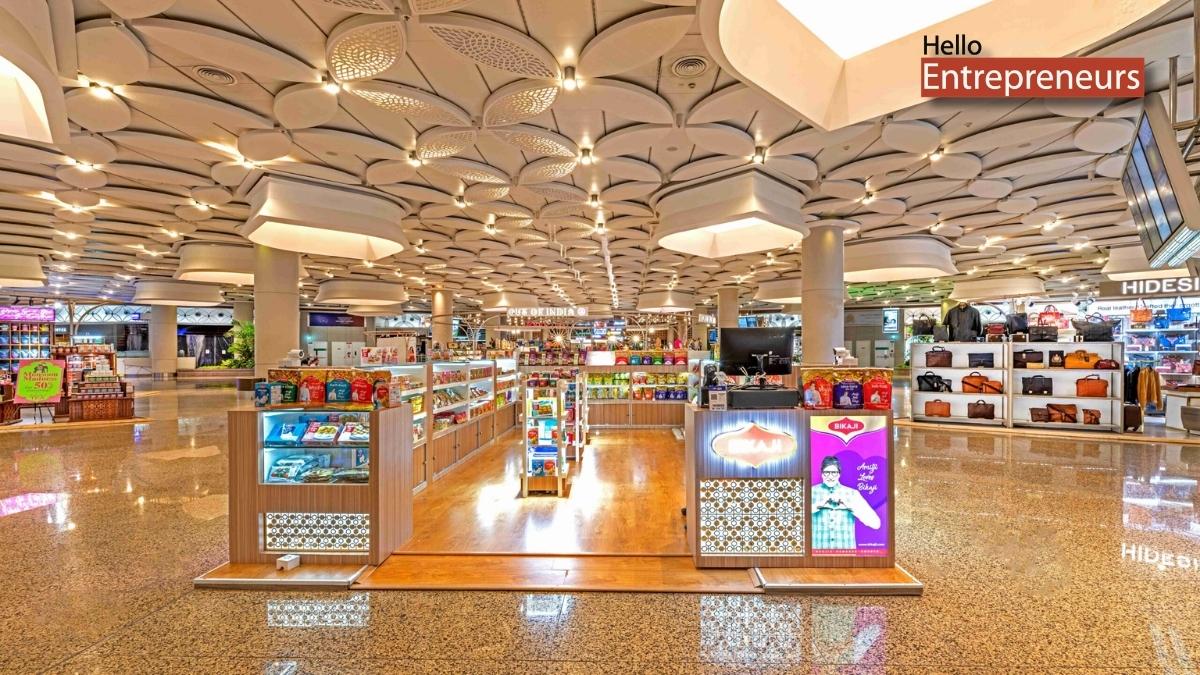
If you walk through airports like Delhi, Mumbai, Bengaluru or Hyderabad today, it’s easy to see the difference. Emblematic luxury brands, electronics chains, bookstores, pharmacies, fashion brands and regional food champions currently occupy large areas of present-day terminals. Airports are being designed more and more like shopping malls, promoting passengers to explore before boarding.
Food and beverage outlets are among the most benefited.
Passengers spend 90 to 150 minutes in airport terminals after completing security checks, according to Airports Council International (ACI). That waiting time is a prime spot of business for retailers. Coffee chains, quick-service restaurants and premium dining outlets are expanding because what matters for travellers is the convenience rather than the cost.
Duty-free shopping also continues to be a major contributor to retail revenue. Liquor, perfumes, chocolates, cosmetics and luxury accessories give the top spots at international terminals, while premium gifting and travel essentials are now popular among domestic travelers as well.
Technology is shaping the airport retail landscape.
Airports are turning to passenger analytics to understand movement patterns, dwell time and shopping behaviour. Digital payments, personalized promotions, loyalty programmes and click-and-collect services are emerging as airports seek to enhance customer experience and increase spend per passenger.
The business opportunity does not end with operators. Restaurant chains, luxury retailers, fashion brands, bookstores, advertising agencies, travel accessory manufacturers and parking operators also find it valuable. Commercial space in airport terminals has become one of the most sought-after assets of the Indian airline ecosystem as the country expands its airport infrastructure.
The government is also pouring money into aviation infrastructure, with plans to increase airport capacity and boost regional connectivity in the coming years. As Indians increasingly opt for air travel, passenger volumes are expected to rise, opening up opportunities for airport retail businesses.
Airports in India are developing into more than just gateways to flights. They’re turning into well-planned commercial ecosystems, with retail shopping, dining and lifestyle gaming playing an integral role in the revenue stream. Airlines bring passengers to airports, but it’s becoming increasingly clear that it is retail that is helping airports to develop more profitable businesses.

