
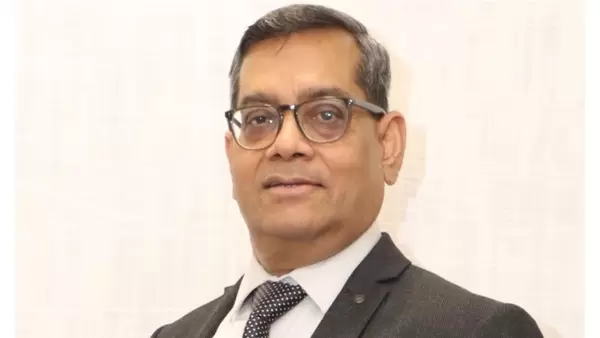








New Delhi: The government of India abruptly revoked the service of R P Gupta, the then Chairman and Managing Director (CMD) of the Solar Energy Corporation of India (SECI). This move was made one month ahead of his tenure expiration in June 2025. The order came on May 10, 2025, from the Appointments Committee of the Cabinet, but no reason was cited as to why he was terminated so prematurely.
Who is R P Gupta?
R P Gupta is a former IAS officer from Gujarat cadre 1987. He had prior work experience in numerous significant government departments such as the Ministry of Environment, NITI Aayog, and Ministry of Coal. He was a B Tech graduate from IIT Kanpur with the stream Aerospace Engineering and began his administrative life at Rajkot. He worked in some major districts of Gujarat such as Bhavnagar, Dangs, Mahesana, Kutch, etc.
Gupta was appointed as the CMD of SECI on June 13, 2023, for a tenure of 2 years and actually joined on June 15, 2023. His tenure had to expire in June 2025, so his ouster was over a month ahead of schedule.
Currently, SECI lacks a full-time CMD. The government has not indicated who will replace him or when the new leader will be appointed. This leaves a leadership vacuum when SECI is facing various challenges.
SECI is a government-owned company that works under the Ministry of New and Renewable Energy, SECI deals with solar, wind, and battery projects in India and contributes to the progress of India to better achieve its green energy target and as of now it aims to have 500 GW of clean energy by 2030, and SECI is meant to assist with an installation of 20 GW of renewable energy projects annually.
Challenges SECI is Facing
Recently, SECI has been facing numerous issues. Many of the energy projects it presented weren’t sold. Of around 40 GW of similar projects, SECI itself has almost 12 GW waiting for sale or purchase orders.
There were also some controversies. For instance, a US corruption case stated that some firms bribed Indian state governments to secure favorable terms on SECI tenders. One of the major problems was that SECI permitted a firm, Reliance Power, to bid on a tender even after it provided forged bank documents. SECI later canceled the tender and banned the firm. But the ban was lifted later after a court stay.
In another case, SECI’s battery energy storage project faced trouble when the electricity regulator (CERC) didn’t accept the price, saying the cost had gone down and there were delays. The company that won the bid, JSW Energy, has taken the matter to court.
Despite all these issues, Gupta did have some ideas for SECI. In a September 2024 interview, he declared that SECI would like to begin producing green energy independently and create 10 GW of clean power capacity by 2030. He also stated that SECI could become a public company as early as 2026-27.