



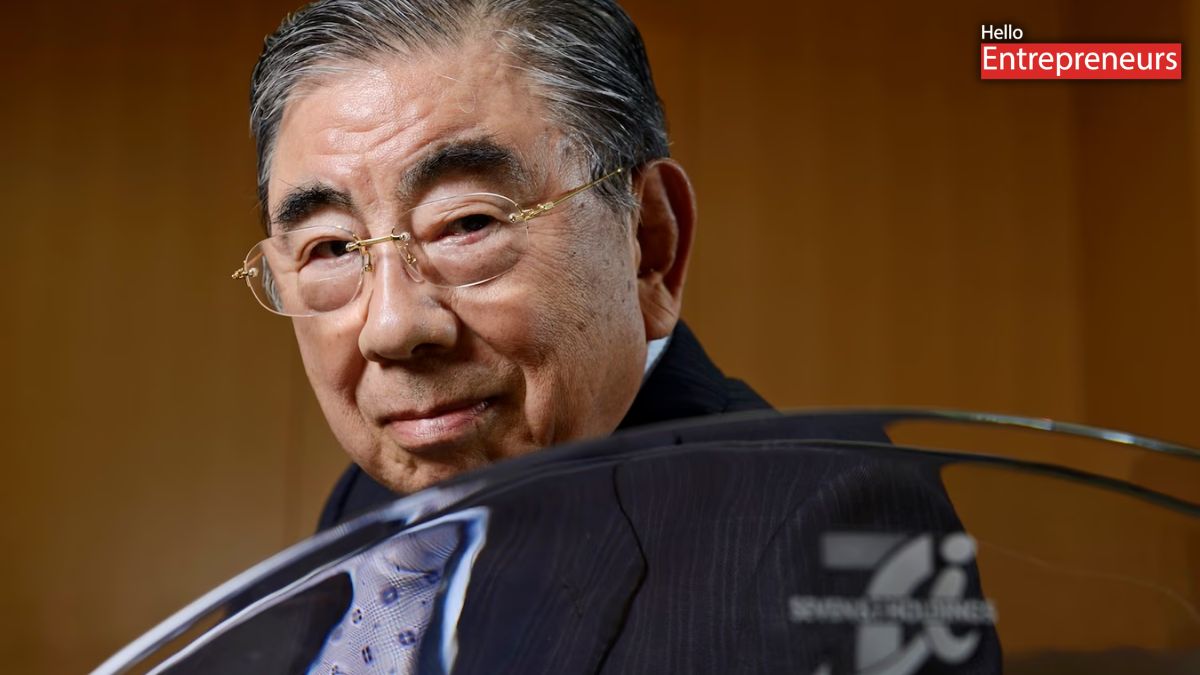
New Delhi: Toshifumi Suzuki, who is widely regarded as the retail giant behind the creation of 7-Eleven, and one of the biggest innovators, passed away at the age of 93. Suzuki revolutionized the convenience store concept, all over the world, as it became. Along with his concept, he helped establish one of the best retail lines in the history of retail.
Suzuki was reputed as a “visionary” businessman who felt that powerful business could come from anywhere even a small hole-in-the-wall shop if his running business knew his customers well. As he directed the chain, 7-Eleven stores evolved from merely selling snacks and soft drinks to much more. It became become fast food shops where people could pay bills, withdraw cash, take their food and even pick up some orders for online shopping.
Suzuki’s eponym was born in Japan in 1932, but did not get into retail work at once. After three years in the university, he continued his study in a publishing company, and later was assigned to Ito-Yokado, a Japanese retail company. In the Seventies, he introduced the brand name 7-Eleven to Japan, something that was of great importance.
There was a time when many wondered if a convenience store could be successful in Japan since there were already numerous local stores. But Suzuki felt Japanese consumers would want more speed, quality and longer hours in stores. His gamble worked.
In 1974, the first Japanese 7-Eleven was introduced in Tokyo. After a couple of decades, Suzuki’s business grew at a fast pace. Soon Japan proved to be the company’s most profitable market, even more lucrative than the United States, where the brand first began.
Suzuki’s great asset was that he concentrated on customer behavior. He learned to persevere instead of stocking shelves with random products, he studied the needs of people at various hours of the day. Fresh rice balls and Souvlaki, noodles, and ready-to-eat food packages would be available according to local demand. This system cut out loss and liabilities for the betterment of profit.
In addition to this, Suzuki also started using high-tech at retail level much sooner than many other competitors. In Japan, 7-Eleven stores was running data systems to monitor customer buying behavior and sales. This enabled store managers to instantly take out items that weren’t performing well. The company was made famous for its very effective supply chain.
Convenience was another key factor which made 7-Eleven a success. Suzuki knew that the way people were buying was altering in the busy urban setting. They desired fast shopping rather than end up spending hours at the supermarket. He ensured that stores of 7-Eleven are placed at proximity to homes, train stations and offices so customers can have easy access to them at any time of day.
By the 1990s and early 2000s, it was a big name in grocery retailing worldwide. In fact, the international 7-Eleven business was soon acquired by the Japanese company illustrating the success of Suzuki’s plan. The brand has presently got a handful of tens of thousands of stores throughout the world in Asia, North America, and different parts of the globe.
The Suzuki is regarded as one of the most influential figures in retail history by many retail experts. His business concept became a model for other convenience stores and changed the shopping culture for consumers. Even big supermarket chains started parroted to 7-Eleven’s methods and efficiency.
Though he was successful, Suzuki was recognized as a hard worker and a “detail man.” Former employees tended to liken him to being demanding, but being very focused on improvement. He felt that the stores need to constantly reassess as per the demand changes and be in no hurry to follow the conventional methods of business.
In his later years Suzuki exited the executive positions he held but was still an influential figure at Suzuki. His concepts still influenced the world’s convenience store business post-retirement. Now that Mies Van der Rohe has passed away, many business leaders and retail experts have written eulogies in his memory. They declared his exploits in taking a convenience store chain to global proportions. Frequent patrons of 7-Eleven throughout Japan also remembered the convenience and night-time hours and cheap prices it provides in their everyday lives.
Toshifumi Suzuki’s past is shattered beyond just those of businessmen. He turned the purchasing lives of millions of people around everyday. He went and started a small convenience store in Japan, and developed a worldwide retail success story. His ideas will be important for decades to come and will remain of influence to retailing practices beyond.

