



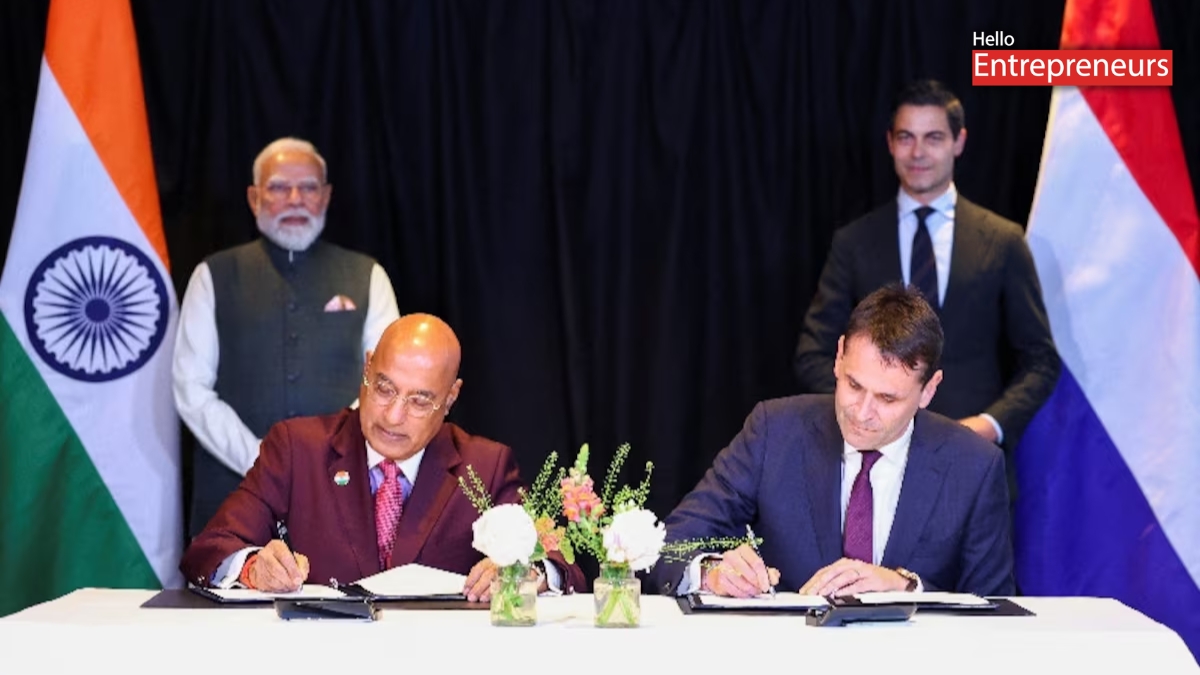
New Delhi: Yet another significant step towards India becoming a semiconductor manufacturing powerhouse. Tata Electronics has inked a strategic agreement with Dutch chip equipment giant ASML to bolster the domain of semiconductors in the country. The deal is likely to assist Tata Electronics’ maiden commercial 300mm semiconductor fabrication plant (Fab) in Dholera, Gujarat.
ASML is one of the biggest Semiconductor Equipment companies in the world. It makes state-of-the-art lithographic machines that are used to create semiconductor chips used in smartphones, laptops, cars, AI servers, telecom devices and more. As part of this relation, ASML will supply its leading lithography systems, know-how and OEM support for the commissioning and operation of the chip plant by Tata Electronics. The two companies will also collaborate in talent cultivation, research and promotions of supply chain for semiconductor industry in the region.
This collaboration is significant as India has to import large quantities of semiconductor chips for making electronics. In developing their domestic semiconductor industry, countries will secure technology security and minimize reliance on foreign producers. It will also enable India to become a trusted manufacturing location for overseas companies looking to diversify their supply chains.
The impact of this collaboration goes far beyond Tata Electronics. There are hundreds of suppliers to a semiconductor manufacturing plant, including supplies of precision components, chemicals, specialty gases, cleanroom equipment, automation equipment, test equipment, logistics & transportation, maintenance. This generates a whole new realm of business opportunities for Indian manufacturers, engineering firms and technology startups. Increased participation of domestic companies in the semiconductor industry value-chain also gives room for other players to compete in international markets.
The partnership will also generate thousands of high-skilled jobs, as well. Engineers, technicians, researchers, software devs and equipment specialists will be required to lend a helping hand to chip manufacturing operations. In addition, universities and technical institutes may be adding new courses on semiconductors in this rapidly developing field to prepare students for future careers in the industry.
This is likely to give a boost to several industries across India. Local chip facilitations to be used in electric vehicles and connected cars will be available to the automotive sector. Consumer electronics firms could also benefit from shorter supply chains and access to more components. There are several other areas where stable, domestic supply of chips would be helpful for businesses, such as defence and weapons manufacturers, the healthcare technology sector and companies in the field of AI.
The collaboration has the potential to unlock new avenues for startups in areas such as semiconductor design, manufacturing software, industrial automation, robotics, and cutting-edge materials. Small and medium enterprises (SME) that offer precision engineering products or services for industries may also open up new growth lines in the semiconductor industry in India.
The joint venture between Tata Electronics and ASML is also helping the Indian government’s vision of India becoming a hub of electronics and semiconductor manufacturing industry in the world. The investments in fabrication plants, assembly plants, as well as supply chains, are making India slowly transition from being a mere consumer to a manufacturer of chips.
Although the establishment of a semiconductor industry might take a number of years, this collaboration is already providing a solid base. The merger of Tata Electronics’ manufacturing plans and ASML’s cutting-edge technology could enhance innovation, appeal to international investors, generate high-quality employment opportunities, and empower India to play a larger role in the semiconductor sector in the coming years.