



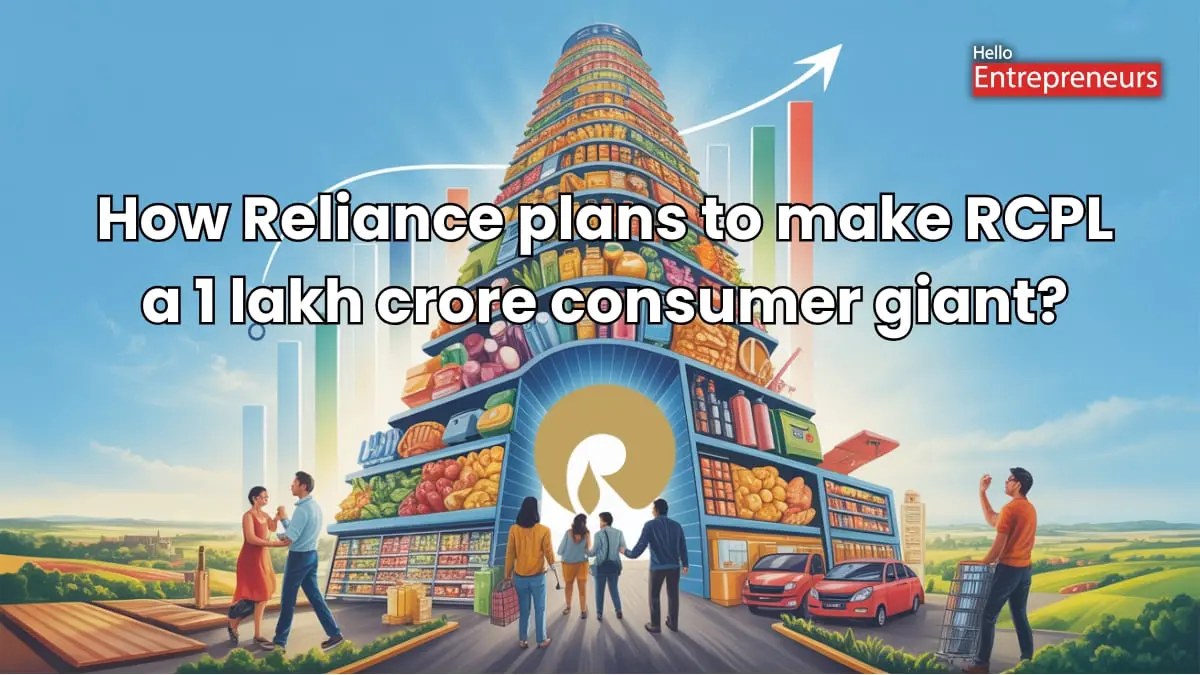
Mumbai: Reliance Industries Limited (RIL) is making it clear that its next big play is in the consumer market. At the company’s latest annual general meeting (AGM), Isha Ambani announced that Reliance Consumer Products Limited (RCPL) is aiming to become India’s fastest-growing consumer brands company, with a target of hitting ₹1 lakh crore in revenue within five years.
That’s not just an ambitious goal, it’s a statement of intent. Analysts already see this move as a potential “value creator” that could change the balance of power in India’s FMCG sector.
The strategy is simple but powerful: RCPL will now function as a direct subsidiary of Reliance Industries. This reshuffle means all of Reliance’s consumer brands, from Independence (grocery) to Avaasa (fashion) and Kelvinator (electronics), will sit under one focused company. The expectation is that this will create sharper strategies, faster execution, and better long-term value for shareholders.
Why Reliance thinks the timing is right?
India’s consumer market is on fire right now. Worth over $2 trillion, it’s growing at more than 8% annually. A few facts stand out:
- India has 350 million middle-class households with huge purchasing power.
- Around 600 million consumers are now brand-conscious and digitally savvy.
- Rural India, home to 900 million people, is driving 65% of FMCG growth, with branded product penetration rising 35% every year, faster than urban markets.
Reliance believes this mix of rising incomes, rural demand, and digital adoption is the perfect recipe to scale RCPL into a consumer giant.
What gives RCPL an edge?
RCPL isn’t just chasing growth; it wants to set the tone for the future of Indian consumption. Its promise is simple: global-quality products at Indian prices.
The company has several growth engines working in its favor:
Consumer insights from billions of retail transactions, strong product launches, like Independence, Avaasa, and Kelvinator.
Deep sourcing networks that balance quality and affordability, omni-channel presence, nearly 20,000 stores backed by a strong digital backbone.
Massive scale, India’s largest supply chain and has a workforce of 2.5 lakh people.
What’s the bigger picture?
What makes this move interesting is how Reliance is betting on rural India and the rising middle class at the same time. Most FMCG players have traditionally focused on urban demand, but Reliance is using its reach and technology to tap into the country’s deepest markets.

