



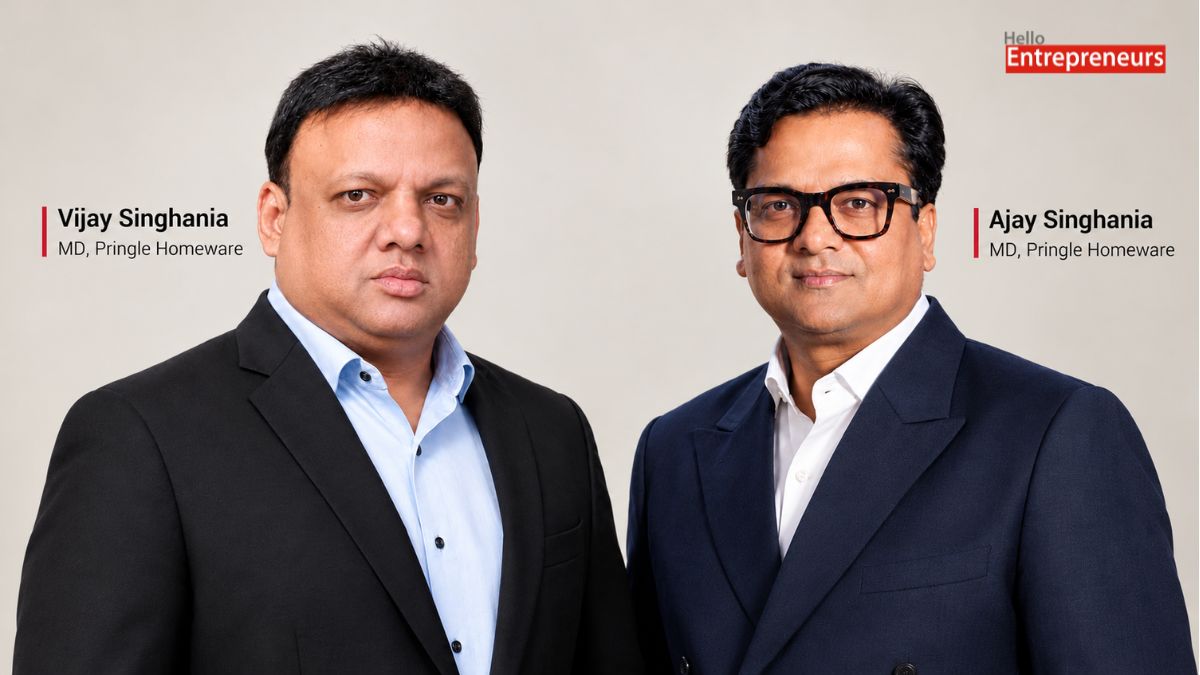
For more than five decades, the Singhania family has been closely associated with India’s home appliance industry. Long before Pringle became a recognized consumer brand, the family had built extensive experience as distributors, working with retailers, understanding customer preferences, and observing how the market evolved. That deep industry knowledge eventually laid the foundation for creating Pringle in 2005—a brand focused on delivering quality, affordable, and stylish home appliances for Indian consumers.
India’s home appliance industry has grown significantly over the past two decades. According to industry estimates, the Indian consumer durables market is valued at over US$25 billion and is expected to continue expanding due to rising disposable incomes, rapid urbanization, increasing electrification, and the growing adoption of modern kitchens. Small kitchen appliances such as mixer grinders, induction cooktops, electric kettles, air fryers, and food processors have witnessed particularly strong demand as consumers increasingly prioritize convenience and healthier lifestyles.
Speaking about Pringle’s journey, Managing Directors Vijay Singhania and Ajay Singhania explained that the decision to launch their own brand was not taken overnight. Years of working in distribution allowed them to understand consumer expectations, retailer challenges, supply chain dynamics, and gaps that existed in the market. Instead of continuing to build other companies’ brands, they believed the time had come to create a brand that reflected their own understanding of quality, design, affordability, and customer needs.
However, entering the market in 2005 was far from easy.
The Indian appliance market was already dominated by established national and international brands with strong customer trust. According to the Singhanias, their biggest challenge wasn’t simply competing against larger companies—it was convincing retailers and consumers that a new brand could deliver reliable products. Rather than relying heavily on advertising, Pringle chose to build credibility through consistent product quality, competitive pricing, dependable after-sales service, and long-term relationships with dealers. Their years in distribution also gave them an advantage because they already understood retailer expectations and had built strong relationships across the industry.
That dealer-first approach remains one of Pringle’s biggest strengths even today.
The company regularly organizes its Annual Dealer & Distributor Meet, where partners from across the country gather to discuss market trends, review new products, and provide direct feedback. Instead of treating dealers merely as sales channels, Pringle views them as strategic partners whose insights help shape future products, pricing, packaging, and service improvements. Outstanding dealers and distributors are also rewarded through international incentive trips, helping strengthen long-term relationships beyond business transactions.
Consumer behaviour has also changed dramatically over the last decade.
Today’s buyers are far more informed than previous generations. Before purchasing an appliance, customers compare prices online, watch product reviews, study features, and evaluate brand reputation. Health-conscious living has further increased demand for appliances that support healthier cooking methods. At the same time, shopping habits have evolved rapidly with the growth of e-commerce and quick commerce platforms, giving consumers access to products faster than ever before.
Recognizing this shift, Pringle has expanded beyond its traditional offline distribution network.
Today, the brand is available across major online platforms including Amazon, Blinkit, FirstCry, and its own direct-to-consumer website. The company has also increased investments in digital marketing, influencer collaborations, and performance marketing to engage younger consumers. Rather than choosing between offline and online retail, Pringle follows an omnichannel strategy where customers can discover products digitally while purchasing through whichever platform they find most convenient.
Product development at Pringle follows a carefully structured process.
Before introducing any new appliance, the company studies market demand, pricing trends, competitor offerings, and customer expectations. Product samples are tested, and feedback is collected from dealers, distributors, and consumers before large-scale production begins. According to the company, every launch is evaluated not only for features but also for reliability and long-term customer satisfaction, ensuring products deliver genuine value for money while minimizing future service issues.
Looking back, the Singhanias describe their biggest business decision as moving from distribution to building their own consumer brand. Although the shift required significant investment, patience, and confidence, they believed their decades of industry experience provided the foundation needed to succeed. What initially appeared risky eventually became the defining milestone in Pringle’s journey and transformed the company into a recognized player in India’s home appliance market.
As a family-run business, responsibilities are clearly divided between the two Managing Directors. One oversees purchasing and product-related decisions, while the other focuses on sales and market development. Despite having independent roles, all major strategic decisions are made jointly after detailed discussions, allowing different perspectives to strengthen the company’s long-term direction.
Looking ahead, Pringle believes India’s biggest opportunities lie in four key areas, premiumisation, deeper expansion into Tier-2 and Tier-3 cities, rapid growth of e-commerce and quick commerce, and increasing demand for Made in India products. As incomes rise and digital access improves across smaller cities, consumers are becoming more aspirational and willing to invest in better-designed, technology-driven appliances. The company sees these trends as the foundation for its next phase of growth, combining innovation, wider accessibility, and Indian manufacturing to build a stronger, future-ready brand.

