



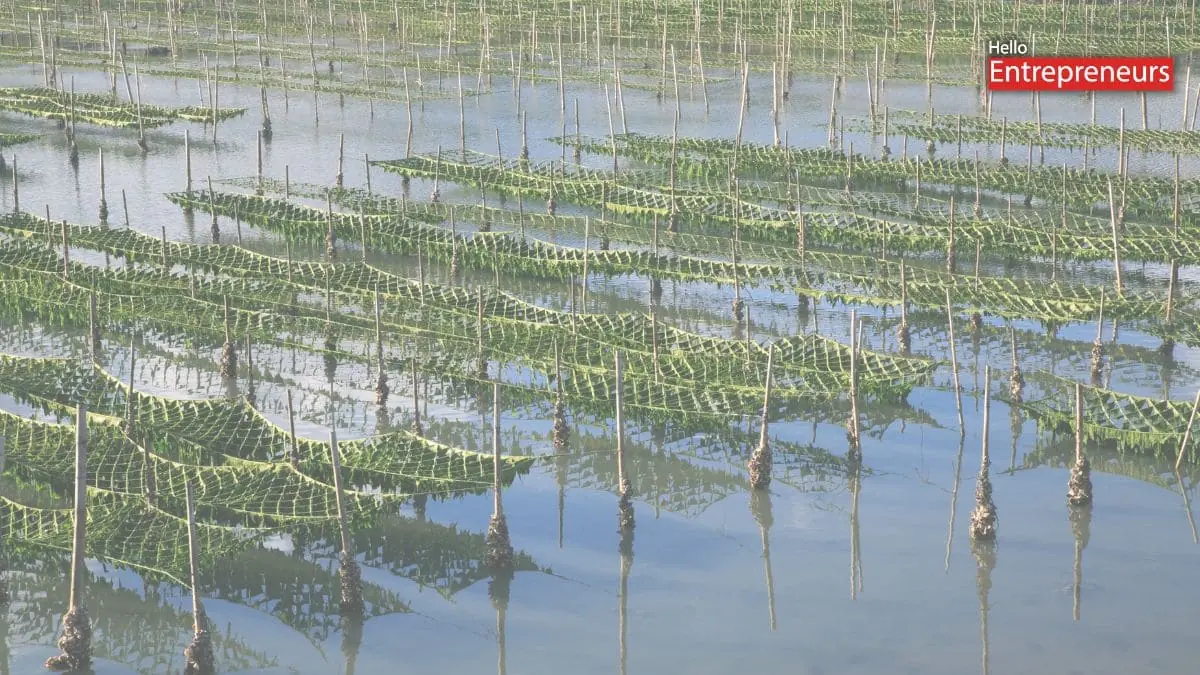
Gandhinagar : The Government of Gujarat has announced the second edition of the Vibrant Gujarat Regional Conference (VGRC) for the Kutch and Saurashtra region. The conference will be held in Rajkot from 10 to 12 January 2026, alongside the Vibrant Gujarat Regional Exhibition (VGRE), which will take place at the same venue from 10 to 13 January 2026. The event will offer a strong platform for industries, MSMEs, government bodies, and entrepreneurs across the region. This edition of VGRC will spotlight Kutch’s growing success in seaweed farming. Stretching from the Kutch coastline to the deep waters near Devbhumi Dwarka, seaweed cultivation across a 430 km belt is emerging as a fast-expanding sector, boosting coastal livelihoods and strengthening India’s blue economy.
What is seaweed and what are its uses?
Seaweed is a type of marine algae that has been used for centuries for food and medicinal purposes. Seaweed is rich in vitamins, minerals (especially iodine), fiber, and antioxidants, which provide benefits such as improved gut health, heart health, thyroid function, and potential weight management. It is used as a nutrient-dense food and as a functional ingredient, offering compounds that are anti-inflammatory, anti-cancer, and helpful in regulating blood sugar.
Special training for coastal communities for seaweed cultivation
Seaweed production in Gujarat is steadily rising, and it is emerging as a vital lifeline for coastal communities. During the monsoon fishing-ban period, seaweed cultivation provides an important source of income. In 2023–24, Kutch alone cultivated 14 tonnes of seaweed. Women self-help groups earn ₹12,000 to ₹18,000 per month through cultivation and drying activities. The sector attracts younger generations seeking environmentally sustainable work and helps ease pressure on traditional fishing. To support this growth, coastal communities are being trained in seaweed cultivation. So far, people from 17 villages in Kutch have received training, and regular training sessions are conducted in Kutch, Devbhumi Dwarka, Gir Somnath, Junagadh, and Morbi.
Recognising seaweed as a key pillar of the Mariculture Vision, the Government of Gujarat has implemented several reforms under the Viksit Gujarat Fund. Under this initiative, a holistic ecosystem has been created—from cultivation support to processing infrastructure. The expenditure limit for a Raft Unit, which was previously set at ₹3,000, has been increased to ₹6,000. The cost for a Tube-Net Unit has been raised from ₹8,000 to ₹25,000. To ensure the availability of seaweed seeds throughout the year, ₹2 crore will be allocated for Seaweed Bank Units, and ₹5 crore will be provided for Seaweed Processing Units to extract salts, carrageenan, alginate, and bio-stimulants. ₹6 crore will be earmarked for a Center of Excellence in Seaweed Research and Utilization at Okha under Kamdhenu University.
Notably, seaweed farming, once a niche activity limited to a few coastal communities, has evolved into a government-supported, research-driven initiative. Backed by new policies, technological innovations, and GIS mapping, seaweed cultivation in Gujarat is gaining unprecedented momentum.

