



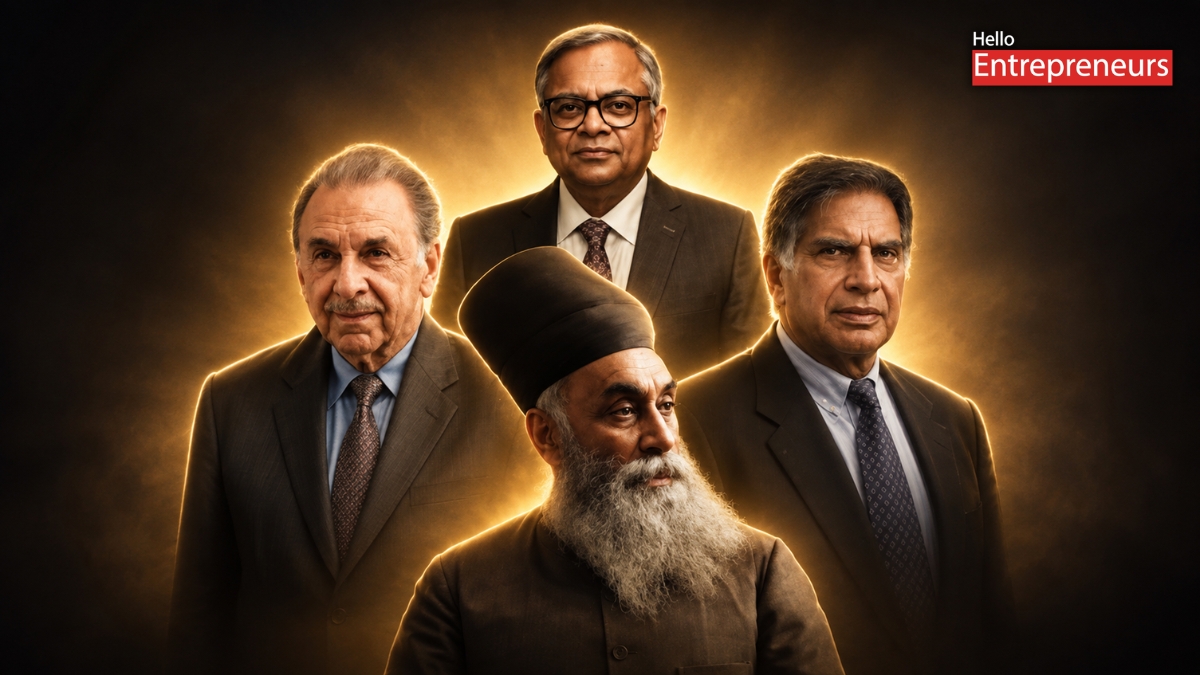
New Delhi: The Tata Group has come a long way from being a small trading firm to one of the largest and most reputed business groups in India. It has been shepherded by a succession of leadership over the past 157 years to grow, globalise and establish its reputation as a trusted, social responsibility brand in new areas.
It had begin with Sir Jamsetji Nusserwanji Tata, who was founder of the most well-known Tata Group in 1868. He was more than just a businessman, he was a visionary for Tata Group. He was keen to establish industries that would going to make India economically empowered. His ideas included setting up with a major steel plant, a world-class hotel and institutions for scientific research. Many of these dreams were continued after his death in 1904.
Sir Dorabji Tata: Turning Dreams Into Reality
Jamsetji Tata was succeeded by his elder son Sir Dorabji Tata. He was an important key to making his father’s plans a reality. While under his stewardship, Tata Steel was set up and other large enterprises like Tata Power also emerged.
Dorabji was not just concerned about growing business. He also assisted with education, science and sports. His handling ensured the Tata group has had a sustained industrial growth for many years to come.
Sir Nowroji Saklatvala: A Period of Consolidation
After Dorabji Tata, the next chairman of the Company was Sir Nowroji Saklatvala. The time he led the group coincided with an expansion and strengthening of the existing businesses.
His term ended before other Tata chairmen but served to keep the company stable and to maintain the focus on responsible business.
JRD Tata: The Longest Leadership Era
JRD Tata or Jehangir Ratanji Dadabhoy Tata is one of the most significant names in the history of Tata. In 1938, he was elected to be chairman, leading the way for over 50 years.
Under JRD Tata, the group grew to diversify to various segments such as automobiles, chemicals, technology and consumer business. Tata Consultancy Services (TCS) too was formed during this wider diversification period.
By the time JRD Tata retired in 1991, it was a much bigger organisation. So, after 53 years with JRD, Ratan Tata became his successor, followed by the group becoming a $100 billion enterprise, according to Tata’s own account.
Ratan Tata: Taking the Group Global
In 1991, it was led by Ratan Tata, who in turn became the new face of the Tata Group. A big part of his focus was on modernisation and establishing a stronger presence in the global market.
Tata firms acquired a number of big overseas assets, such as Jaguar Land Rover, under his guidance. Tata Motors also introduced a product in the market Nano and other companies like TCS, Tata Consultancy Services and Tata Consumer Products became important to the group’s business.
After Cyrus Mistry’s removal in 2016, Ratan Tata has again been appointed chairman, which he has subsequently resigned from in 2012.
Cyrus Mistry: A Short and Difficult Tenure
In 2012 Cyrus Mistry was appointed as chairman. But he was only in the job for about four years. In 2016, he was sacked after a leadership conflict at the group.
His departure turned one of the most controversial leadership transitions in Tata’s recent history.
N Chandrasekaran: A New Era
In 2017, N Chandrasekaran went on to take over as chairman of the Tata Sons and became the first non-Parsi to run the group. Previously, he had worked his way up the hierarchy of TCS.
Tata broadened its scope to aviation, electronics, semiconductors, and digital businesses and other emerging areas during his tenure. During his tenure the market value of all the listed Tata companies rose steeply as well.
But after his tenure ends this February 2027, Chandrasekaran has now announced that he will not run for a second term. The choice has begun yet another round of the casting for a new head of Tata Sons.
Jamsetji Tata’s industrial blueprint and Chandrasekaran’s tech and new-age business emphasis have marked distinct eras of the Tata saga, leaving an indelible effect on every generation. Now the challenge for the next leader will be in seeking to continue this 157-year tradition.

