



New Delhi: At seven years old, Onkar Singh Batra entered the Guinness World Records as the world’s youngest male webmaster.
Today, at just 20, he is working on a much bigger problem: how to keep satellites connected when they move beyond the range of ground stations.
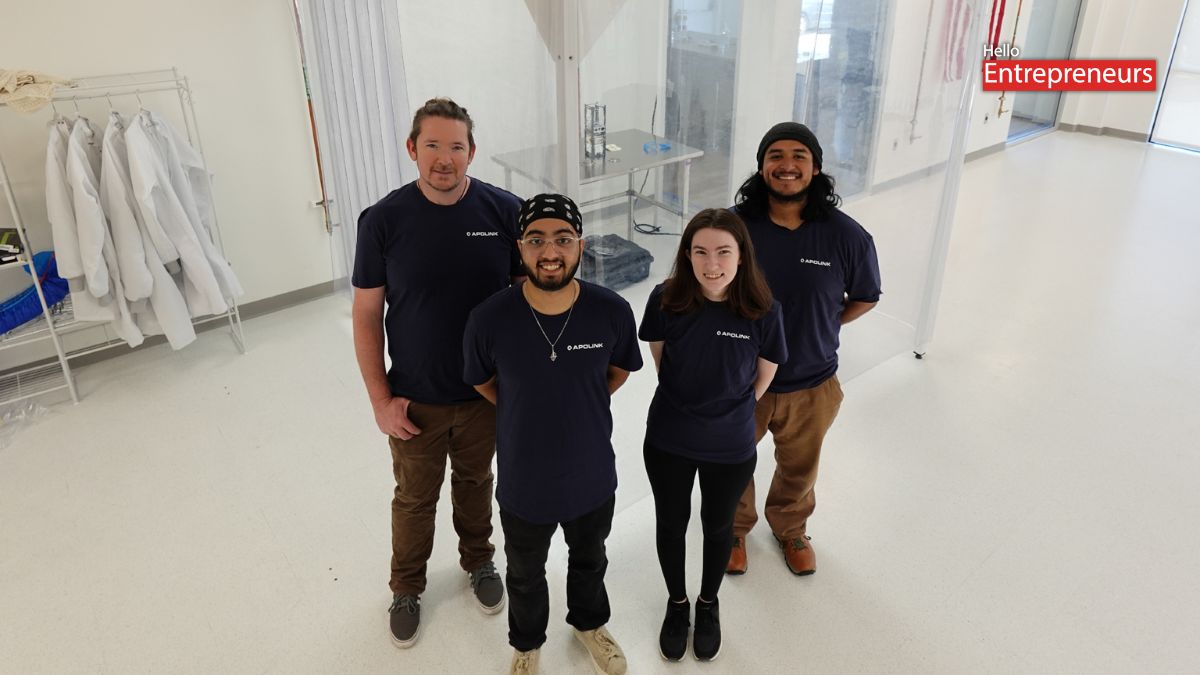
Batra is the founder of Apolink, a space-technology startup developing a satellite communication system designed to create a continuous communication layer for spacecraft in low Earth orbit. The company has raised $4.3 million, giving the young entrepreneur backing to pursue a problem that is becoming increasingly important as the number of satellites in space grows.
Batra’s technology journey began unusually early.
At seven, he was already building websites. By 12, he had written a book, and by 13 he had founded a company. His interest later moved from software toward space technology.
By the age of 16, he had developed a satellite.
The transition from websites to satellites may sound unusual, but it reflects how rapidly technology is changing. Software skills can provide the foundation for work in increasingly complex industries, including aerospace.
Apolink is attempting to solve a practical problem.
Satellites in low Earth orbit move rapidly around the planet. When they move outside the communication range of a ground station, maintaining a continuous connection becomes more difficult.
Batra’s company is working on a relay system designed to bridge these communication gaps.
The opportunity is growing because the number of satellites being launched into orbit has increased sharply. Communications, Earth observation, navigation and scientific research are all creating demand for reliable satellite networks.
The funding gives Apolink the resources to develop and test its technology.
For Batra personally, the journey also represents a transition from being known as a child prodigy to being taken seriously as a founder.
That transition can be difficult. Building a technology company requires much more than technical ability. It requires fundraising, hiring, managing customers and convincing investors that the technology can become a viable business.
The $4.3 million funding round is therefore an important milestone. It signals that investors see commercial potential in the problem Batra is trying to solve.

