



New Delhi: India’s next technology battle may not be fought by traditional technology companies alone.
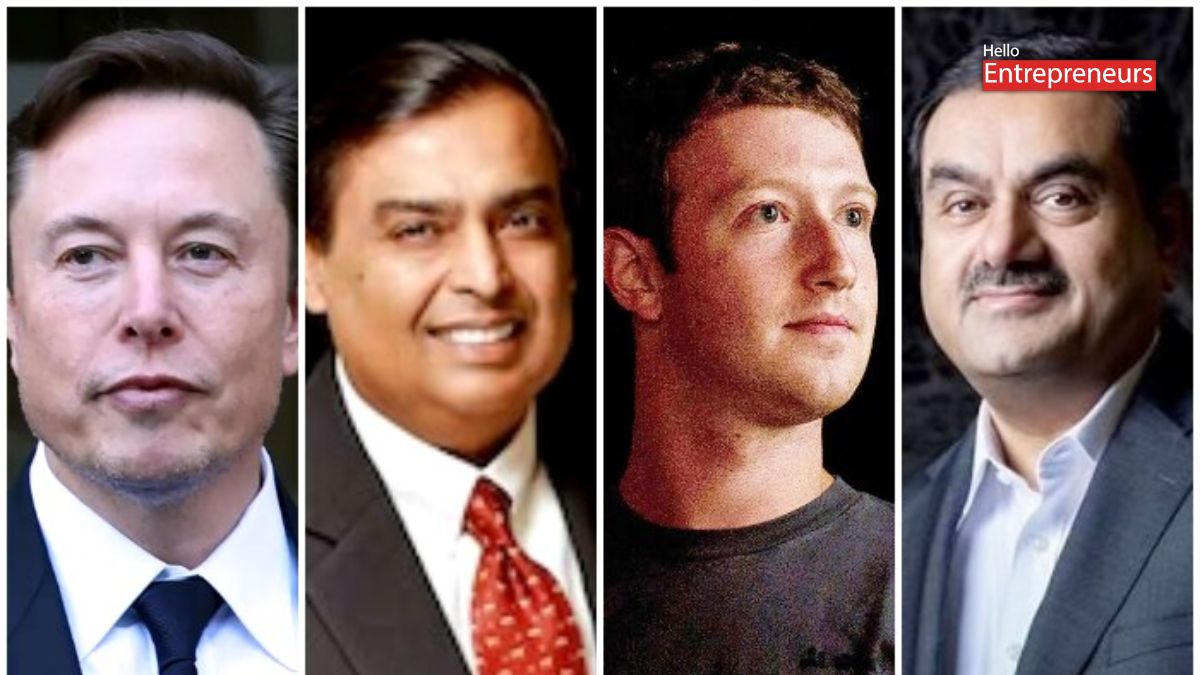
Some of the world’s most powerful businessmen, Elon Musk, Mark Zuckerberg, Mukesh Ambani and Gautam Adani, are increasingly competing for pieces of the same opportunity: India’s rapidly growing digital economy.
Their strategies are different, but the areas they are targeting increasingly overlap.
Mukesh Ambani has perhaps the most established position. Reliance’s Jio transformed India’s telecom market and gave the group access to hundreds of millions of consumers. Reliance is now moving beyond connectivity into AI, cloud services, data centres, digital entertainment and consumer technology.
Meta’s Mark Zuckerberg has taken a different route.
WhatsApp has become one of India’s most important communication platforms, while Meta has expanded into payments, business messaging and commerce. Its latest major move is a $900 million investment in fintech company CRED. The deal also brings CRED founder Kunal Shah into a global leadership role at WhatsApp.
Meta has also deepened its infrastructure ambitions. The company announced a partnership with Reliance for a 168 MW AI-enabled data centre in Jamnagar, showing how closely global technology companies and Indian industrial groups are becoming connected.
Then there is Elon Musk.
Musk’s India ambitions are centred around Starlink and potentially Tesla, but Starlink is particularly important to the digital-economy story. Satellite internet could bring high-speed connectivity to areas where traditional fibre or mobile infrastructure is difficult to build.
Musk’s SpaceX is also expanding aggressively into AI infrastructure, making connectivity, computing and artificial intelligence increasingly connected businesses.
Adani is approaching the opportunity from the infrastructure side.
The group is investing heavily in power, renewable energy, data centres and digital infrastructure. At its 2026 AGM, Adani outlined major expansion plans for power and data centres, linking India’s growing electricity demand directly with the country’s AI ambitions.
This is where the four business empires begin to overlap.
AI needs data centres.
Data centres need electricity.
Digital platforms need connectivity.
Connectivity creates consumers.
And consumers create demand for payments, entertainment, shopping and AI services.
Ambani has the consumer network. Zuckerberg has the global digital platforms. Musk controls a growing satellite network and AI ecosystem. Adani has physical infrastructure and power.
That does not mean one of them will “control” India’s digital economy. India’s ecosystem also includes Google, Amazon, Microsoft, Apple, Indian startups, telecom companies and thousands of smaller technology firms.

