



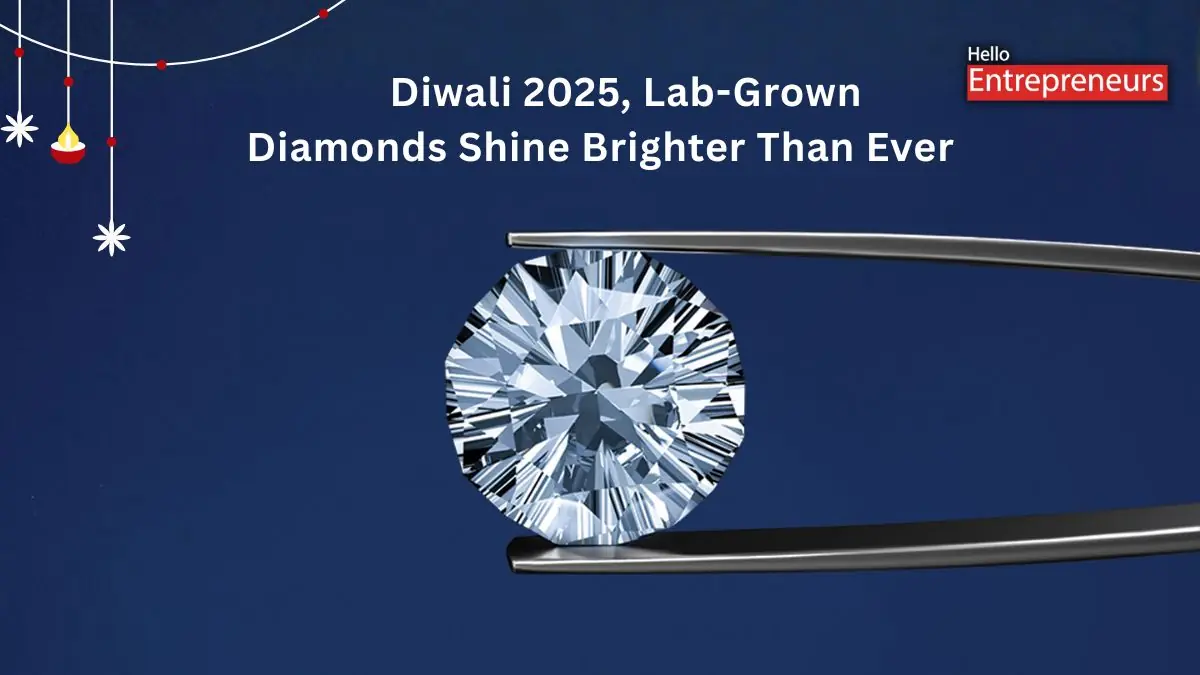
Diwali, the festival of lights has always been a festival of celebration, joy and family bonding in India. It is also a shopping season, a gift giving season and a wearing jewellery season, which is as shiny as the diyas which illuminate houses. However, this year the jewellery market is a story of transformation. Lab-grown diamonds are stealing the hearts of shoppers, who bring more style, lower prices, and modernity to festive events and the traditional diamond industry has not adjusted to new realities.
In cities such as Pune, Mumbai and Bangalore, there is an observable change in buyer preference in jewellery stores across the cities this Diwali. Lab-grown diamonds that resemble the natural diamonds at all but cost significantly less have been the preferred option of most families. They are not only being purchased during weddings but as presents to relatives and friends and also loved ones during the festive season.
One of the mothers who was getting ready to marry off her daughter stated that they had resolved to use jewellery made with lab-grown diamonds. They are realistic, they have certificates and even can be resold in future. It simplifies our shopping experiences of festivals and makes them more rewarding. This feeling is indicative of a larger trend: customers desire beauty, authenticity, and affordability in one.
One extreme reason behind this development is the increasing price of gold. The prices have increased exponentially up to ₹1,10,000, this month compared to about ₹78,000 per 10 grams last year. In this case, the lab-grown diamonds can enable the family to purchase more luxurious jewellery such as oversized earrings, necklaces and rings without straining their budgets. Other jewellery companies have also begun to release lighter gold (18K, 14K or even 9K) designed jewellery to make them even cheaper.
According to jewellers in Mumbai Zaveri Bazaar, nearly 80 percent of the Diwali orders placed in their stores are now including lab-grown diamonds. One of the designers told me that the current consumers desire to party without spending heavily. Grown diamonds allow them to do so. They are able to select larger rocks, brighter patterns and yet remain in their financial limits.
The cost of diamonds produced in the laboratory has decreased drastically over the last year. In India, the prices of standard stones are now nearly 65 percent less, as has the international price on some varieties, by up to 90 percent. This price is particularly appealing in the season of Diwali, when families wish to celebrate with a diamond but do it economically as well.
There are problems to the Diamond Industry
As the shoppers flaunt their lab-grown diamonds, the conventional diamond industry is struggling. The decline in exports, international tariffs, and an increase in the competition in the synthetic diamond market are putting pressure on traders and manufacturers. Some of them have been forced to reduce working hours or production or reconsider the ideas of lab-grown diamonds.
Many diamond enterprises have invested in HPHT (High Pressure High Temperature) or CVD (Chemical Vapour Deposition) machines during the last two years in order to make lab-grown diamonds. As much as there are new opportunities in this technology, the market has become crowded. Prices are now dwindling and most traders are not finding enough market to sell their products.
Some businesses are putting more emphasis on survival than growth even in Diwali, which is considered as a season that is usually busy. The juxtaposition between this and the speed at which the diamond market is evolving underscores the fact that even as people rush to buy gifts during the festive season, they are opting out and trying alternative new products.
The Two Faces of Diwali Jewellery
The transformation into lab-grown diamonds displays the Indian jewellery market in a new perspective. Urban consumers are adopting lab-grown diamonds due to their price, contemporary style and certification where they can afford to embrace festivals in the style and also budget wisely. In the meantime, technology, competition and changing demand are pushing producers into adapting to them.
Lab-grown diamonds are transforming the culture of the festivals. They enable the families to purchase larger and more expensive jewellery without spending too much. Meanwhile, the old industry is getting to know that change cannot be achieved without investment, innovation, and time.
A Case of Festive Change
Take two families in Diwali. A family in Pune that is about to get married believes that the gold price is too high, and they cannot afford natural diamonds. Lab-grown diamonds offer the ideal remedy. Their shopping in the bridal section during the festival makes them happy and unforgettable because they purchase a huge, glittering certified, beautiful, and affordable bridal set.
Diwali, to the manufacturers and workers in the diamond industry, is a reminder that getting used to things is a prerequisite. It is also necessary to learn new skills, invest into technology, and learn new changing consumer preferences in order to survive in a market that is rapidly shifting to lab-grown diamonds.
These stories provide two sides of the festival season celebration to the buyer and challenge to the producer. They both belong to the same changing diamond business.
The emergence of lab-grown diamonds in Diwali has a number of lessons to teach. Even very traditional markets can be changed with the help of technology. Affordability, style, and certification are now considered by the consumers besides tradition. By investing into the technology of producing diamonds in a lab, experimenting with new markets, and developing credibility, businesses will be capable of surviving and expanding.
The speedy development without the plan may cause issues, since a saturated market may cause the prices to decline and the competition to be hard. Diwali brings out the fact that business and celebrations are closely related. Smart, cheaper luxury can be appreciated by shoppers, producers are forced to be creative and adjust in order not to become irrelevant.

