



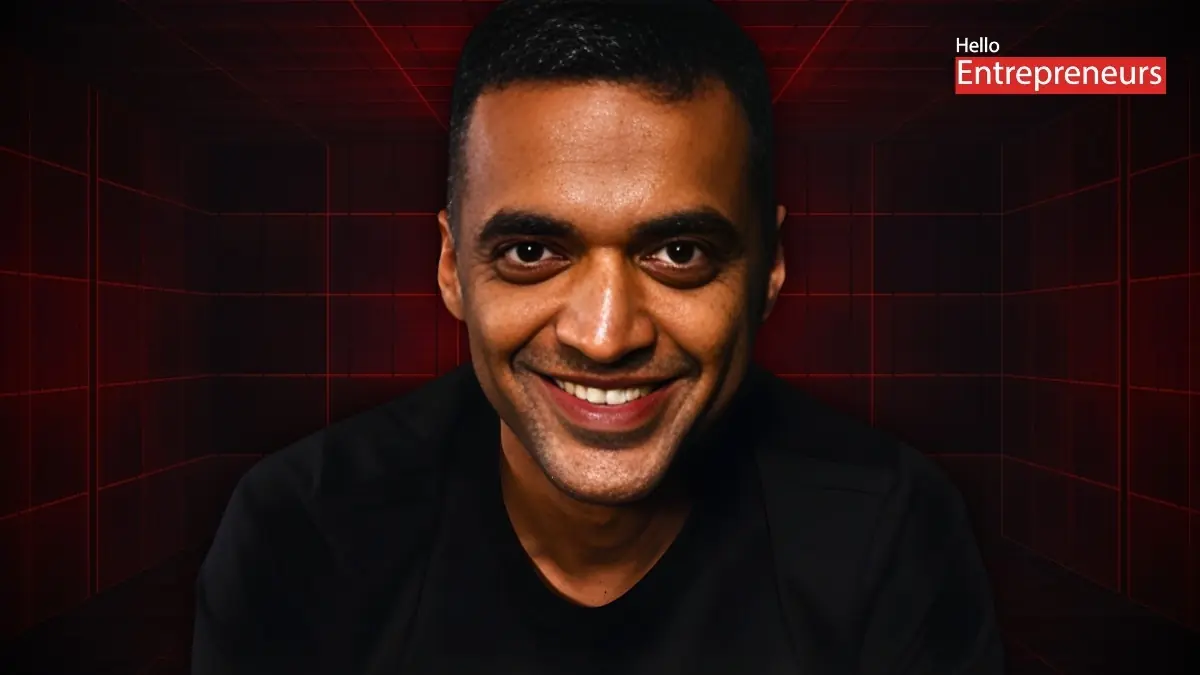
Bengaluru: When most billionaires chase yachts and islands, Deepinder Goyal is chasing biology. The Zomato founder just dropped $25 million of his own money into Continue Research, his moonshot to decode human ageing and, maybe, extend how long we live.
A $25 Million Bet on Curiosity
On Friday, Deepinder Goyal announced a $25 million fund for his project, Continue Research, an independent scientific initiative he’s personally bankrolled. No venture capital, no institutional money, just one entrepreneur deciding that biology might be due for a software update.
The goal? To support researchers worldwide who dare to ask what Goyal calls “simpler questions.” His post on X summed it up with characteristic precision: researchers who “believe biology might be far simpler than we’ve made it.”
Continue Research isn’t a company, a startup, or a vanity lab. It’s a hybrid between a research collective and a seed fund, already two years in motion. The fund’s purpose is to identify simple leverage points in human biology, those upstream mechanisms that could fundamentally alter how humans age, function, and evolve.
From Food Delivery to Life Extension
Let’s be honest, not many founders go from delivering biryani to decoding biology. But Deepinder Goyal has always operated on first principles. The same man who turned Zomato (now Eternal) into a publicly listed tech powerhouse worth over ₹2.6 lakh crore is now applying that startup rigour to science.
Continue Research aims to extend healthy human lifespan, not just add more candles to the cake. Goyal calls it a “multi-decadal journey”, one he sees as a catalyst in “humanity’s conscious evolution.” He’s openly talking about ushering us into what he calls the “Post-Darwin era.” Sounds audacious, but then again, audacity built Zomato.
How the Fund Works: Moonshots and Deep Dives
The $25 million Continue Research fund isn’t a black box. Goyal’s team has laid out a two-track model:
- Moonshots: Idea-stage research with $50,000–$250,000 grants, running six to twelve months. Designed to fund bold, early hypotheses that challenge conventional science.
- Deep Dives: Larger $250,000–$2 million grants for one-to-three-year studies aimed at converting correlation into causation or disproving entrenched assumptions.
It’s structured like venture funding, except the “startups” here are scientists, and the ROI isn’t money, it’s insight. All the research will be open-source, meaning anyone can build on the findings. No patents, no walled gardens, no “for the elite few.”
That accessibility focus is rare in a world where longevity startups often flirt with exclusivity. Goyal’s stance is blunt: “Our endeavour is to find answers and interventions that can be made accessible to the entire population.”
Decoding Human Ageing, The Big Hypothesis
Continue Research’s current obsession: human ageing. Goyal hinted that his team has been investigating a “penny-drop insight” that’s been hiding “in plain sight for eternity.” He says they’re at the “tail end” of validating it, and if true, it could “fundamentally change our understanding of biology and ageing.”
That’s a bold claim, but not an empty one. Continue’s researchers are exploring upstream biological mechanisms, essentially, the system-level wiring of the human body that determines how we age. They’re not chasing anti-wrinkle creams; they’re chasing the operating code of life.
The underlying philosophy is simple yet radical: biology might be simpler than we think. Instead of studying it pixel by pixel, Continue Research takes a systems approach, mapping how everything connects.
Beyond Longevity, Toward Conscious Evolution
For Goyal, this isn’t just about living longer; it’s about living wiser. He points out that the world is evolving faster than human biology can adapt, from climate change to AI to nuclear weapons. “These require long-term wisdom,” he said. “We don’t live long enough to develop that.”
In other words, evolution needs an upgrade. Continue Research’s long-term vision is to accelerate humanity’s biological and intellectual evolution, or at least help us keep up with the world we’ve built.
Goyal even entertained a thought experiment: What if we lived for 180 years instead of 80? The answers aren’t science fiction. They’re behavioural: patience becomes a survival trait, lifelong education becomes a necessity, and progress stops being a sprint.
India’s Own Post-Darwin Gambit
There’s a quiet pride to all this. India has produced plenty of unicorns, but few founders have attempted to bridge business success with scientific discovery. Continue Research puts Goyal in a different league, one that blends Indian entrepreneurial tenacity with Silicon Valley-style futurism.
This isn’t philanthropy. It’s high-risk R&D for the species, powered by personal capital. If successful, Continue Research could position India as a hub for longevity science, a field dominated by Western institutions and billionaires like Bryan Johnson and Jeff Bezos.
Goyal’s play is simple: instead of buying his way into immortality, he’s funding the open-source path to it.
A Pattern of Building for the Future
Continue Research isn’t Goyal’s only side quest. Earlier this year, he co-founded LAT Aerospace with former Zomato COO Surobhi Das, investing $20 million to develop hybrid-electric short takeoff and landing aircraft.
From aerospace to ageing, there’s a consistent theme: long-term bets on human systems. Goyal is building not for this decade but for the next century.
As his website puts it, Continue Research “exists to support those who see the whole picture rather than studying it pixel by pixel.” That’s not just science talk. It’s a strategy, and it sounds exactly like something the founder of Zomato would say.
A Global Movement in the Making
Continue Research has already begun collaborating with scientists across continents. All research will be open-source, ensuring that discoveries can’t be locked away by corporate interests.
By funding curiosity instead of profit, Goyal might have cracked the oldest startup formula in the book: back people who ask better questions.
Also Read: Certified Quantum Randomness Achieves Unbreakable Security?