



Mumbai: India’s deep-tech story isn’t running on luck. It’s running on capital, courage, and a government that finally understands how innovation actually grows. The Electronics Development Fund is Exhibit A.
India’s Quiet Tech Engine Picks Up Speed
Look, the electronics sector used to be India’s missed opportunity. For years, we imported more than we built, and every gadget in our pockets served as a reminder. That’s changing fast.
A mix of reforms, smart manufacturing incentives, and a new appetite for indigenous design has pushed India into global conversations about electronics. Amid this shift, one instrument has quietly shaped the country’s innovation backbone: the Electronics Development Fund.
Launched on 15 February 2016, EDF wasn’t framed as another bureaucratic exercise. It was built as a strategic Fund of Funds designed to supercharge research, fuel startups, and build real intellectual property in electronics, nano-electronics, and information technology.
And yes, it’s working.
How the Electronics Development Fund Works
At its core, the Electronics Development Fund is a capital multiplier. Instead of betting directly on companies, EDF invests in professionally managed Daughter Funds. These early-stage angel and venture funds then deploy risk capital into startups building deep-tech solutions.
Simple model. High leverage. Maximum impact.
Some hard facts worth noting:
- Anchor Investor: Ministry of Electronics and Information Technology
- Trustee & Sponsor: Canara Bank
- Investment Manager: Canbank Venture Capital Funds Ltd
Every Daughter Fund must operate as a SEBI-registered Category I or II AIF. That keeps governance tight and investment discipline real. EDF participates as a minority investor, which attracts more private capital. That’s how you build a sustainable market, not a subsidy pipeline.
What EDF Really Aims to Do?
Every fund has objectives, sure. But EDF’s list reads like a blueprint for building a self-reliant digital powerhouse.
Promote Innovation and R&D
Foster research in electronics, nano-electronics, and IT. India-first innovation, not imported blueprints.
Support Daughter Funds
Back fund managers who know how to spot and shape early winners.
Encourage Product and Technology Development
Shift India from assembly to design. Build the brains, not just the boxes.
Strengthen Indigenous Design
Grow local engineering muscle in the Electronics System Design and Manufacturing sector.
Build National IP
Generate patents and technologies owned by Indian companies.
Enable Strategic Tech Acquisitions
Acquire foreign technologies when India imports too much of them. Reduce dependence and push capability.
Honestly, it’s everything a long-term tech strategy should be.
Built for Flexibility, Run Professionally
EDF didn’t fall into the usual trap of overcontrol. Instead, it runs on market principles:
- Participation is non-exclusive
- Minority stake encourages private investment
- Fund managers get autonomy to raise corpus and choose startups
- Investments span the full electronics and IT value chain
- Every fund undergoes rigorous due diligence
It’s government-enabled but industry-driven. Refreshing.
EDF’s Impact: Numbers That Actually Matter
As of 30 September 2025, the Electronics Development Fund has delivered real, measurable impact:
- ₹257.77 crore invested in eight Daughter Funds
- Daughter Funds invested ₹1,335.77 crore across 128 startups
- Over 23,600 high-tech jobs created
- 368 Intellectual Properties generated or acquired
- 37 successful exits
- ₹173.88 crore returned to EDF through exits and partial exits
And the sectors? IoT, robotics, drones, autonomous vehicles, HealthTech, cybersecurity, AI, ML. Exactly where India needs a strong domestic foundation.
Performance Snapshot of Daughter Funds
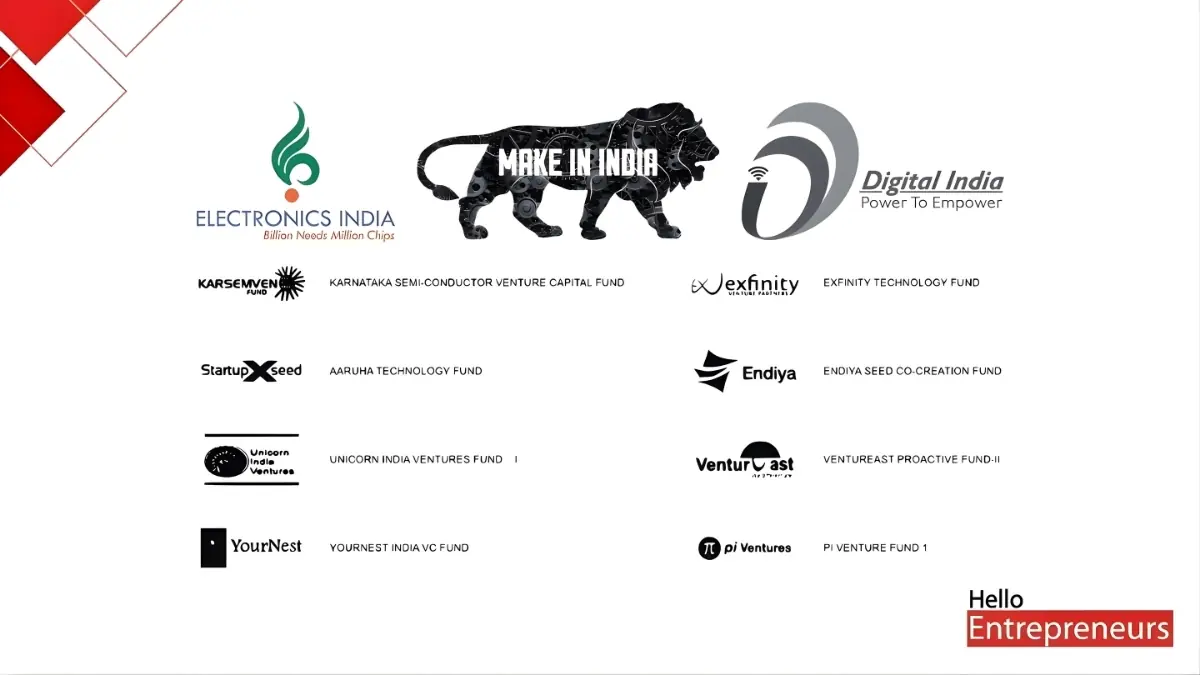
- Unicorn India Ventures Trust: ₹15.82 cr (17 startups)
- Aaruha Technology Fund-1: ₹6.75 cr (13 startups)
- Endiya Seed Co-creation Fund: ₹30 cr (12 startups)
- Karsemven Fund: ₹24 cr (17 startups)
- pi Ventures Fund 1: ₹15 cr (15 startups)
- YourNest India VC Fund II: ₹43.15 cr (19 startups)
- Ventureast Proactive Fund-II: ₹97.75 cr (18 startups)
- Exfinity Technology Fund Series II: ₹25.30 cr (17 startups)
A strong spread. Good diversification. Serious ambition.
Why This Matters for India’s Tech Future?
If India wants to lead in electronics globally, it must dominate design, innovation, and IP. Not just assembly lines. EDF is planting the seeds for exactly that.
This Fund isn’t chasing quick wins. It’s building capability. It’s setting up the ecosystem where the next breakthrough in robotics, drones, HealthTech, or AI could come from an Indian founder sipping cutting chai at 11 PM while debugging code.
That’s the India we’re building.
Also Read: Goldman Sachs’ Bold India Upgrade Signals 14% Nifty Surge

