



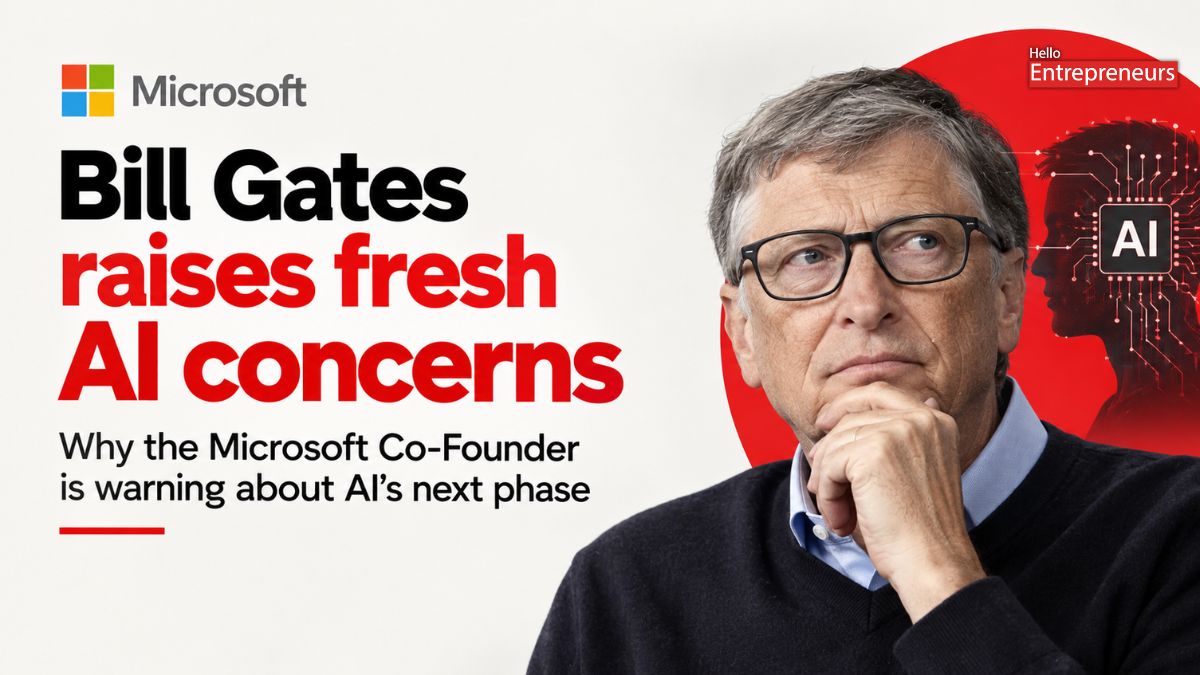
New Delhi: In a recent 6,000-word essay, the Microsoft co-founder called for some jobs to be protected as “human-reserved” roles, arguing that governments are not preparing quickly enough for the disruption AI could create in employment and society.
Gates compares the idea to nature reserves. Just as certain areas are protected from development, he believes some forms of human work may need protection from complete automation.
The concern is straightforward: AI systems are moving beyond simple chatbots and are increasingly capable of handling research, coding, analysis, customer service, design and other knowledge-based tasks.
That could increase productivity, but it could also reduce demand for some workers.
Gates has warned that the impact may be particularly difficult for people who cannot quickly move into new occupations. He argues that governments need to prepare for retraining, education and changes to tax policy rather than waiting until large-scale job losses become visible.
His warning comes at a time when companies are spending enormous amounts on AI infrastructure.
More than $1.1 trillion has been invested in AI infrastructure since 2024, covering areas such as chips, data centres, power systems and networking, according to recent analysis.
That investment reflects the belief that AI will become one of the biggest economic technologies of the next decade.
But Gates is asking a different question: who benefits from that growth?
He has argued that governments could consider new approaches such as taxing robots or AI-related activity and using the money to support workers affected by automation. The goal would not necessarily be to stop AI, but to make the transition less painful.
His concerns also extend beyond employment.
Gates has pointed to AI’s possible impact on healthcare, education, cybersecurity and young people’s development. AI systems can deliver major benefits in medicine and drug discovery, but advanced systems can also create new risks if they are misused. His own recent writing has warned that AI could make it easier to design dangerous biological threats.
The debate is becoming broader as AI systems become more capable.

