



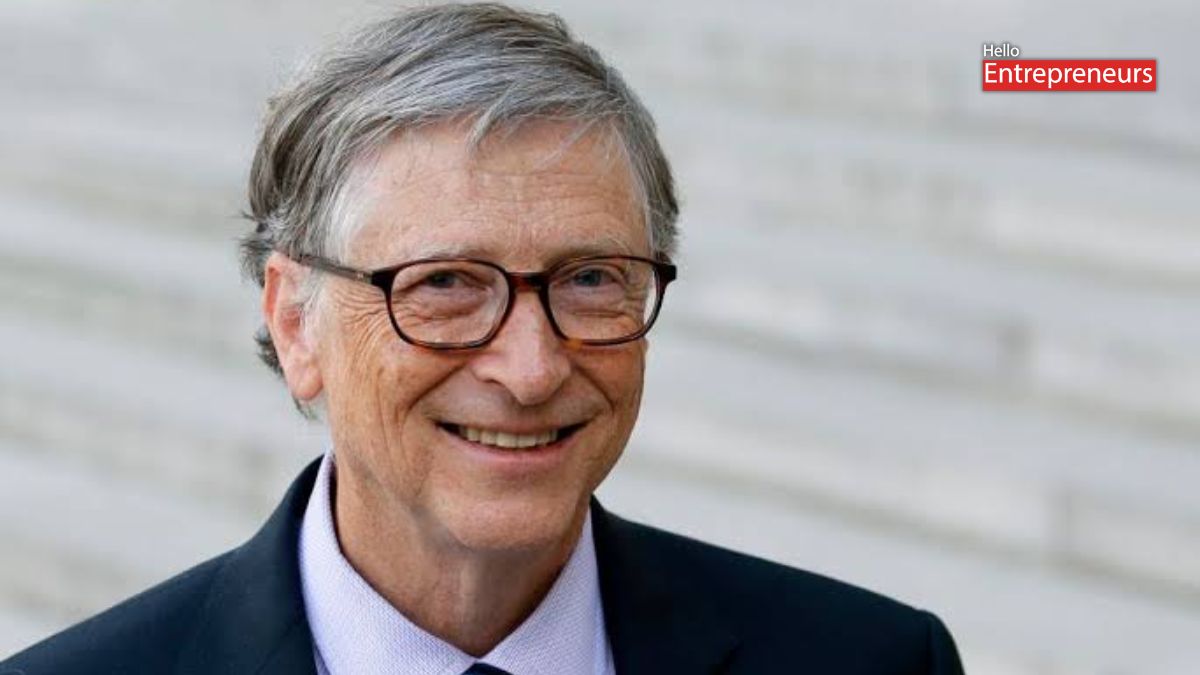
New Delhi: Bill Gates is increasing his focus on Artificial Intelligence, climate innovation and global development as he looks for technology-based solutions to some of the world’s biggest challenges.
The Microsoft co-founder has spent much of the past two decades focusing on philanthropy through the Gates Foundation. His work has supported healthcare, vaccination, education, agriculture and poverty reduction. More recently, Gates has highlighted the growing role of artificial intelligence in improving public services and helping communities respond to climate change.
In his outlook for 2026, Gates described AI as a technology that could bring major benefits to people with limited access to resources. He pointed to agriculture as one important example, where AI tools could provide farmers with information about weather conditions, crop diseases, soil quality and market prices.
For small farmers, access to accurate information can make a major difference. Many farmers in developing countries do not have access to advanced agricultural experts or modern technology. AI-powered tools could help them make better decisions about planting, irrigation and crop protection.
The Gates Foundation has committed around $1.4 billion to support farmers facing the effects of extreme weather and climate change. Rising temperatures, changing rainfall patterns and severe droughts are creating major risks for food production, particularly in lower-income countries.
Gates believes that climate innovation must include both reducing emissions and helping communities adapt to changing weather. His investments through Breakthrough Energy have supported companies working on clean electricity, energy storage, green fuels, sustainable materials and low-carbon industrial technology.
The focus is important because industries such as cement, steel, transport and agriculture are difficult to fully decarbonise. New technology may be needed to reduce emissions without slowing economic growth.
AI could also speed up scientific research. Advanced systems can analyse large amounts of information, identify possible solutions and help researchers develop new medicines, materials and energy technologies. However, experts warn that AI also creates risks related to privacy, job disruption, misinformation and unequal access.
The Gates Foundation is working to ensure that AI tools are used in areas such as global health, education and agriculture. In 2026, the foundation announced a partnership with Anthropic to explore AI applications that could support public-interest work.
Gates has also stressed that technology alone cannot solve global problems. Governments, research institutions, businesses and local communities must work together to make innovation affordable and widely available.

