



New Delhi: The Indian packaged snacks industry is a dynamic market. A regional food can become a national food item in the blink of an eye if it appears in a viral video, a celebrity’s meal, or a political event. The problem for food companies is to recognize these moments early and to take advantage of them by making a product before the interest wanes.
It seems that’s what Balaji Wafers is doing.
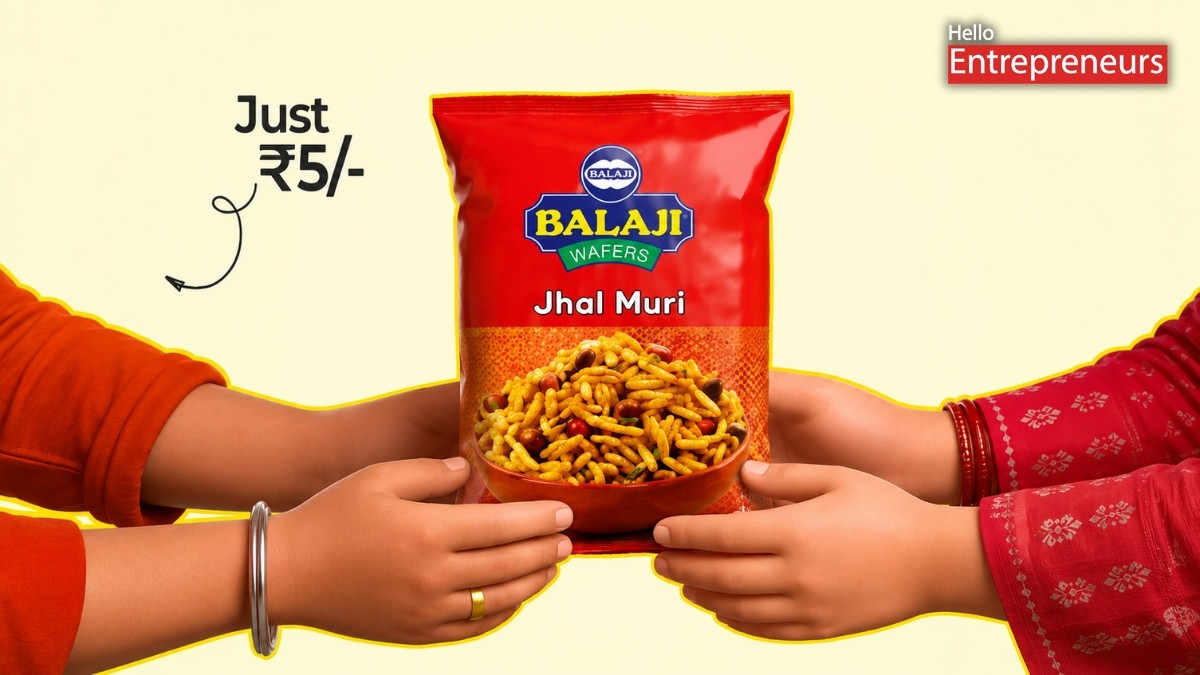
One of its recently launched Jhal Muri snacks.
The company is reportedly getting a tremendous increase in demand since the Prime Minister Narendra Modi was spotted eating Jhal muri, a traditional snack, in West Bengal last month during a campaign visit. It was soon picked up by television and social media, giving the Bengali street snack national visibility.
In days, Balaji Wafers launched packaged Jhal Muri in ₹5 and ₹10 packs. The main takeaway is the record pace at which things were done. With the industry’s products taking months to launch, the company acted fast to perfect a product that was already a hit with a growing culture.
Retailers in several cities have reported strong demand, with some stores experiencing rapid sellouts and stock shortages. The snack has even gained a new following among consumers, starting with the younger generation who are aware of the viral clips online. According to industry reports.
This trend also indicates a greater shift in the packaged food business in India. Local varieties, with a regional dimension, are now being reworked for national markets. Traditional street foods are becoming more accessible in urban and semi-urban markets in both price and form, making them ready to eat.
Balaji Wafers was established in 1974 by Chandubhai Virani and his brothers from Rajkot, Gujarat. It started as a small wafer manufacturing venture associated with a cinema hall’s takon department and then grew into one of the biggest home-grown snack makers in India. The company built up its business by becoming aggressive in distribution and pricing in western and central India over the years.
According to the report, Balaji Wafers is currently present in over 15 states and is available in nearly 4.5 lakh kirana stores across the country through its distribution network. Private equity firm General Atlantic had bought a minority stake in the company in 2024, valuing the business at around ₹35,000 crore, according to various media reports.
Balaji stands out among several larger players because of its regional-first approach. Instead of going aggressive across the country, the company has traditionally concentrated on a market-by-market approach. This way, it can be more responsive to local consumer tastes and has reduced operating expenses.
The Jhal Muri launch is no exception to this. Instead of making the snack a premium product, Balaji decided to launch it as an economical mass-market item, emulating the street-food experience. The drop in prices has made people more impulsive, particularly at smaller neighborhood stores, according to retailers.
Simultaneously, the launch is a testament to the power of viral attention as a business accelerator. As more and more food companies listen to social chatter, capture cultural moments, and track regional trends, they can more quickly pinpoint products that appeal to consumers.
The savory snacks market in India has been steadily expanding. IMARC Group’s industry estimates peg the snack market in India at more than $17 billion in 2024, with growth projected to continue due to rising snack consumption in urban regions, the cost-effectiveness of packaging, and the booming Quick-commerce business.
The rise in popularity of Jhal Muri has also been reportedly impacting Balaji’s future expansion plans. The company may open a manufacturing plant in West Bengal in the next two to three years, according to reports, to expand its operations in eastern India.
Balaji’s Jhal Muri success seems so far to be a blend of timing, pricing and distribution. The company’s speed of response led to a viral political moment that made it visible, and the resulting sales are what still set it apart from many larger brands in the region.

