



New Delhi: Big tech companies don’t usually wake up one day and change their CEO. It doesn’t work like that. These things are planned quietly, sometimes years in advance, with signals that are easy to miss unless you’re really paying attention.
That’s exactly the kind of moment Apple Inc. seems to be in right now.
There’s been a lot of chatter lately, triggered partly by internal communication and media reports, around succession planning at Apple. Not a confirmed leadership change. Not an official announcement. But enough to get analysts, and frankly, the market, thinking about what comes next after Tim Cook.
A leadership era defined by scale and consistency
Cook has been in charge since 2011. That’s a long run by any standard. When he took over from Steve Jobs, the big question was whether he could sustain what Jobs had built. Over time, that question sort of faded. Apple didn’t just hold its position—it expanded. Revenue has grown from about $108 billion in FY2011 to over $380 billion in FY2023, while net profit has more than doubled in the same period. The company’s market capitalization, which was under $400 billion when Cook took over, surpassed $3 trillion in 2022, making it one of the most valuable companies globally.
So this isn’t about a struggling company looking for a reset. It’s the opposite. Apple is stable, highly profitable, and deeply embedded in the global tech ecosystem. In FY2023 alone, it generated over $111 billion in net income and maintained gross margins above 44%, reflecting strong pricing power and operational efficiency.
Which is why any talk of leadership change is more about timing than urgency.
The rising focus on John Ternus and internal continuity
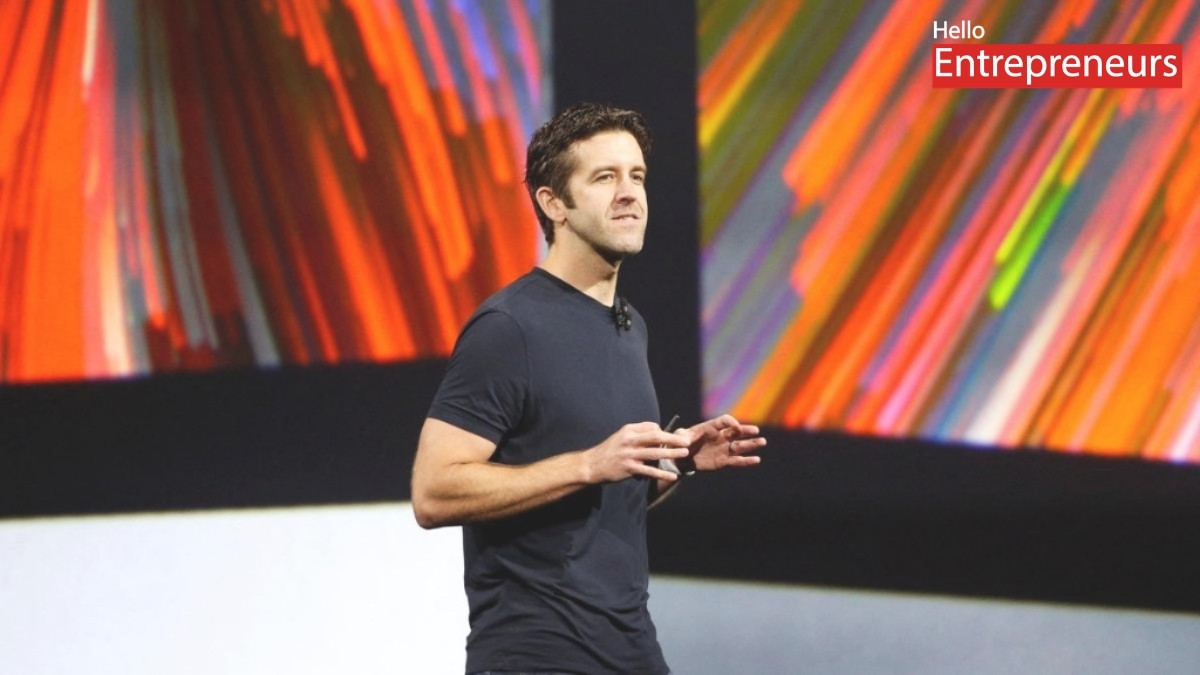
What’s interesting, though, is the increasing attention on John Ternus.
Ternus isn’t a public-facing figure in the way some tech executives are. You won’t see him doing high-profile interviews or making big public statements. But inside Apple, he’s a key operator. As Senior Vice President of Hardware Engineering, he oversees core product lines iPhone, iPad, and Mac, which together still account for a significant share of Apple’s revenue. The iPhone alone contributes over 50% of total revenue, making hardware leadership a critical role.
And that matters.
Because if you look at Apple’s history, it tends to promote from within. People who understand the culture, the pace, and the way decisions are made. Ternus fits that pattern. He’s been with the company for over two decades and has worked across multiple product cycles, including major Mac transitions and iPhone iterations. Internally, that kind of continuity is often valued more than external visibility.
Now, to be clear, Apple has not announced that Ternus is becoming CEO. And it hasn’t said that Cook is stepping down or moving into a chairman role. That part is important. There’s a difference between internal signals and confirmed decisions, and right now we’re still in the “signals” phase.
But signals do matter.
Preparing for the next phase amid a more complex landscape
In many large companies, succession planning isn’t a single announcement. It’s a process. You start to see certain executives take on more responsibility, gain more visibility, and become more central to decision-making. Over time, a pattern forms.
Ternus’s rising profile fits into that broader pattern.
At the same time, Cook’s own messaging, at least based on reported internal notes, suggests he’s thinking about timing. Not necessarily immediate change, but the idea that transitions should happen when the company is in a position of strength, not under pressure. That’s a fairly classic approach, especially for companies that prioritize stability.
The company today operates in a much more complex environment than it did a decade ago. The smartphone market is maturing in key regions like the US, Europe, and China. At the same time, Apple’s services business covering the App Store, Apple Music, iCloud, and more now contributes over $85 billion annually, making it a major second engine of growth alongside hardware.
Regulatory scrutiny has also intensified, particularly around App Store policies in major markets. Meanwhile, Apple is investing in newer areas such as artificial intelligence and mixed reality, including its push into spatial computing. These are long-cycle bets, and they require a leadership approach that balances innovation with execution.
Cook’s strength has been operations and discipline. Under his leadership, Apple built one of the most efficient supply chains globally, maintained high margins, and returned hundreds of billions of dollars to shareholders through buybacks and dividends over the past decade. That operational consistency has been a defining feature of his tenure.
Ternus, by contrast, is often seen as a product-focused executive. If he does eventually move into a broader leadership role, the question will be whether that shifts Apple’s strategic emphasis in any noticeable way or simply reinforces the existing balance between hardware, software, and services.
Though, realistically, companies of Apple’s size don’t pivot overnight. Even leadership changes tend to play out gradually, with continuity often outweighing disruption.
There’s also the governance angle. Globally, many large corporations have moved toward separating the roles of CEO and Chairman to strengthen oversight and board independence. Some of the recent speculation touches on whether Apple could eventually move in that direction as part of a future transition. But as of now, there is no official indication of such a change.
For now, what we’re really seeing is preparation, not transition.
Apple appears to be strengthening its leadership bench, ensuring that when a change does happen, it doesn’t feel abrupt. That continuity has long been one of its strengths. Even the transition from Jobs to Cook, arguably one of the most closely watched leadership changes in corporate history, was operationally smooth despite the broader uncertainty at the time.
Looking ahead, the company’s priorities remain fairly clear. It continues to invest in its services ecosystem, which now contributes a growing share of revenue and typically carries higher margins. It is also pushing into new technology areas, while still relying heavily on its core hardware business, particularly the iPhone.
In that context, leadership succession becomes less about “who’s next” and more about “how ready is the system.”
And right now, Apple looks like it’s getting ready quietly, carefully, and very much on its own terms.

