



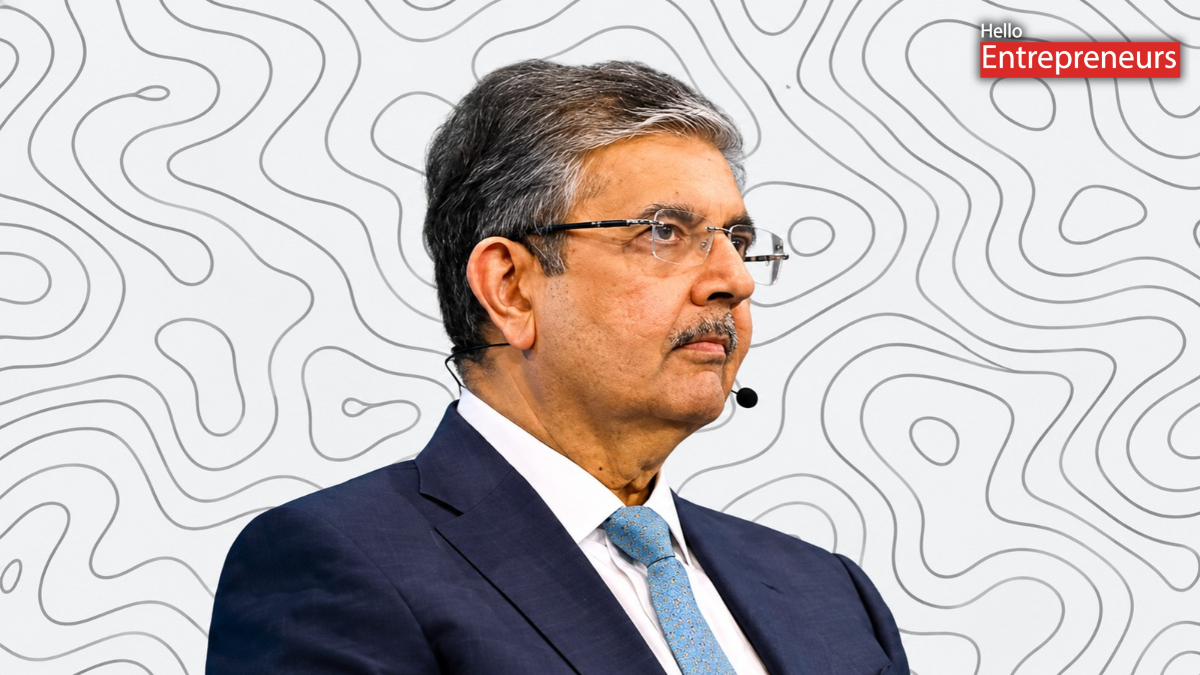
New Delhi: On the day Anthropic started trading on Wall Street, banker Uday Kotak posed a question that has garnered over 270,000 views on X.
AI firm Anthropic, which creates the Claude chatbot, has been valued at $1.5 trillion. It did not exist till ~5 years ago,” Kotak wrote. He said it is more than the combined market capitalisation of India’s top 10 companies and posed the question of whether India is undervalued or needs to catch up in the new world or both.
The listing
Anthropic will sell its shares at $83, and the stock will open trading on Thursday on the Nasdaq under the symbol ANT. It is the second-most valuable IPO of all time, with a valuation of $1.5 trillion, behind SpaceX’s $1.77 trillion listing in June, although its approximately $79 billion raise would surpass SpaceX’s $75 billion. Other social media estimates are slightly higher, at approximately $81 billion, so the actual number could be slightly different depending on the source.
The price was higher than the previous price guidance. The company had quoted a range of $70 – $78 per share. This was no easy road. After the technology stocks had gotten beaten up, institutional investors had been demanding a valuation of around $1.5 to $1.6 trillion, which was below the valuation of around $2 trillion that had been discussed in previous months.
Why Kotak’s question landed
The post has resonated as it suggests what India is doing. The nation boasts the world’s biggest cadre of engineers, a burgeoning start-up culture and a stock exchange that has made investors wealthy. But not an Indian company is developing frontier AI models in this magnitude.
The difference is not just a question of talent, says commentators. The cost of training advanced models is huge, and requires a tremendous amount of patient capital and computing power, usually with tens of billions of dollars still to come before profits begin. Indian venture firms, which seldom write cheques of this magnitude, are much smaller than their American counterparts. The bulk of the domestic AI development has been in applications, services and adaptation of existing models instead of foundation models.
Pressure on the IT services sector
The question also captures the interest of the largest technology employers in India. Large teams of engineers working on coding, testing and support work for global companies like TCS, Infosys and Wipro were the backbone of their business. That’s what AI is becoming more proficient at. For a long time, analysts have predicted that the pervasiveness of this billing model in India’s IT exporting business can be put under pressure if clients need fewer people to perform the same task.
This is a different take on Kotak’s “undervalued” question. It might not be so much about the stock price, but whether the nation’s most valuable technology firms are ready for industry’s next phase.
Is it a bubble?
This isn’t seen as a good sign of strength by everyone. But this is not the typical stock release with the risk section; according to its IPO filing on October 26, Anthropic appears to be growing explosively and has already made its first operating profit. The filing said the first half sales were $16.3 billion. But some critics have argued that a $1.5 trillion valuation requires a long period of continued growth, and how quickly sentiment can decline is evident in the tech sell-off leading up to the stock’s going public. The value determined by a few days demand is not a long-term value.
Which is a cautionary note on comparing India. Immediate matching of a number on a screen isn’t a worthwhile target, when the number is based on expectations which are unlikely to be fulfilled. The more useful lesson is perhaps the ingredients that went into the valuation: significant investment in the computers and much research talent and capital that would also tolerate a waiting period.
What happens next
In his post, Kotak didn’t give a response and the comments reflect the polarized views. Some users have pointed out that India should proceed with its own language use cases and avoid following the trail-blazers that the US is looking at. Others argued that the true issue is policy and funding; they all noted the need for government support, patient capital and access to computing hardware.
The debate raises a tough question for corporate India. As far as boards and investors are concerned, they’ll need to determine their investment amounts and timelines between developing their own foundation models and being a big user of and adapter of other models. At close range, it’s clear that Anthropic has succeeded in attracting the attention of the market, and the clear proof is how quickly a five-year-old startup reached that milestone.

