



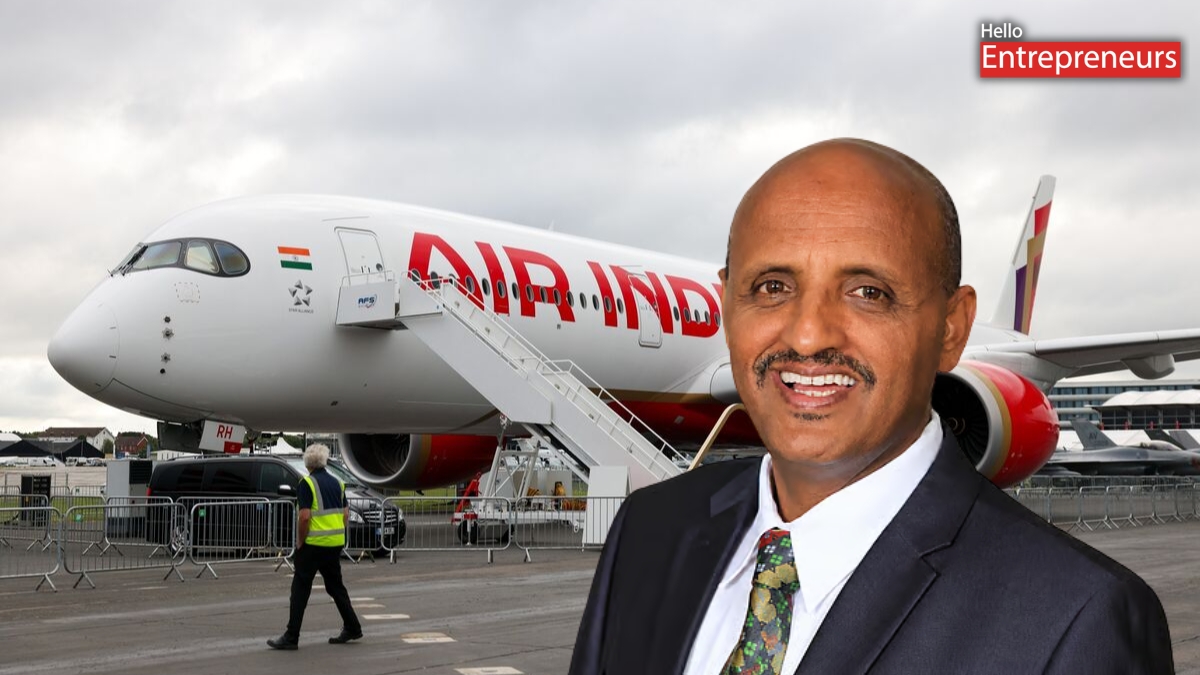
New Delhi: The new boss of Air India. As we all know that the airline has officially appointed Tewolde Gebremariam to be its new Chief Executive Officer (CEO) and Managing Director, by replacing Campbell Wilson. He has been officially confirmed in charge of operational duties this week, but his security clearance is still pending.
Who is the New CEO?
Gebremariam is no stranger to the airline industry. For over a decade he served as the CEO of Ethiopian Airlines, transforming it from a sound regional airline to Africa’s largest and most respected airline group. During his tenure, Ethiopian Airlines’ turnover increased by more than four times and its fleet was expanded by almost three times. That sort of resume is crucial to the Air India board’s choice of him. The board had considered many options from within and outside India, looking out someone who had experienced a large scale airline turnaround, maintained safe and reliable flights and had built a business profitably within a budget.
Why Air India needed a change
From time immemorial, Air India is attempting to solve these historical issues, and safety concerns have been paramount. This follows the tragedy of the Ahmedabad air crash last June that left over 270 dead. In the past, in early August, a plane carrying approximately 20 passengers and four crew members had an unexpected drop in altitude on a flight from Phuket to New Delhi, wounding the occupants. Later, the airline dismissed the pilot from that flight, as tests revealed he had a psychoactive substance in his system.
What changes are expected
So what will differ under the new boss? According to reports, the following is what happened:
- Stronger focus on safety – Gebremariam will closely analyse how the airline operates on day-to-day basis, identify weaknesses and correct them quickly with more attention to proper procedures and reliability.
- More freedom to act – He is reportedly being granted a significant degree of independence for operational issues and making the airline safer and more sustainable.
- A shift toward discipline and cost control – According to some sources, his introduction may result in a more stringent and cost-conscious way of running the airline, which could have a slight impact on the long-anticipated cabins facelift on the aircraft fleet.
- Big-picture priorities – His first staff town hall is presumed to center on his key objectives: safety, “professional running of operations,” enhancing the passenger experience for riders and managing finances.
The road ahead
It will be no easy task to turn around Air India. The airline has greater resources, a larger home market, and support from the Tata group than Gebremariam would have had in Ethiopia, but it also suffers from a host of deep-seated problems, stiff competition from the Gulf carriers and poor quality of service, as well as a roll of older cabins that still need to be phased out.
Both the employees and the passengers of Ethiopian Airlines will be closely eyeing the airlines to see if the man who turned Ethiopian airways into the biggest airline in Africa can achieve the same feat with the flag carrier of India.