



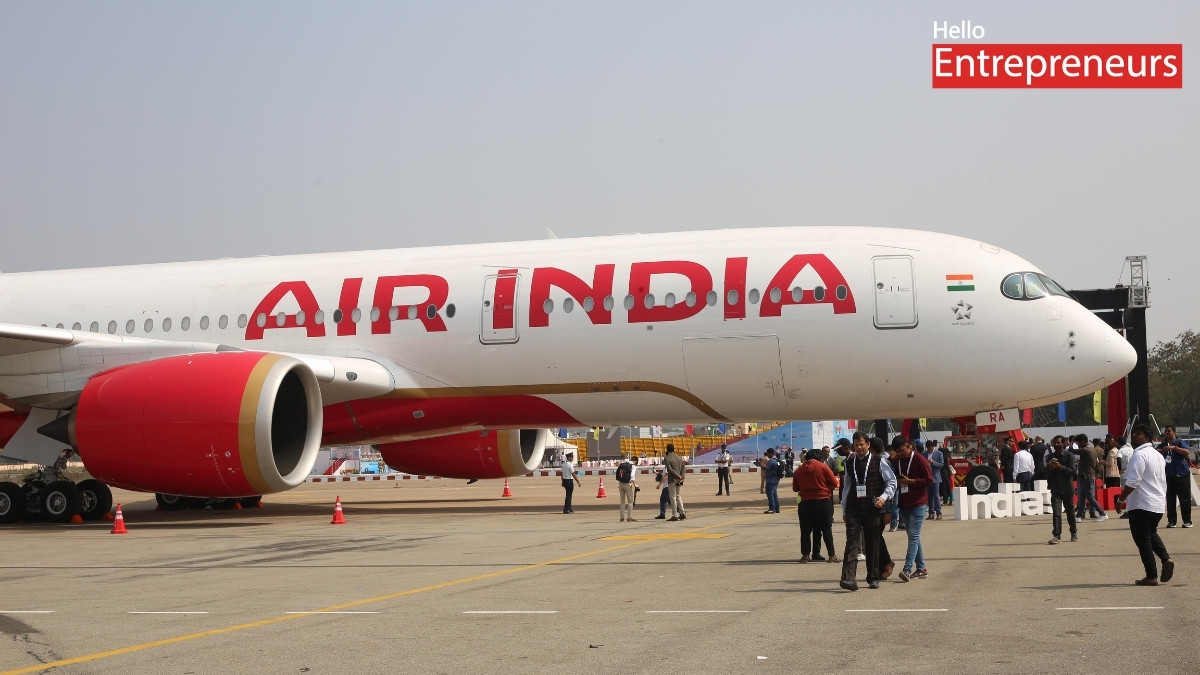
New Delhi: The aviation industry very seldom has the chance to solve only one issue at a time. It is currently experiencing increasing fuel expenses, political instability, and already slim profit margins- all within weeks rather than months. This is what makes this moment different. It does not seem like a typical slowdown, but rather a true test of real stress to airlines.
Air India cuts flights as costs surge
It is against this background that Air India’s move to reduce its flights by almost 100 per day until July is not merely a shift in schedule. It demonstrates the speed of the change in the economics of flying. This is nearly a 10% cut to the airline network, as the company operates approximately 1,100 daily flights.
It is obvious, although the scale is not. Aviation turbine fuel (ATF), which constitutes up to 40 percent of an airline’s expenditure, has soared in the past few weeks. Jet fuel prices in the world market have now risen to approximately 179.46 per barrel, approximately 80 percent above the 99.40 that was recorded at the close of February. In the case of airlines in particular, in a price-sensitive market such as India, it is extremely difficult to impose such a high price increase on customers.
Campbell Wilson, the CEO of Air India, has indicated that certain routes, particularly the long international routes, are no longer even covering their basic operating expenses. There is a reduction in flights to Europe, North America, and Australia, as well as on busy routes such as Singapore. It is not demand that is the problem; people are still traveling. The issue is that expenses have increased more than ticket prices.
Geopolitics and longer routes add pressure
Things have been complicated by geopolitics. As a result of tensions in West Asia, airlines are being compelled to take longer routes to avoid restricted airspace. In the case of Air India, this has entailed diverting some international flights to make technical stops in cities such as Vienna or Stockholm. The longer routes imply increased fuel consumption, crew expenses, and ineffective aircraft utilization.
Once you put these factors together, the financial strain will be evident. It is estimated that Air India will record losses of more than ₹22,000 crore in FY26. With a firm in that sort of financial health, when its largest expense suddenly increases 70-80 percent, it has little but to do something. These flight cuts are more about cost control than strategy.
Industry-wide stress, the economy shows a contrast
This is not the pressure of a single airline. The Federation of Indian Airlines has cautioned that the industry is under extreme stress and may require government bailouts, particularly due to fuel prices. In India, ATF is heavily taxed and is among the most expensive in the world, due to excise taxes and state VAT. Airlines will not be able to easily transfer these costs without impacting demand.
What is notable, however, is the difference in appearance of the rest of the economy. India registered a high GST revenue of 2.43 lakh crore in April 2026, 9 percent higher than the previous year. This indicates that overall economic activity and consumption remain robust, although the aviation industry is not doing well.
Such a gap is also apparent in the financial markets. Markets such as the BSE Sensex and Nifty 50 have been recording all-time highs, owing to high earnings expectations and availability of liquidity. Aviation, though, is at the mercy of aspects beyond its control, such as fuel prices, currency fluctuations, and geopolitical events.
Likewise, in the rest of the world, the same tendencies are evident. Airlines are retarding growth, switching paths, or even dropping out of markets. The closure of Spirit Airlines due to decades of operation indicates how fragile the low-cost airline model can be when expenses are high over an extended period of time.
Among the immediate effects on travelers to India, there will likely be higher fares and fewer choices, particularly on long-haul flights. In instances where capacity is constrained during the peak travel seasons, the supply becomes constrained relatively fast. Airlines can attempt to raise fares or fuel surcharges, but that risks decreasing demand in a market where price is a significant factor.
In the case of Air India, it is even more complicated, as it is undergoing a long-term transition under the Tata Group. The airline has made investments in new planes, new routes, and advancement of services. Such plans rely on a fairly stable cost environment, though. These shocking moments make it necessary to shift the focus from growth to coping with losses.
What happens next for airlines
In the future, much will depend on how fuel prices and geopolitical tensions evolve. Assuming that fuel prices stabilize and airspace restrictions are relaxed, airlines can slowly restore capacity. However, with uncertainty persisting, more radical changes may follow, including fewer routes, higher fares, and an emphasis on profitability over growth.
In mere terms, this scenario points to one of the most fundamental of aviation: it is a high-need business, though with very slim margins. In good conditions, growth appears good. However, when several pressures converge simultaneously, even large airlines must adapt quickly. That reorientation is in progress.

