




Bengaluru: Everyone knew 2025 would be big for artificial intelligence. What caught Wall Street off guard was who would win. Not users. Builders. The AI data centre spending boom has become the defining investment story of 2025. Loud. Expensive. Slightly unsettling. And very real.
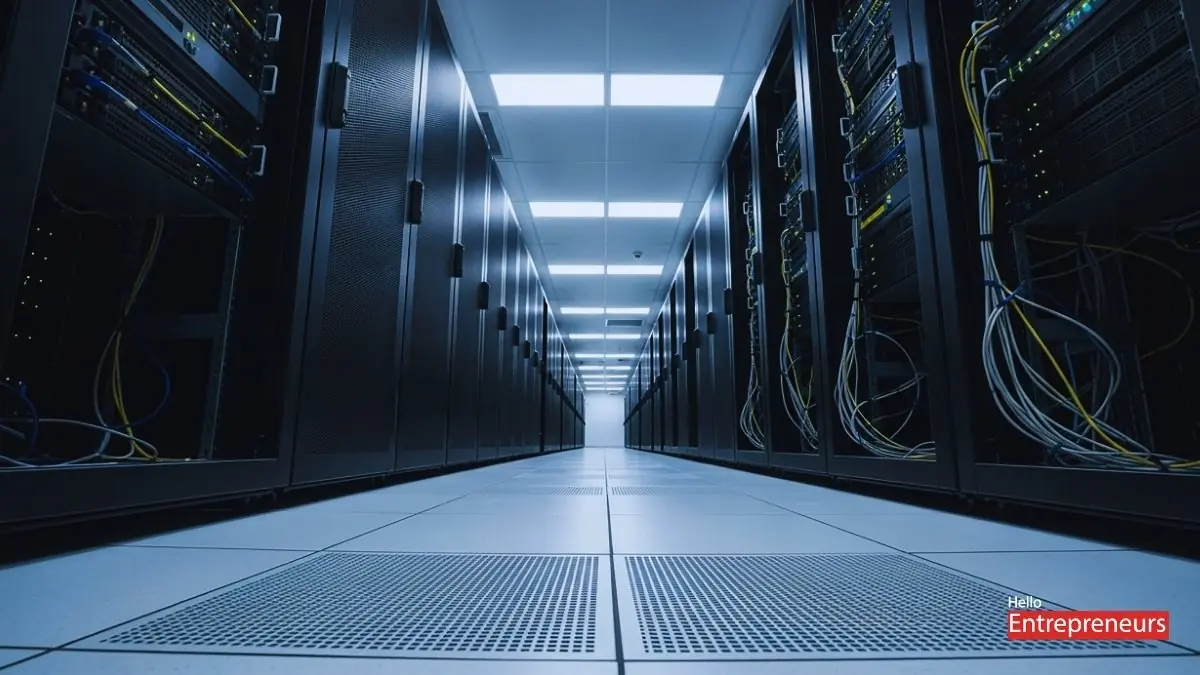
For most of the year, investors sat glued to one chart: capital spending. Specifically, how much money was being funnelled into the physical backbone of artificial intelligence. Data centres. Chips. Power-hungry infrastructure that does not come cheap and does not move fast.
Morgan Stanley started the year with a reasonable call. AI infrastructure spending would grow 20 to 25 percent. Sensible. Conservative. By late in the year, that forecast looked almost quaint. The number jumped to 68 percent. Total spending now points to roughly $470 billion in 2025, before leaping again to about $620 billion in 2026.
And even that might be understating the frenzy.
In the second half of the year, deal announcements ballooned into the trillion-dollar club. OpenAI alone has lined up plans tied to $1.4 trillion worth of new data centres. Let that sink in. This is not incremental growth. This is industrial-scale ambition.
Why This Is Not 1999 All Over Again?

The obvious comparison is the late-1990s internet boom. Massive capital. Big promises. Then a brutal hangover. But the AI data centre spending boom has one crucial difference.
Demand is real. And it is running ahead of supply.
Back then, telecom networks were built faster than anyone could use them. Fibre lay dark. Balance sheets collapsed. Today, the opposite problem dominates. AI capacity is scarce. Compute is rationed. Cloud providers talk openly about shortages.
That imbalance matters. It changes the risk profile. It also buys time.
When supply finally catches up, gravity will return. Prices will compress. Margins will shrink. But that reckoning may be further off than sceptics expect. Bottlenecks are everywhere. Electricity availability. Grid upgrades. Cooling systems. Land. Permits. None of this scales overnight.
That reality hands a clear advantage to companies already fluent in operating at massive scale. Hyperscalers. Established cloud giants. Firms that know how to manage complexity without blowing themselves up.
Model Builders Have Rewritten the Valuation Playbook
The second shock of 2025 came from a different corner. Model builders.
At the start of the year, the mood was cautious. Training costs were exploding. Returns seemed to be diminishing. Meanwhile, China’s DeepSeek claimed ultra-low training costs and pushed open-source models into the spotlight. Disruption felt imminent.
Then the script flipped.
Instead of brute-force scaling, leading labs shifted focus to post-training techniques. Fine-tuning. Optimisation. Smarter use of compute. The models kept improving. Performance climbed. And the world did not, in fact, rush en masse to open source.
The market reaction was electric.
Just over a year ago, OpenAI closed a funding round valuing it at $157 billion. Today, it is reportedly stretching for a valuation north of $800 billion. That is not growth. That is a re-rating of expectations.
Others rode the same wave. Anthropic is now targeting a valuation above $300 billion, up from $18 billion in its final 2024 round. Elon Musk’s xAI believes it is worth $230 billion, compared with $50 billion not long ago.
Are all these companies necessary? Will they all survive? No one knows. That debate has not moved an inch in a year. Either these firms become the dominant platforms of the AI era, or they fight each other into commoditisation. Pick your camp.
Token Prices Are Collapsing, And That Changes Everything
One fact cuts through the noise. Prices are falling. Fast.
Tokens, the core output of AI model companies, have been in relentless deflation. Tomasz Tunguz, a venture capitalist, put a sharp number on it. For $1.10, users of Google’s Gemini 3 Flash can now buy the same amount of machine intelligence that cost $65 using GPT-4 just two and a half years ago.
That is not a discount. That is a collapse.
Andreessen Horowitz tracks a roughly tenfold annual improvement in price-performance for leading models. If that trend holds, AI gets cheaper every year, by an order of magnitude.
This dynamic favours companies that control more of the stack. Chips. Data centres. Models. Applications. Alphabet’s renewed stock market favour makes sense in this light. Vertical integration cushions margin pressure.
It also accelerates adoption. Cheaper intelligence spreads faster. Into enterprises. Into consumer tools. Into places that once found AI unaffordable or unnecessary.
Usage Is Exploding. Revenue Is Not.
Here is the uncomfortable part.
People are using AI more than ever. Monetisation is lagging.
A year ago, about 300 million people used ChatGPT at least once a week. That number has now crossed 800 million. Coding assistants have become standard equipment for software developers. Quietly indispensable.
Yet 2025 did not deliver a breakout consumer killer app. Nothing on the scale of smartphones or social media. Business spending on generative AI has grown, but not at the pace infrastructure builders might like.
This gap fuels anxiety. Usage curves look great. Revenue curves look… patient.
Bubble talk thrives in that gap.
Wall Street’s Bet Is Narrow And Heavy
Against this backdrop, the AI boom rests on surprisingly few shoulders. A small group of big tech firms with deep pockets and strong cash flows.
Eight US technology companies now carry valuations of $1 trillion or more. They include cloud giants, internet platforms, and chipmakers like Nvidia and Broadcom. Together, they added $4.7 trillion in market value this year alone.
Since ChatGPT’s launch, their combined valuation has roughly tripled to $23 trillion. That is concentration. And it cuts both ways.
So far, these firms have delivered. In the first nine months of the year, they generated about $300 billion in combined free cash flow. That matched the previous year, despite increasing capital spending by $100 billion.
In plain terms, they paid for the AI build-out without flinching.
But stretch this pace into 2026, and pressure builds. Cash flows are not infinite. Power constraints tighten. Political scrutiny grows. At some point, even giants feel strain.
India’s Quiet Opportunity in the AI Build-Out
From an Indian perspective, this boom carries a quieter implication. Infrastructure matters. Power matters. Scale matters.
India’s data centre market has been expanding steadily, driven by cloud adoption and digital public infrastructure. As global AI players hunt for capacity, regions with reliable power, improving grids, and favourable policy will attract attention.
India may not host trillion-dollar deals tomorrow. But as AI pushes into the mainstream, secondary hubs will matter. Talent is here. Demand is here. The question is execution.

